The Strategic Patience Behind Apple’s Calculated AI Pivot
For years, critics labeled Apple as a laggard in the artificial intelligence arms race, suggesting that a lack of aggressive strategy would eventually erode the company’s market dominance. However, the recent unveiling of a revamped Siri—integrated with advanced automated capabilities and a partnership with Google Gemini—signals a shift in narrative. Rather than chasing the industry trend of releasing experimental tools, Apple is embedding AI directly into the core of its operating system, focusing on utility and user experience over raw technological spectacle.
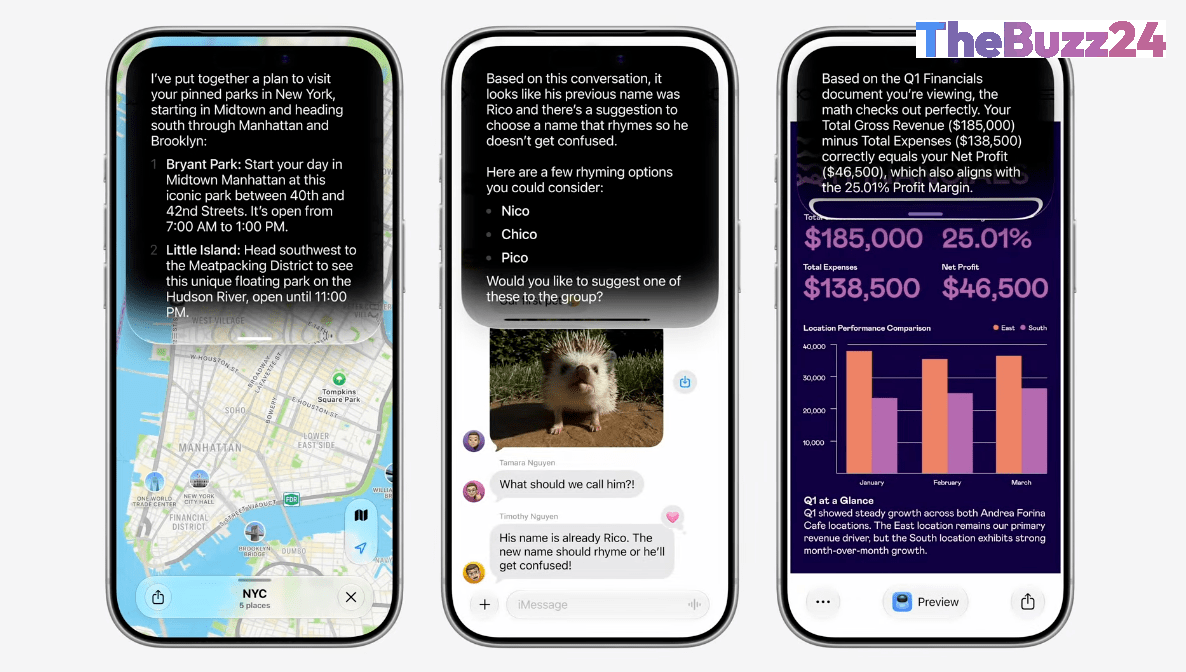
During the announcement, Apple’s senior vice president of software engineering, Craig Federighi, emphasized a philosophy of human-centric design, subtly critiquing competitors who prioritize AI development for its own sake. This approach serves a dual purpose: it addresses consumer anxiety regarding the rapid, often invasive, expansion of AI while positioning Apple as a privacy-conscious, reliable steward of the technology. By enabling Siri to parse personal data across emails, texts, and onscreen content, Apple is aiming to make AI an invisible, helpful layer of the user experience rather than a standalone product.
From a competitive standpoint, this integration poses a significant challenge to third-party developers who rely on the App Store for distribution. By providing native, system-level AI features, Apple effectively raises the bar for utility, potentially rendering some standalone AI apps redundant. While these features are slated for a beta release later this year, the strategy highlights a distinct divergence from rivals like OpenAI and Meta, who have struggled to balance massive capital expenditures with clear, profitable use cases.
Ultimately, Apple’s measured pace appears to be a calculated financial maneuver. While tech giants commit hundreds of billions to infrastructure, Apple continues to generate massive revenue through its existing hardware ecosystem and App Store commissions. By spending significantly less on AI development while delivering features that integrate seamlessly into the daily lives of its users, Apple is demonstrating that winning the AI race may not be about who arrives first, but who provides the most sustainable value.
Key Takeaways
- Apple is shifting its AI strategy toward deep system-level integration rather than standalone applications, focusing on user-centric utility.
- The company is maintaining a disciplined financial approach, spending significantly less on AI infrastructure than its competitors while leveraging its massive hardware install base.
- By embedding AI directly into Siri, Apple is creating a competitive barrier for third-party AI developers who rely on the App Store for distribution.
Editor’s Analysis & Impact
Apple’s strategy represents a masterclass in ‘platform leverage.’ While competitors are burning through cash to build foundational models and search for a business model, Apple is treating AI as a feature set designed to increase hardware stickiness. This approach mitigates the risk of AI commoditization; by making AI an intuitive, background utility, Apple avoids the ‘hype cycle’ fatigue currently affecting other tech firms. The long-term implication is that Apple is effectively outsourcing the heavy lifting of model development to partners like Google while maintaining control over the user interface and data privacy. This allows Apple to capture the value of AI without the massive overhead, likely resulting in higher margins and sustained customer loyalty in an increasingly crowded and skeptical market.
Frequently Asked Questions
Q: When will the new Siri AI features be available to the public?
A: The new AI-powered Siri features are scheduled to be released to consumers later this year as a beta version.
Q: How does Apple’s AI spending compare to other major tech companies?
A: Apple is taking a more conservative financial approach, with approximately $14 billion in planned capital expenditure for the year, compared to the hundreds of billions being committed by other major tech giants.
AI Disclosure: This article is based on verified data and official reports. Our Team and AI have cross-referenced every financial detail with primary sources to ensure total accuracy.
More from this Category