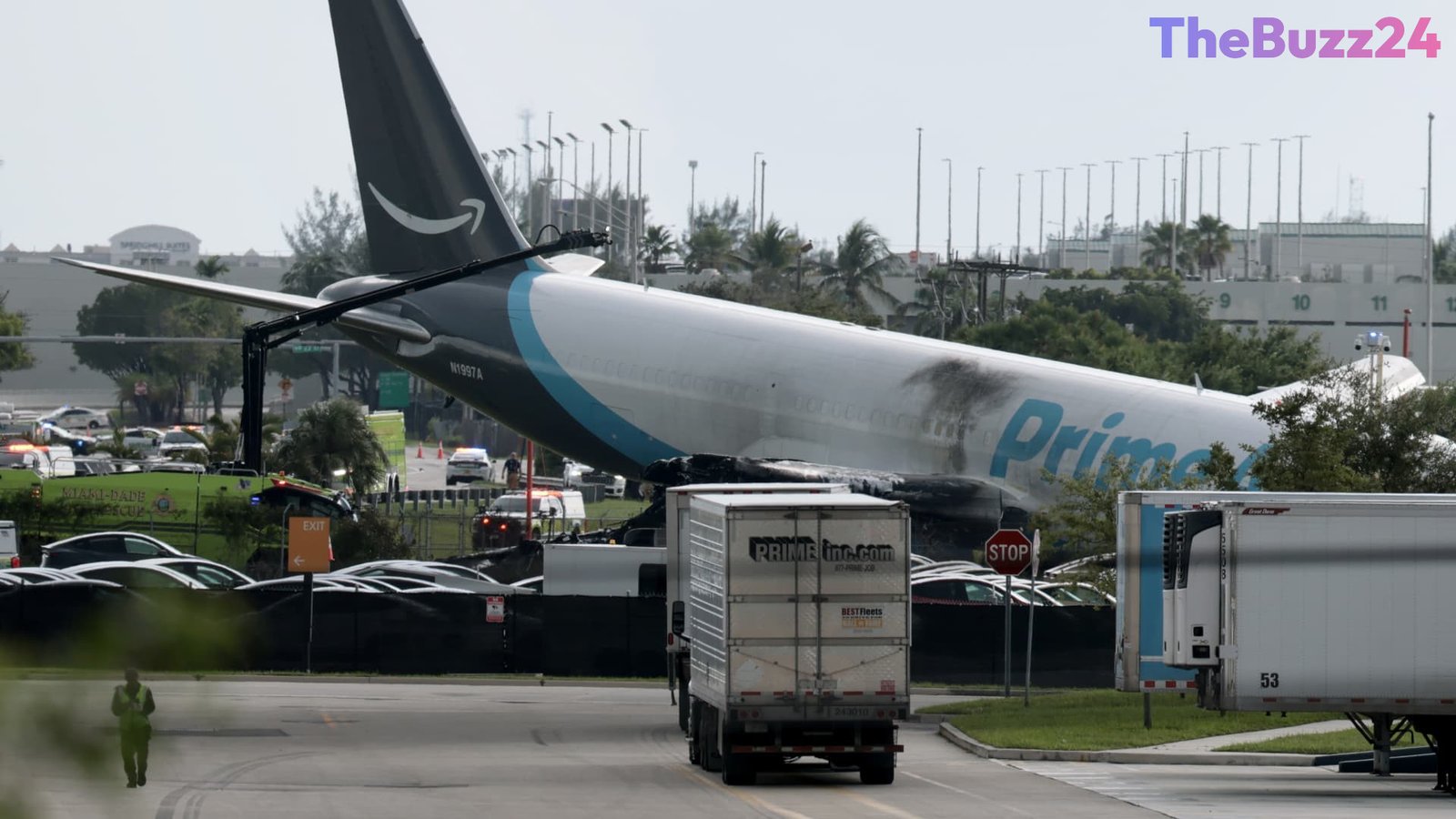
Tragedy at Miami International: Cargo Plane Crash Leaves Five Dead
A devastating aviation accident occurred at Miami International Airport on Sunday when a cargo aircraft operated for Amazon’s Prime Air fleet overran the runway, resulting in at least five fatalities and multiple injuries. The Boeing 767, which had arrived from San Juan, Puerto Rico, veered off the tarmac at approximately 2 p.m. ET, plowing into a nearby roadway frequently used by airport warehouse personnel and local businesses.
The impact triggered a massive fire, engulfing the aircraft and several vehicles in flames. Emergency responders, including over 200 personnel, were dispatched to the scene to battle the blaze and conduct complex extrication operations. Firefighters utilized specialized foam to suppress the engine compartment fire, while rescue teams worked to free individuals trapped within the wreckage and under vehicles. In addition to the five confirmed deaths, three individuals were reported in critical condition, with two others hospitalized for less severe injuries.
The incident caused significant disruption to air travel, leading to the cancellation of over 160 flights and the delay of nearly 325 others. The National Transportation Safety Board has launched a formal investigation into the cause of the crash, with a team led by Chairwoman Jennifer Homendy arriving on-site to examine the wreckage and flight data. While weather conditions at the time included thunderstorms and high wind gusts, investigators have yet to determine if environmental factors or mechanical issues were the primary catalyst for the overrun.
Amazon has issued a statement expressing its condolences to the victims’ families and pledging full cooperation with the ongoing investigation. The aircraft involved, a 32-year-old Boeing 767, had been converted for cargo use in 2015. Aviation experts are currently reviewing flight data and video footage to determine why the aircraft failed to stop within the designated touchdown zone, noting the absence of specialized runway arresting systems at the Miami facility that are designed to safely halt planes during such emergencies.
Key Takeaways
- A cargo plane overran the runway at Miami International Airport, resulting in five confirmed deaths and multiple injuries.
- The crash caused widespread flight disruptions, leading to over 160 cancellations and 325 delays at the major travel hub.
- The National Transportation Safety Board is conducting a formal investigation to determine if mechanical failure, pilot error, or weather conditions caused the incident.
Editor’s Analysis & Impact
The Miami International Airport crash highlights critical vulnerabilities in airport infrastructure and the operational risks associated with aging cargo fleets. The absence of Engineered Material Arresting Systems (EMAS) at a high-traffic facility like Miami raises significant questions regarding federal safety standards and the pace of runway modernization. From an industry perspective, this incident will likely trigger a rigorous review of cargo flight protocols, particularly regarding landing procedures during adverse weather. Furthermore, the reliance on converted passenger aircraft for heavy logistics operations remains a point of contention among safety advocates. In the near term, we expect increased scrutiny from the NTSB regarding runway safety margins and potential mandates for retrofitting older airports with advanced stopping technologies to prevent similar ground-based fatalities in the future.
Frequently Asked Questions
Q: What is the current status of the investigation into the Miami cargo plane crash?
A: The National Transportation Safety Board (NTSB) has dispatched a team led by Chairwoman Jennifer Homendy to investigate the cause of the crash, including analyzing flight data and environmental conditions.
Q: Were there any safety systems that could have prevented the plane from leaving the runway?
A: Experts noted that Miami International Airport lacks Engineered Material Arresting Systems (EMAS), which are crushable beds installed at the end of runways at many other U.S. airports specifically designed to stop aircraft that overrun the tarmac.
AI Disclosure: This article is based on verified data and official reports. Our Team and AI have cross-referenced every financial detail with primary sources to ensure total accuracy.
More from this Category