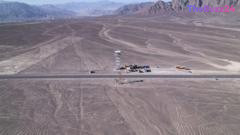
Tragic Tourist Flight Crash Over Peru’s Nazca Lines Claims 13 Lives
A sightseeing flight over Peru’s famous Nazca Lines ended in tragedy on Saturday when a small tourist aircraft crashed, resulting in the deaths of all 13 people on board. The ill-fated plane, operated by local airline Aerodiana, had departed from an airport in Pisco and was carrying eleven passengers alongside two pilots.
The accident occurred around 13:00 local time in the Pueblo Viejo region as the aircraft flew over the renowned archaeological site in southern Peru. Emergency responders and local authorities quickly mobilized, confirming that the severe impact left no survivors. Recovery operations commenced immediately to retrieve the victims from the wreckage.
While the exact cause of the disaster remains under investigation, preliminary information indicates that foreign nationals, including Italian tourists, were among those killed. Officials from the Civil Aviation Directorate General and local municipalities have expressed profound grief over the incident, offering their condolences to the grieving families.
This catastrophic event underscores ongoing safety concerns regarding aerial tourism above the ancient geoglyphs. Similar fatal accidents have occurred in the region previously, including a 2022 crash that killed seven individuals and a 2010 incident resulting in six fatalities, prompting renewed scrutiny over aviation protocols in the area.
Key Takeaways
- A small tourist plane crashed in Peru, killing all 13 people on board, including 11 passengers and 2 pilots.
- The aircraft was flying over the historic Nazca Lines archaeological site when it went down in the Pueblo Viejo region.
- The airline involved has been identified as Aerodiana, with preliminary reports indicating international tourists were among the victims.
Editor’s Analysis & Impact
The tragic accident in Peru highlights the ongoing safety and regulatory challenges facing aviation tourism in remote or archaeologically sensitive regions. Aerial sightseeing remains one of the most popular ways to experience large-scale wonders like the Nazca Lines, but recurring incidents over the past two decades emphasize the critical need for stringent aircraft maintenance, rigorous pilot training, and updated safety protocols. For the local tourism economy, which heavily relies on visitors eager to witness the ancient geoglyphs from the air, incidents of this magnitude can severely impact traveler confidence and prompt immediate government intervention. Moving forward, aviation authorities face mounting pressure to enforce stricter oversight on regional carriers to prevent future tragedies and ensure sustainable, secure tourism operations.
Frequently Asked Questions
Q: How many people died in the Peru plane crash?
A: All 13 people on board—consisting of 11 passengers and two pilots—lost their lives in the crash.
Q: What airline operated the flight?
A: The flight was operated by Aerodiana, a local Peruvian airline.
Q: Have there been similar crashes at the Nazca Lines before?
A: Yes, small tourist planes have crashed over the Nazca Lines in previous years, including fatal incidents in 2022 and 2010.
AI Disclosure: This article is based on verified data and official reports. Our Team and AI have cross-referenced every financial detail with primary sources to ensure total accuracy.
More from this Category