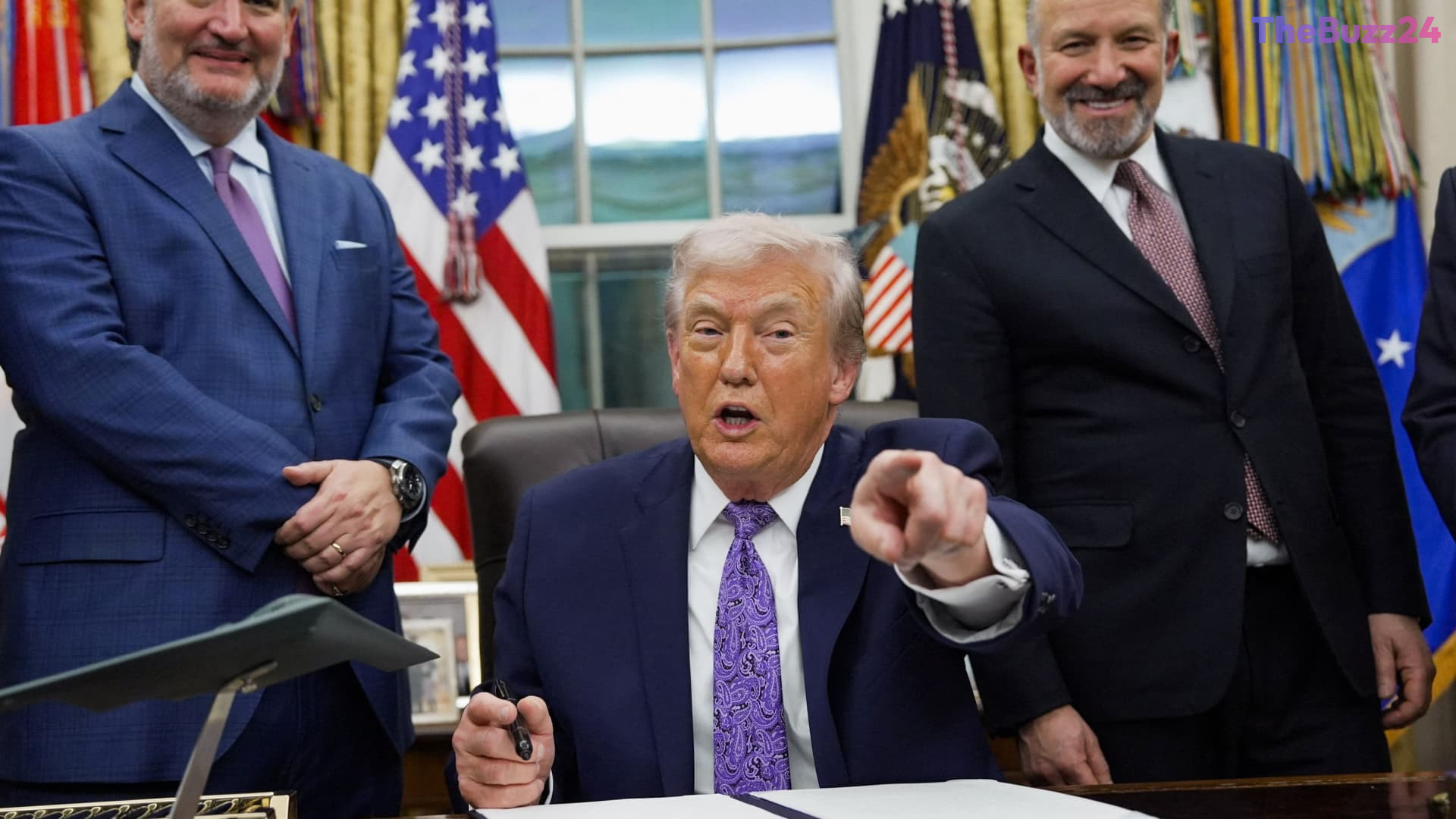
Trump Administration Issues Executive Order on AI Security and Model Benchmarking
President Donald Trump has signed a new executive order aimed at strengthening national security oversight regarding the rapid development of artificial intelligence. The directive establishes a framework for the federal government to implement benchmarking processes designed to evaluate the advanced cyber capabilities of emerging AI models. Under the new guidelines, AI developers are encouraged to voluntarily collaborate with federal agencies by providing early access to their most sophisticated systems—referred to as ‘frontier models’—up to 30 days prior to public release.
The order emphasizes that these measures are intended to assess potential security risks rather than impose mandatory licensing or preclearance requirements on the tech industry. By facilitating a review process, the administration aims to identify ‘covered frontier models’ that may pose significant cyber threats. The government will also play a role in selecting trusted partners to assist in these evaluations, ensuring that high-stakes technology is scrutinized for vulnerabilities before widespread deployment.
This policy shift arrives at a critical juncture for the AI sector, as major players like Anthropic and OpenAI prepare for potential public offerings. The move also follows intense lobbying from prominent industry figures, including Elon Musk and Meta CEO Mark Zuckerberg, who have engaged with the administration regarding the scope of federal AI regulation. Meanwhile, the Department of Defense continues to maintain a cautious stance, having previously labeled certain frontier models as potential supply chain risks, a designation that remains the subject of ongoing legal challenges.
As the administration moves forward, the order mandates specific timelines for federal agencies to develop comprehensive guidance. The Department of Defense, in particular, has been tasked with prioritizing the cyber defense of its internal information systems. While the order stops short of strict regulation, it signals a clear intent to integrate government oversight into the lifecycle of the most powerful AI technologies currently in development.
Key Takeaways
- The executive order establishes a voluntary benchmarking process for AI companies to provide the government with early access to frontier models.
- The directive focuses on identifying 'advanced cyber capabilities' and potential security risks without imposing mandatory federal licensing.
- The Department of Defense is directed to prioritize cyber defense, even as it faces ongoing litigation regarding its classification of certain AI startups as supply chain risks.
Editor’s Analysis & Impact
This executive order represents a delicate balancing act between national security imperatives and the desire to maintain American leadership in the global AI race. By opting for a voluntary benchmarking framework, the administration is attempting to mitigate the risks of ‘black box’ AI models—which could potentially be weaponized for cyberattacks—without stifling the innovation that has driven massive market valuations for companies like Anthropic and OpenAI. However, the tension between the Department of Defense’s restrictive stance on supply chain security and the industry’s push for open development remains a significant hurdle. The future outlook suggests a period of ‘cooperative friction,’ where tech giants will likely comply with voluntary reviews to avoid more stringent, mandatory regulations, while legal battles over government designations of ‘risk’ will continue to shape the regulatory landscape for years to come.
Frequently Asked Questions
Q: Does the new executive order force AI companies to get government permission to release models?
A: No. The order explicitly states that it does not authorize the creation of mandatory governmental licensing, preclearance, or permitting requirements for the development or release of AI models.
Q: What is the primary goal of the benchmarking process mentioned in the order?
A: The primary goal is to assess the 'advanced cyber capabilities' of frontier AI models to determine if they pose security risks before they are released to the general public.
AI Disclosure: This article is based on verified data and official reports. Our Team and AI have cross-referenced every financial detail with primary sources to ensure total accuracy.
More from this Category