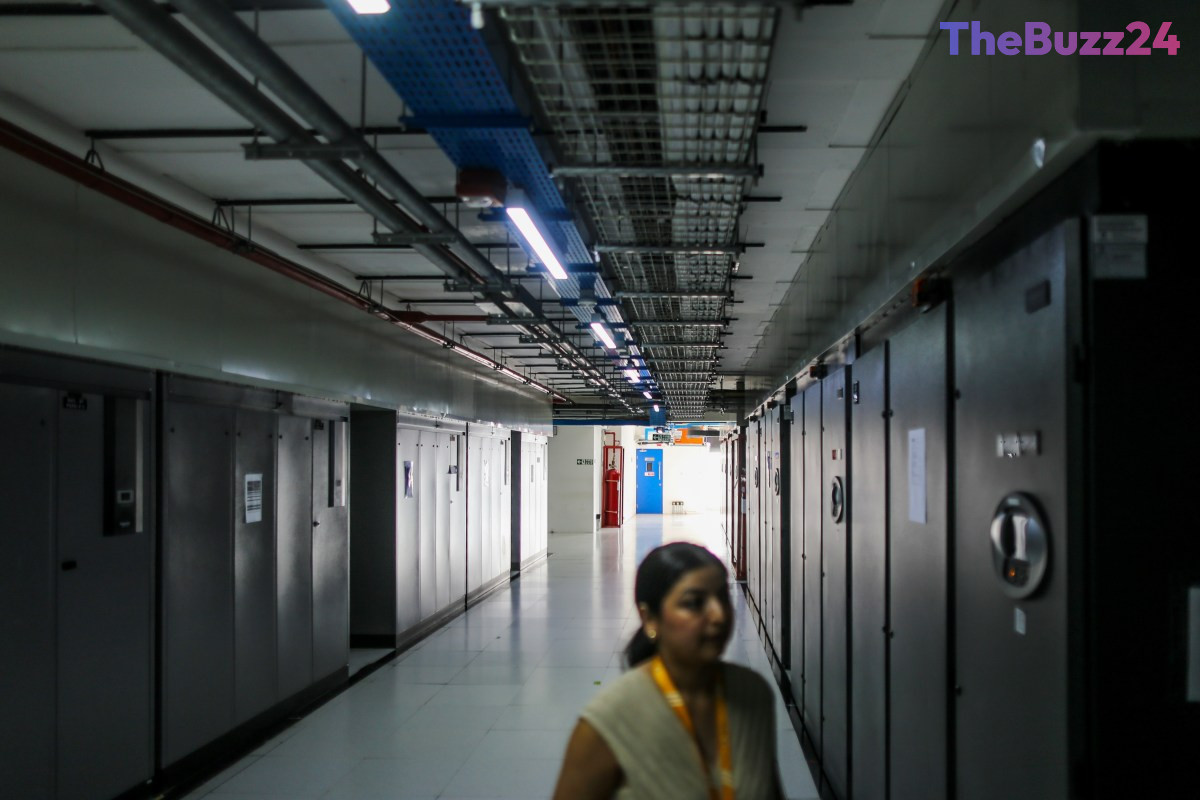
U.S. Data Centers Projected to Consume 20% of National Electricity by 2035
The explosive growth of artificial intelligence and high-performance computing is set to dramatically reshape the energy landscape across the United States. New industry projections indicate that domestic data centers will require four times their current electricity consumption within the next decade, ultimately accounting for roughly one-fifth of the entire nation’s power generation by 2035. This massive scaling is largely driven by surging demands for AI compute capacity, which is projected to approach 200 gigawatts. Nearly half of this newly built capacity will be dedicated exclusively to model training and inference workloads, with the U.S. expected to anchor approximately 64% of global AI chip power demand through 2033.
Industry analysts note that these upwardly revised energy estimates may still lean on the conservative side. Several prominent research organizations have consistently doubled or significantly raised their power consumption forecasts over recent months, underscoring the unprecedented and rapid expansion of digital infrastructure. As these massive technological hubs proliferate, they increasingly threaten to overwhelm electrical grids that are already operating under severe strain. Key regional grids, such as the PJM Interconnection spanning from Virginia to Illinois and the ERCOT grid in Texas, face staggering burdens, with projections suggesting they will need to dedicate well over a third and nearly a quarter of their respective generating capacities entirely to data center operations.
This unprecedented strain has already caused severe operational bottlenecks and financial repercussions. Major grid managers have struggled to process a backlog of connection requests from both energy generators and heavy power consumers, leading to significant delays and friction. In regions heavily concentrated with server farms, the widening gap between surging demand and available supply has triggered dramatic spikes in local electricity prices. Despite these logistical hurdles and rising energy costs, the appeal of establishing operations in primary tech corridors remains robust, with operators continuing to command a significant share of recent capacity auctions. Meanwhile, international markets are also experiencing parallel growth, with worldwide data center electricity demand projected to scale up to levels comparable to the annual power consumption of entire nations.
Key Takeaways
- U.S. data centers are projected to consume 20% of the country's electricity by 2035, quadrupling current levels.
- The rapid expansion of artificial intelligence workloads is driving data center capacity toward nearly 200 gigawatts over the next decade.
- Regional power grids like PJM and ERCOT face severe strain and rising electricity prices due to the unprecedented surge in demand.
Editor’s Analysis & Impact
The exponential rise in power demand driven by artificial intelligence and data center expansion represents a critical inflection point for the global energy sector and technology industry. As digital infrastructure scales rapidly, traditional power grids are being pushed to their absolute limits, exposing long-standing vulnerabilities in energy transmission and generation capacity. This dynamic is accelerating the urgency for alternative energy solutions, including dedicated nuclear, solar, and geothermal power sources tailored specifically for tech campuses. In the broader market context, the bottleneck created by strained grids could potentially slow down AI deployment if energy supply fails to keep pace. Furthermore, soaring electricity prices in major tech hubs may force operators to decentralize future data center developments toward regions with more resilient power infrastructure. Ultimately, the intersection of big tech and utility providers will redefine energy policy, regulatory frameworks, and capital investments for decades to come.
Frequently Asked Questions
Q: Why are U.S. data centers using so much more electricity?
A: The dramatic increase in power consumption is primarily driven by the explosive growth of artificial intelligence, which requires massive computational power for both training and running AI models.
Q: What percentage of U.S. electricity will data centers use by 2035?
A: According to recent industry projections, data centers are expected to consume approximately one-fifth, or 20%, of the electricity generated in the United States by 2035.
Q: How is this surge affecting regional power grids?
A: Regional grids like PJM Interconnection and ERCOT are experiencing severe strain, connection bottlenecks, and significant electricity price spikes as they struggle to accommodate the massive energy loads demanded by new data centers.
AI Disclosure: This article is based on verified data and official reports. Our Team and AI have cross-referenced every financial detail with primary sources to ensure total accuracy.
More from this Category