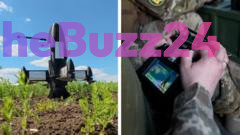
Ukraine Revolutionizes Air Defense with AI and Domestic Drone Production
Ukraine is rapidly transforming its air defense capabilities, moving decisively away from its legacy Soviet-era systems towards a sophisticated, multi-layered network powered by artificial intelligence and homegrown innovation. As the nation endures persistent aerial assaults, the integration of advanced software, notably ‘Sky Map,’ has become a cornerstone of its defensive strategy. This system meticulously synthesizes data from thousands of sensors, radar feeds, and various video inputs, enabling military commanders to track incoming threats with unparalleled precision and significantly boosting the interception rates for both drones and missiles.
Central to this defensive paradigm shift is the large-scale production of cost-effective, 3D-printed interceptor drones. These agile units, exemplified by models like the P1-SUN, are capable of speeds exceeding 300 km/h and are specifically engineered to neutralize expensive enemy hardware at a fraction of the cost. With production now scaling to over 1,000 units daily, these interceptors have emerged as a vital tool in safeguarding Ukrainian airspace. This strategy is further bolstered by a unique public-private partnership, where commercial entities are deploying their own defensive infrastructure, including remotely operated machine gun towers, to protect critical energy grids and industrial sites.
Despite these remarkable technological advancements, the conflict remains a high-stakes race of innovation. While Ukraine has successfully integrated civilian volunteers and private companies into its military command structure, certain coverage gaps persist. These are particularly evident concerning high-altitude ballistic missiles and small, highly maneuverable first-person-view (FPV) drones. As both sides continuously refine their tactics and technologies, the ongoing battle for control of the skies serves as a stark reminder of the human cost of war, where even the most advanced defensive systems cannot entirely eliminate the threat posed by sustained, large-scale aerial assaults.
Key Takeaways
- Ukraine is transitioning to an AI-driven, multi-layered air defense system, leveraging software like 'Sky Map' for enhanced threat tracking and increased interception rates.
- The nation is mass-producing cost-effective, 3D-printed interceptor drones, such as the P1-SUN, at a rate of over 1,000 units daily to counter expensive enemy hardware.
- Despite significant technological advancements and public-private partnerships, challenges remain in defending against high-altitude ballistic missiles and small FPV drones, highlighting the continuous innovation race in conflict.
Editor’s Analysis & Impact
Ukraine’s rapid evolution in air defense signifies a pivotal shift in modern warfare, emphasizing agile, technologically advanced, and cost-effective solutions. This development will likely spur increased investment and innovation in defense technology globally, particularly in AI-driven command systems and drone countermeasures. The public-private partnership model could become a blueprint for other nations facing similar threats, fostering a new defense industry ecosystem. However, the persistent challenge from high-altitude missiles and FPV drones underscores the continuous cat-and-mouse game of military innovation. The broader implication is a redefinition of national security, where civilian tech and rapid prototyping play an increasingly critical role, pushing traditional defense contractors to adapt or risk obsolescence.
Frequently Asked Questions
Q: What is 'Sky Map' and how does it enhance Ukraine's air defense?
A: 'Sky Map' is advanced software that integrates data from thousands of sensors, radar feeds, and video inputs. It provides military commanders with precise tracking of incoming aerial threats like drones and missiles, thereby significantly increasing interception rates.
Q: How are 3D-printed interceptor drones contributing to Ukraine's defense?
A: These cost-effective, agile drones, such as the P1-SUN, are mass-produced (over 1,000 daily) to neutralize expensive enemy hardware at a fraction of the cost. They form a critical part of Ukraine's strategy to maintain airspace integrity against aerial threats.
Q: What are the main challenges Ukraine still faces in its air defense?
A: Despite technological advancements, gaps persist in defending against high-altitude ballistic missiles and small, highly maneuverable first-person-view (FPV) drones. This indicates an ongoing innovation race against evolving and diverse aerial threats.
AI Disclosure: This article is based on verified data and official reports. Our Team and AI have cross-referenced every financial detail with primary sources to ensure total accuracy.
More from this Category