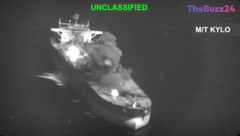
US Forces Strike Three Iranian Tankers in Retaliation for Attacks on American Warships
Tensions in the Middle East have escalated sharply following coordinated retaliatory strikes by the United States military against three oil tankers linked to Iran. The strikes followed an incident in which ballistic missiles launched by the Islamic Revolutionary Guard Corps (IRGC) targeted an American aircraft carrier and a guided-missile destroyer operating in regional waters. American defense officials confirmed that naval forces successfully evaded the barrage without sustaining damage or casualties.
In response to the offensive, US Central Command launched precision operations targeting maritime assets tied to Tehran’s commercial operations. Military assets permanently disabled two vessels—one stationed near Kharg Island and another adjacent to the strategically vital Strait of Hormuz—while a third tanker was completely destroyed in the Gulf of Oman. Officials characterized the targeted vessels as vital components of an illicit, multi-billion-dollar maritime network utilized by the IRGC to finance proxy networks across the region.
Admiral Brad Cooper, commander of US Central Command, issued a firm warning following the strikes, emphasizing that attacks on American naval presence will be met with immediate economic retaliation. Cooper stressed that the US military stands prepared to defend its troops and dismantle Iran’s oil export capabilities if maritime aggression continues, signaling a decisive shift toward neutralizing Tehran’s revenue-generating infrastructure.
The retaliatory action marks the end of a brief lull following the expiration of a 60-day ceasefire between Washington and Tehran. With diplomatic channels stalled and critical waterways such as the Strait of Hormuz facing severe operational disruptions, the intensifying confrontation continues to impact global oil distribution channels and exacerbate economic pressures worldwide.
Key Takeaways
- The US military struck and disabled three Iranian-linked oil tankers in response to IRGC missile attacks on American warships.
- US Central Command confirmed all naval personnel and vessels were unharmed during the Iranian assault.
- The renewed confrontation comes amid the collapse of a 60-day ceasefire, heightening instability across key Persian Gulf shipping routes.
Editor’s Analysis & Impact
The direct targeting of Iran’s maritime commercial assets marks a significant escalation in US deterrence strategy, moving beyond defensive posturing to asymmetric economic retaliation. By disabling tankers affiliated with the IRGC’s funding mechanism, Washington is targeting Tehran’s primary economic lifeblood. This move significantly increases risk premiums across global energy markets, particularly as maritime transit through the Strait of Hormuz remains contested. Moving forward, the likelihood of asymmetrical maritime warfare—including mine deployment, drone strikes, and vessel seizures—is expected to rise. Energy markets should prepare for sustained volatility, while regional shipping insurers will inevitably hike premiums for commercial transit across the Persian Gulf and Gulf of Oman.
Frequently Asked Questions
Q: Why did the US military target Iranian oil tankers?
A: The strikes were carried out in direct retaliation after Iran's Islamic Revolutionary Guard Corps launched ballistic missiles targeting an American aircraft carrier and a guided-missile destroyer.
Q: Where did the retaliatory strikes occur?
A: The operations took place across three key maritime regions: near Kharg Island, near the Strait of Hormuz, and within the Gulf of Oman.
Q: Were any American troops injured in the initial missile assault?
A: No. US Central Command confirmed that American warships successfully evaded the incoming missiles and suffered neither damage nor personnel casualties.
AI Disclosure: This article is based on verified data and official reports. Our Team and AI have cross-referenced every financial detail with primary sources to ensure total accuracy.
More from this Category