US Importers Boost Chinese Goods Orders Ahead of High-Stakes Presidential Summit
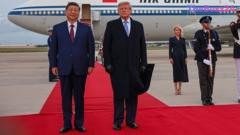
Ahead of the pivotal presidential summit between Donald Trump and Xi Jinping, American companies unexpectedly increased their orders for Chinese manufactured goods. This upward trend in monthly and annual metrics highlights corporate efforts to hedge against trade volatility and position themselves favorably for potential diplomatic breakthroughs between the world’s leading economic powers.
Survey data compiled across nearly 1,300 Chinese enterprises revealed a notable rebound in export sentiment. The index tracking U.S.-bound orders surged into positive territory after lingering in negative zones, reflecting an immediate improvement in China’s relative tariff landscape. Despite this localized surge in bilateral trade, broader domestic and international export metrics for China continued to lag behind historical performance benchmarks.
The surge in demand coincided with mutual agreements to temporarily extend trade truces, freeze planned port levies, and pause strict export controls on critical minerals. Although prevailing tariff rates on imported Chinese merchandise remain significantly higher than those applied to other global trade partners, these recent diplomatic concessions have provided temporary relief for supply chain managers anticipating a more stable regulatory environment.
Industry analysts note that neither Washington nor Beijing currently benefits from escalating trade hostilities. Future diplomatic engagements, including upcoming multilateral summits, will likely focus on securing long-term commitments regarding agricultural purchases, mineral supply chains, and regional stability, signaling a cautious path forward for international commerce.
Key Takeaways
- American companies unexpectedly ramped up orders for Chinese goods prior to the presidential summit.
- Survey indicators measuring U.S.-bound demand rebounded significantly compared to previous periods.
- Temporary trade truce extensions and paused tariffs helped alleviate near-term pressure on exporters.
Editor’s Analysis & Impact
The unexpected spike in U.S. orders for Chinese goods ahead of the presidential summit underscores the profound sensitivity of global supply chains to geopolitical signaling. While corporations are clearly taking advantage of temporary trade truces and delayed tariff implementations, the underlying structural challenges—such as elevated average tariff rates and subdued broader domestic demand in China—remain unresolved. This dynamic suggests that businesses are engaging in tactical inventory buffering rather than long-term strategic realignment. Looking ahead, the durability of this trade thaw will depend heavily on whether subsequent diplomatic meetings yield permanent regulatory frameworks or merely kick the can down the road. Continued vigilance is warranted for supply chain managers operating across the trans-Pacific corridor.
Frequently Asked Questions
Q: Why did American businesses increase orders for Chinese goods?
A: Companies increased orders to position themselves for a friendlier outcome at the summit and to take advantage of temporary trade truce extensions that paused certain tariffs and export controls.
Q: What were the primary outcomes of the recent trade discussions?
A: The two countries agreed to extend a trade truce by two months, suspend restrictive controls on rare earth exports, hold off on higher port fees, and delay threatened tariffs related to industrial overcapacity.
Q: How do current tariff rates compare to historical norms?
A: The effective U.S. tariff rate on Chinese goods remains at approximately 23%, which is still significantly higher than the average levies imposed on other major trading partners.
AI Disclosure: This article is based on verified data and official reports. Our Team and AI have cross-referenced every financial detail with primary sources to ensure total accuracy.
More from this Category