Tragic End for ‘Hope’: Controversially Rescued Whale Found Dead Off Danish Coast
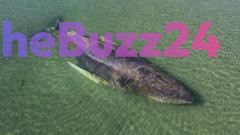
A whale that captured international attention during a highly debated, privately funded rescue operation has been found dead near the Danish island of Anholt. Spotted floating in the waters separating Denmark and Sweden, the carcass is currently being monitored by regional environmental authorities. While official identification is still pending, local officials believe the conditions are right to confirm whether the remains belong to the same marine mammal that rescuers desperately tried to save weeks ago.
The whale, known to the public and media as “Hope” or “Timmy,” initially became stranded on Germany’s Timmendorfer Beach in late March. Following several unsuccessful government-led attempts to return the animal to deep water, private entrepreneurs Karin Walter-Mommert and Walter Gunz took matters into their own hands. They funded a private mission to transport the whale out to sea using a barge. However, the initiative drew sharp criticism from marine biologists and wildlife conservation groups, who warned that the animal was far too weak to survive the ordeal.
The Danish Environmental Protection Agency has announced that it does not plan to retrieve the carcass or perform an autopsy, as the remains do not pose an immediate threat to the local ecosystem. Nevertheless, authorities have issued a strong warning to the public to stay clear of the area. Beyond the biological hazards of disease transmission, officials cautioned that decomposing marine mammals can explode due to the buildup of internal gases.
Key Takeaways
- A whale previously rescued in a controversial private operation has been found dead near the Danish island of Anholt.
- The whale, nicknamed 'Hope,' was moved to sea on a barge by private entrepreneurs after government efforts failed, drawing criticism from marine experts.
- Danish authorities have warned the public to stay away from the carcass due to health risks and the potential for gas-induced explosions.
Editor’s Analysis & Impact
This tragic outcome highlights a growing tension in wildlife conservation: the clash between emotional, well-meaning public interventions and established scientific protocols. While the private rescue of ‘Hope’ by entrepreneurs Karin Walter-Mommert and Walter Gunz was driven by compassion, it bypassed the warnings of marine biologists who argued the animal was already too weak to survive. This incident is likely to spark tighter regulations regarding private interference with stranded marine life. Moving forward, governments may implement stricter legal frameworks to prevent unauthorized rescue attempts, ensuring that trained veterinary and marine experts dictate the course of action. Ultimately, the event serves as a somber reminder that passion must be balanced with scientific reality when dealing with distressed wildlife.
Frequently Asked Questions
Q: Why was the private rescue of the whale controversial?
A: Marine experts and wildlife organizations warned that the whale was severely weakened and highly unlikely to survive in the open ocean, arguing that the barge transport was prolonged and stressful for the dying animal.
Q: What are the dangers of approaching a dead whale carcass?
A: Decomposing whales pose significant health risks, including the transmission of diseases. Additionally, the buildup of internal gases during decomposition can cause the carcass to suddenly explode.
Q: Will there be an investigation or autopsy on the whale?
A: The Danish Environmental Protection Agency has stated there are currently no plans to conduct a necropsy or remove the carcass, as it does not pose an immediate environmental hazard.
AI Disclosure: This article is based on verified data and official reports. Our Team and AI have cross-referenced every financial detail with primary sources to ensure total accuracy.
More from this Category