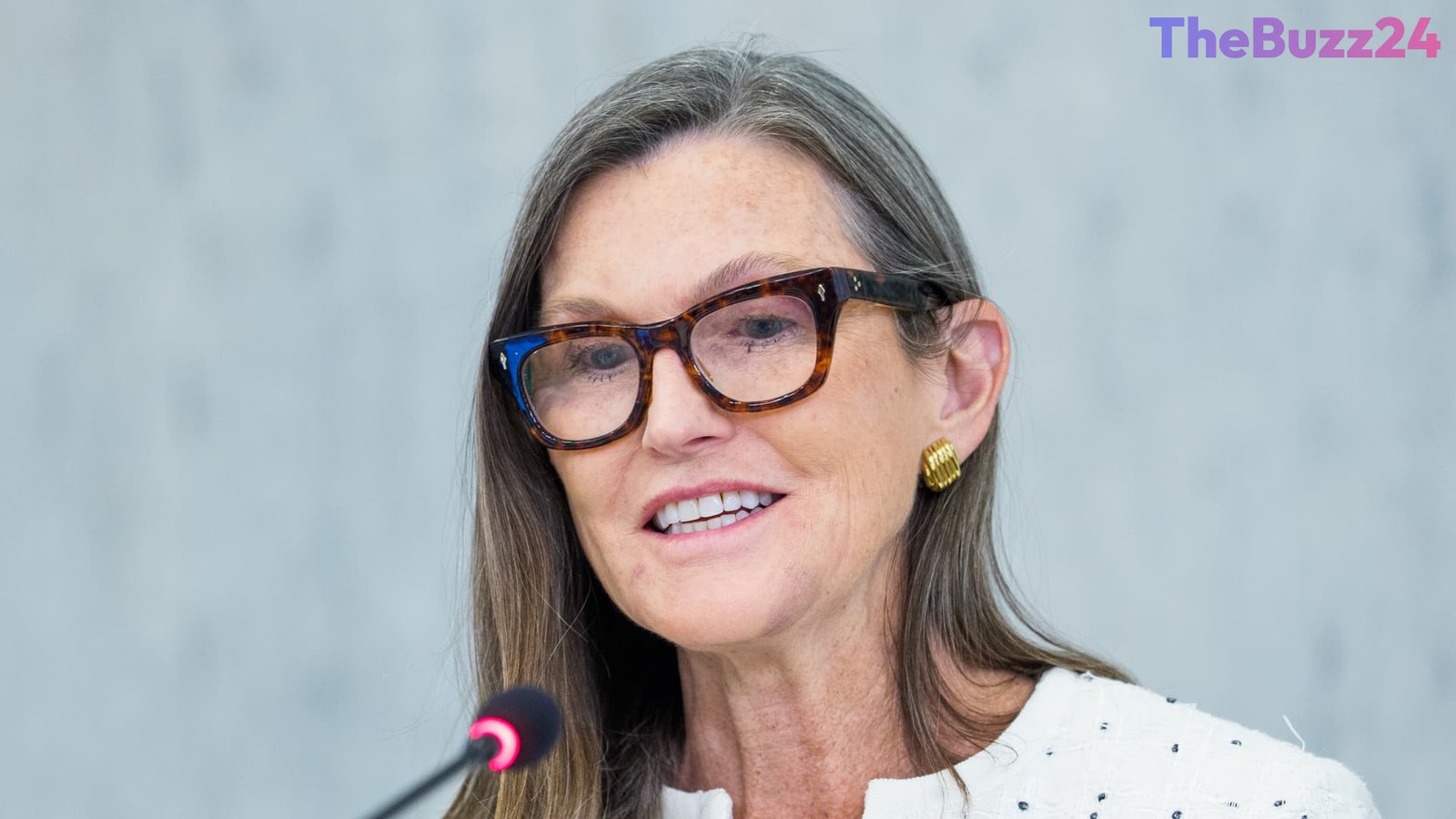
Why Market Panic is Actually a Bullish Sign, According to Cathie Wood
Financial markets have experienced significant turbulence recently, with U.S. equities enduring a sharp sell-off led by artificial intelligence-related stocks and shifting political landscapes. Despite the growing anxiety that pushed the tech-heavy Nasdaq Composite temporarily into correction territory before a modest recovery, Ark Invest CEO Cathie Wood remains thoroughly unfazed. Rather than viewing widespread investor apprehension as a negative signal, she contends that a pervasive ‘wall of worry’ is precisely what validates the durability of the current bull market.
Drawing comparisons to past financial eras, Wood noted that the infamous 1990s tech and telecom bubble was characterized by unchecked euphoria and an assumption that prices would rise indefinitely. In contrast, the current artificial intelligence trade has faced skepticism and scrutiny from its inception. Investors have continuously questioned the massive capital expenditures, cash flow demands, rising corporate debt, and circular financing models employed by tech giants. According to Wood, this constant state of unease among market participants prevents the kind of dangerous overexuberance that typically precedes a catastrophic crash.
The ongoing market correction is also being heavily influenced by macroeconomic factors, particularly the bond market. Rising interest rates and climbing bond yields—exacerbated by global geopolitical tensions—have forced fixed-income investors into the high-capital-cost world of artificial intelligence infrastructure. Because modern tech revolutions require significantly higher fixed costs compared to the low-margin software applications of previous decades, bond investors are demanding greater compensation. Nevertheless, Wood believes that AI hyperscalers are well-positioned to absorb these costs if taking on debt accelerates their growth trajectories.
Looking ahead, Wood advises investors to navigate periods of heightened volatility by consolidating capital into their highest-conviction assets. By taking profits during market rallies and selectively reinvesting during downturns, portfolios can weather the inevitable storms of a technological revolution. As innovations like autonomous robotaxis, advanced AI agents, and even space-based data centers continue to mature, she anticipates that the broader equity rally will resume its upward trajectory as the transformative nature of these technologies becomes undeniable.
Key Takeaways
- Ark Invest CEO Cathie Wood views widespread market worry as a bullish indicator that guarantees the longevity of the current bull run.
- Unlike the unchecked euphoria of the 1990s tech bubble, the current AI trade has faced continuous scrutiny over capital expenditures and cash flow.
- Rising interest rates and bond yields have introduced bond investors into the high-fixed-cost ecosystem of modern technology infrastructure.
Editor’s Analysis & Impact
Cathie Wood’s perspective highlights a psychological shift in how modern tech cycles are evaluated. While traditional analysts view high capital expenditures, debt reliance, and rising bond yields as red flags, innovators see them as necessary growing pains of an industrial-scale technological revolution. The involvement of bond investors in tech financing marks a departure from the asset-light software booms of the past, linking macroeconomic monetary policy much closer to tech valuations. If high-conviction players like SpaceX and major AI hyperscalers can maintain growth rates that outpace rising borrowing costs, the market correction may indeed prove to be a temporary consolidation rather than the end of the cycle.
Frequently Asked Questions
Q: Why does Cathie Wood welcome market anxiety?
A: Wood believes that widespread worry prevents the kind of unbridled euphoria and speculative excess that typically characterize dangerous market bubbles, signaling a healthier and more durable bull market.
Q: What factors contributed to the recent market sell-off?
A: The recent volatility was driven by concerns over artificial intelligence capital expenditures, political shifts affecting data center construction, and rising interest rates and bond yields in the fixed-income market.
AI Disclosure: This article is based on verified data and official reports. Our Team and AI have cross-referenced every financial detail with primary sources to ensure total accuracy.
More from this Category