California’s ‘Galapagos’ Under Siege: Massive Wildfire Ravages Santa Rosa Island
A significant wildfire has swept across Santa Rosa Island, a vital part of California’s Channel Islands National Park, leading to the complete closure of the area to all visitors. The blaze, which ignited in mid-May 2026, has already consumed more than 16,000 acres of diverse landscapes, including coastal sage scrub, grasslands, and island chaparral. This island, often likened to the “Galapagos of North America” due to its exceptional biodiversity, now faces an urgent threat to its unique species from the rapidly advancing flames.
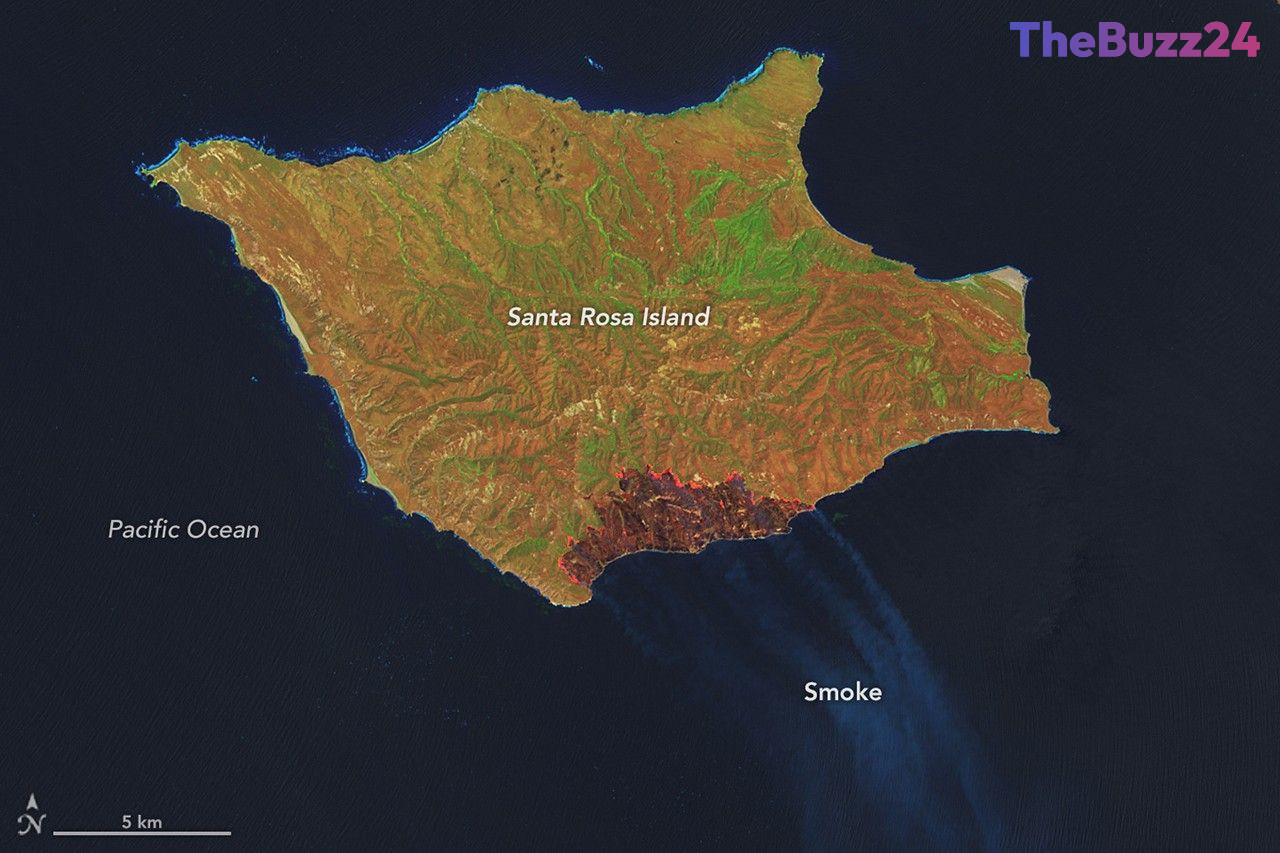
Advanced satellite surveillance, utilizing data from the Landsat 9 mission, has provided stark imagery of the fire’s destructive path. False-color visuals clearly illustrate the scorched terrain and the active fire front as it continues its spread through the island’s southeastern quadrant. As of May 19, emergency crews are grappling with a largely uncontained inferno, with dense smoke plumes drifting across the Pacific Ocean, complicating efforts to bring the situation under control.
While investigations are ongoing to pinpoint the exact origin, authorities have confirmed the fire was human-caused. Conservationists are particularly alarmed by the immediate danger posed to rare stands of Torrey pines. These distinctive trees naturally exist in only two global locations: Santa Rosa Island and a small coastal area near San Diego. As firefighters persist in their battle against the conflagration, the paramount concern for park management and environmental scientists remains the long-term recovery of the island’s delicate and isolated ecosystem.
Key Takeaways
- A human-caused wildfire has devastated over 16,000 acres on Santa Rosa Island, forcing the closure of Channel Islands National Park.
- The blaze poses an imminent threat to the island's unique biodiversity, including the globally rare Torrey pine population.
- Satellite monitoring confirms the fire remains largely uncontained, with significant challenges for containment efforts.
Editor’s Analysis & Impact
The extensive destruction on Santa Rosa Island underscores the extreme vulnerability of isolated ecosystems to human-induced environmental incidents. As a critical natural laboratory for rare species, the habitat loss could inflict irreversible damage on local biodiversity. This event highlights the growing importance of sophisticated remote sensing and satellite technology for early wildfire detection, especially in remote or protected zones where traditional response times are often delayed. Moving forward, this incident will likely prompt a re-evaluation of human access protocols in ecologically sensitive national parks. The island’s long-term recovery hinges significantly on post-fire restoration initiatives and the resilience of the Torrey pine stands against immediate environmental stress.
Frequently Asked Questions
Q: What makes Santa Rosa Island ecologically significant?
A: Santa Rosa Island is often called the 'Galapagos of North America' due to its unique and isolated ecosystem, hosting numerous endemic plant and animal species, including rare Torrey pines, that have evolved distinctly.
Q: How large is the wildfire on Santa Rosa Island?
A: As of May 19, 2026, the wildfire has consumed over 16,000 acres of terrain, and emergency crews are still working to contain the blaze.
Q: What is the current status for visitors to Santa Rosa Island?
A: Santa Rosa Island, part of Channel Islands National Park, has been completely closed to all visitors due to the ongoing wildfire and safety concerns.
AI Disclosure: This article is based on verified data and official reports. Our Team and AI have cross-referenced every financial detail with primary sources to ensure total accuracy.
More from this Category