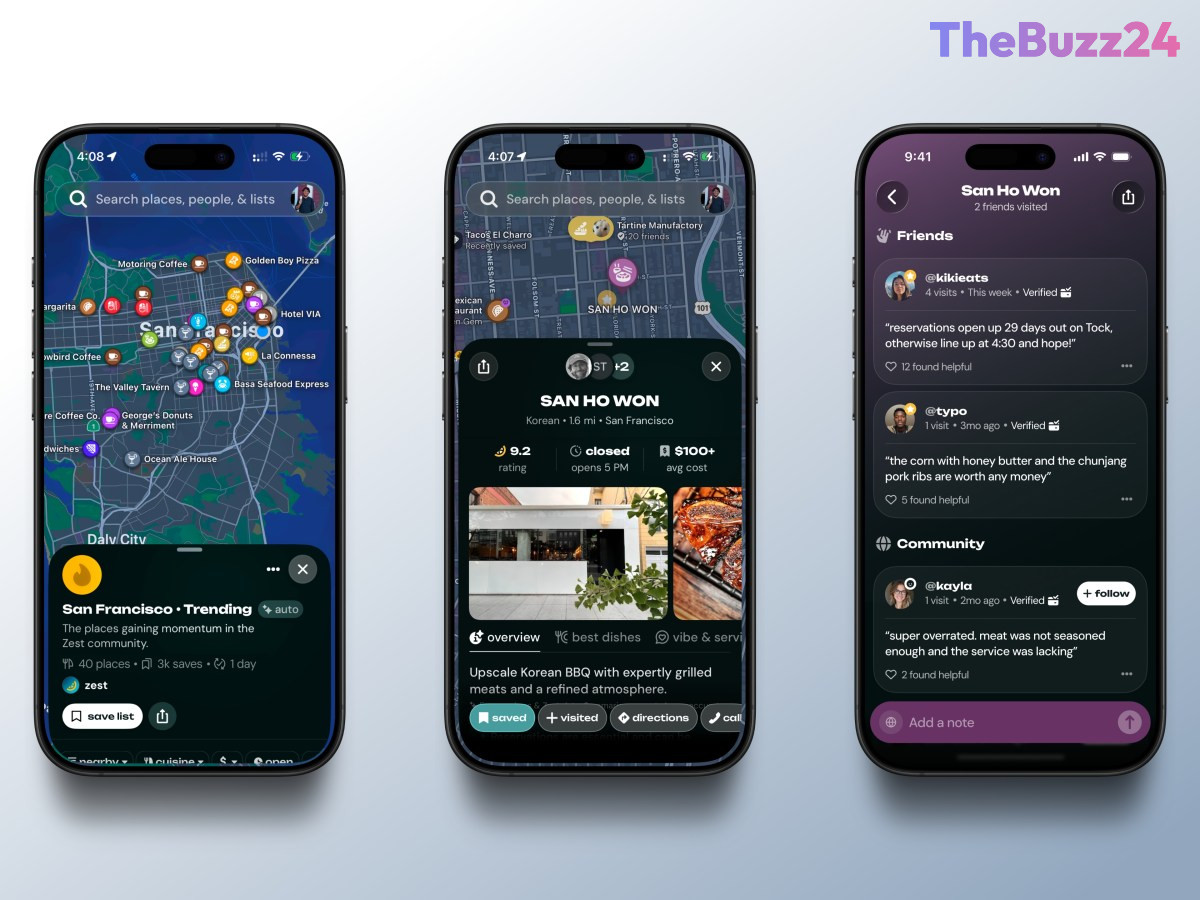
Zest Launches AI-Powered Discovery App to Revolutionize Restaurant Recommendations
A new startup, Zest, has officially launched its restaurant discovery platform, aiming to transform how diners find their next favorite meal. By leveraging real-world transaction data and artificial intelligence, the app provides personalized suggestions based on where users actually spend their time and money, rather than relying on subjective social media posts or potentially biased reviews. Founded in late 2024, the company has already secured $1.8 million in pre-seed funding from notable investors including Alexis Ohanian’s 776 and Kindred Ventures.
The core functionality of Zest relies on users linking their credit cards via Plaid, a secure financial services provider. The app automatically imports dining and drinking transactions to build a personal map of frequented spots, intentionally filtering out fast-food chains to focus on more curated, local experiences. This data-driven approach allows the app to learn individual preferences over time, offering tailored recommendations that reflect a user’s genuine habits. Since its public launch, the platform has already seen significant traction, recording over 100,000 visits.
Beyond personal tracking, Zest functions as a social network for food enthusiasts. Users can follow friends or curated profiles to discover new dining locations, whether in their home city or while traveling. To further enhance its utility, the app integrates over 80 million reviews from diverse sources, ranging from prestigious guides like Michelin to community-driven platforms like Reddit. The team is also rolling out new features, including freeform user notes and a ‘Fresh Picks’ discovery tool, with long-term plans to expand the platform’s scope into retail and other lifestyle categories.
Co-founders Mario Gomez-Hall and Alex Moller emphasize that the platform is designed to highlight authentic, ‘hole-in-the-wall’ gems rather than just high-profile establishments. By focusing on frequency and actual spend, Zest aims to foster a more genuine connection between users and their local culinary scenes, moving away from the ‘social posturing’ often associated with traditional dining apps.
Key Takeaways
- Zest uses verified credit card transaction data to provide personalized restaurant recommendations based on actual user habits.
- The app integrates over 80 million reviews from various sources to provide context and helpful tips for dining out.
- The startup has secured $1.8 million in pre-seed funding and plans to eventually expand its discovery model beyond food into retail and shopping.
Editor’s Analysis & Impact
Zest represents a significant shift in the ‘discovery’ market by moving away from self-reported preferences toward behavioral data. By utilizing financial transaction history, the platform bypasses the ‘influencer’ bias that plagues current review sites, offering a more authentic look at where people actually eat. The industry impact could be substantial; if successful, Zest could force competitors to integrate more robust data-sharing features or risk obsolescence. However, the company faces a delicate balance regarding user privacy and the ‘creepiness’ factor of tracking spending habits. Its long-term success depends on its ability to scale beyond food and become a comprehensive lifestyle discovery engine. If it can maintain user trust while providing high-value, hyper-local recommendations, it is well-positioned to disrupt the local search and recommendation landscape currently dominated by legacy platforms.
Frequently Asked Questions
Q: How does Zest ensure the security of my financial data?
A: Zest uses Plaid, a widely trusted financial services provider, to import transaction data. The app specifically filters for food and drink categories and does not track other types of spending.
Q: Does Zest include fast-food chains in its recommendations?
A: No, the app is designed to filter out fast-casual and fast-food chains to focus on more unique, local, and 'hole-in-the-wall' dining experiences.
AI Disclosure: This article is based on verified data and official reports. Our Team and AI have cross-referenced every financial detail with primary sources to ensure total accuracy.
More from this Category