British Elite Forces Execute Emergency Parachute Drop to Remote Atlantic Outpost
A specialized unit from the British Army’s Pathfinders Platoon has completed a high-stakes emergency deployment to Tristan da Cunha, the world’s most isolated inhabited overseas territory. The mission was triggered by an urgent medical crisis involving a local resident suspected of contracting hantavirus, a condition potentially linked to a recent health outbreak aboard the cruise ship MV Hondius.
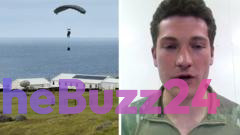
To reach the remote island, the elite team—which included a dedicated doctor and an intensive care nurse—conducted a tandem parachute jump into the territory. Captain George Lacey, who spearheaded the operation from Colchester Garrison, noted that the mission was fraught with difficulty, citing severe wind conditions that made the aerial insertion particularly hazardous. The team successfully delivered vital medical supplies and equipment necessary to stabilize the patient upon arrival.
Currently, the medical personnel are stationed on the island to provide ongoing care and monitor the patient’s recovery. Given the logistical constraints of the island’s geography and the lack of infrastructure for a standard aerial extraction, the team is coordinating with authorities to determine the safest method for their eventual departure. The operation highlights the unique capabilities of the Pathfinders in responding to humanitarian emergencies in the most inaccessible corners of the globe.
Key Takeaways
- British Pathfinders performed an emergency parachute jump to Tristan da Cunha to treat a patient with suspected hantavirus.
- The medical team, including a doctor and nurse, successfully delivered critical supplies despite challenging high-wind conditions.
- The team remains on the island to provide care while awaiting logistical arrangements for their return from the remote territory.
Editor’s Analysis & Impact
This operation underscores the critical role of specialized military units in providing humanitarian aid to isolated regions where traditional medical infrastructure is non-existent. The deployment to Tristan da Cunha serves as a case study in logistical agility, demonstrating how elite forces can bridge the gap between emergency response and civilian healthcare in extreme environments. From a broader perspective, this mission highlights the vulnerability of remote territories to health outbreaks originating from international travel, such as cruise ship activity. As global connectivity increases, the ability of national militaries to project medical expertise into isolated areas will likely become a more frequent requirement. Future implications suggest a need for enhanced pre-positioned medical stockpiles in overseas territories to reduce the reliance on high-risk, rapid-response aerial deployments.
Frequently Asked Questions
Q: Why was the British Army deployed to Tristan da Cunha?
A: The team was deployed to provide urgent medical care to a resident suffering from a suspected case of hantavirus.
Q: How did the medical team reach the island?
A: The team, including medical professionals and paratroopers, reached the island via a tandem parachute jump.
AI Disclosure: This article is based on verified data and official reports. Our Team and AI have cross-referenced every financial detail with primary sources to ensure total accuracy.
More from this Category