Mapping the Heavens: TESS Unveils Unprecedented All-Sky Exoplanet Catalog
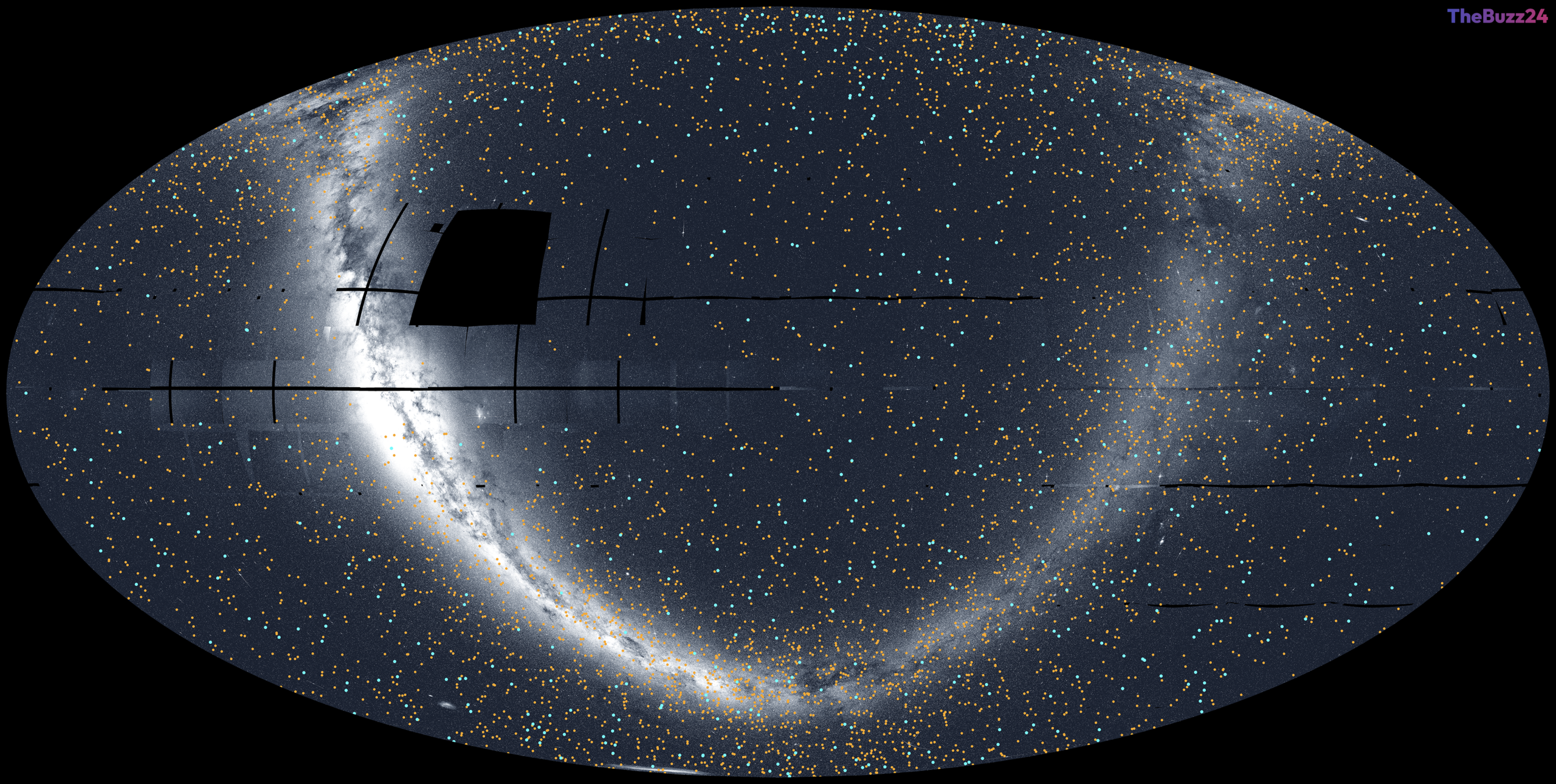
A monumental achievement in modern astronomy has been reached with the release of a comprehensive all-sky map, offering the most detailed view of our cosmic neighborhood to date. Spanning eight years of continuous observation, this expansive mosaic documents nearly 6,000 distinct locations where exoplanets have been confirmed or identified as potential candidates. The dataset, which encompasses observations concluded in September 2025, provides a transformative look at the diversity of planetary systems existing beyond our own solar system.
The mission has fundamentally shifted our understanding of the galaxy, cataloging a vast array of worlds ranging from small, rocky spheres to massive gas giants. Among the most significant findings are several planets situated within the ‘habitable zone’ of their host stars, where conditions might support liquid water. Currently, the repository includes 679 confirmed exoplanets and over 5,100 candidates awaiting further verification, showcasing a variety of environments from volcanic terrains to complex multi-sun systems.
To construct this high-resolution panorama, researchers stitched together 96 individual sectors of the sky captured by the mission’s advanced camera array. By meticulously monitoring minute fluctuations in starlight caused by orbiting bodies, the team successfully mapped vast regions of the galaxy. In addition to identifying new worlds, the imagery provides stunning views of the Milky Way’s structure and the nearby Magellanic Clouds.
This extensive data collection now serves as a foundational resource for the global astrophysical community. Beyond the search for exoplanets, the information is being utilized to investigate the formation of young stellar clusters and the trajectories of near-Earth asteroids. As scientists continue to parse this repository, the mission remains a critical instrument in the ongoing quest to understand the universe and the potential for life elsewhere.
Key Takeaways
- A new all-sky map documents nearly 6,000 confirmed and candidate exoplanets discovered over eight years of observation.
- The dataset includes 679 confirmed planets, with many located in habitable zones where liquid water could potentially exist.
- The mission data is now being used to study stellar cluster formation and near-Earth asteroid movements, serving as a vital resource for future research.
Editor’s Analysis & Impact
The release of this comprehensive exoplanet map marks a pivotal moment in space exploration, shifting the focus from individual discovery to large-scale statistical analysis of the galaxy. By providing a standardized, high-resolution dataset, the mission lowers the barrier to entry for researchers studying planetary formation and atmospheric composition. The industry impact is significant; it provides the necessary ‘target list’ for next-generation observatories, such as the James Webb Space Telescope, to conduct detailed spectroscopic analysis. Looking ahead, this data will likely accelerate the identification of Earth-like analogs, potentially narrowing the search for biosignatures. The broader implication is a transition toward a more systematic, data-driven approach to astrobiology, moving us closer to answering fundamental questions about the prevalence of life in the universe.
Frequently Asked Questions
Q: What is an exoplanet?
A: An exoplanet is any planet that orbits a star located outside of our own solar system.
Q: What is the 'habitable zone' mentioned in the report?
A: The habitable zone, often called the 'Goldilocks zone,' is the range of orbits around a star where a planet's surface temperature may allow for the existence of liquid water, a key ingredient for life as we know it.
AI Disclosure: This article is based on verified data and official reports. Our Team and AI have cross-referenced every financial detail with primary sources to ensure total accuracy.
More from this Category