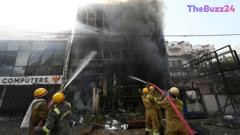
Tragic Fire in Lucknow Claims 15 Lives, Sparking Urgent Safety Probe
A devastating fire in the northern Indian city of Lucknow has resulted in the deaths of at least 15 people, prompting an immediate government inquiry into the safety standards of the commercial building. The blaze, which erupted on Monday afternoon in the densely populated Aliganj area, trapped numerous individuals inside a structure that housed a ground-floor pet shop and an animation and 3D gaming center on the upper levels.
Witnesses reported harrowing scenes as the fire quickly engulfed the building’s only staircase, effectively sealing off the primary exit. Trapped occupants were forced to resort to desperate measures, with some jumping from windows and others attempting to descend via power cables to escape the thick, suffocating smoke. Rescue operations were hampered by the building’s lack of emergency exits, forcing firefighters to access the terrace through an adjacent property and breach a side wall to reach those inside.
Preliminary reports suggest that a biometric entry system may have further hindered evacuation efforts, preventing people from exiting the premises quickly. In the wake of the tragedy, authorities have suspended four public officials and arrested four individuals as part of an ongoing investigation into criminal negligence. The incident has reignited a national conversation regarding the enforcement of fire safety regulations in India’s rapidly growing urban centers, where violations in commercial buildings remain a persistent and deadly issue.
Key Takeaways
- At least 15 people died in a fire at a multi-use commercial building in Lucknow, India.
- The building lacked adequate emergency exits, and a biometric security system reportedly complicated evacuation efforts.
- Authorities have launched an official inquiry, suspended four officials, and arrested four individuals in connection with the incident.
Editor’s Analysis & Impact
The Lucknow tragedy highlights a systemic failure in urban planning and regulatory oversight within India’s rapidly densifying commercial districts. The recurring nature of these fires—often involving buildings that bypass safety codes—suggests that current enforcement mechanisms are insufficient to deter negligence. From a market perspective, this incident will likely trigger a wave of mandatory fire safety audits across similar commercial hubs, potentially increasing operational costs for small and medium-sized enterprises. In the long term, the government is under immense pressure to modernize building codes and implement stricter, technology-integrated safety inspections. Failure to address these structural vulnerabilities will continue to pose significant risks to human life and could lead to more stringent, albeit disruptive, regulatory crackdowns that impact the local business environment.
Frequently Asked Questions
Q: What caused the fire in the Lucknow building?
A: The exact cause of the fire is currently under investigation by local authorities.
Q: Why were people unable to escape the building?
A: The fire engulfed the building's only staircase, cutting off the primary exit. Additionally, reports indicate that a lack of emergency exits and a biometric entry system hindered the ability of those inside to evacuate safely.
AI Disclosure: This article is based on verified data and official reports. Our Team and AI have cross-referenced every financial detail with primary sources to ensure total accuracy.
More from this Category