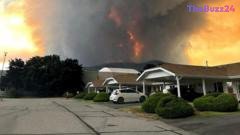
Fast-Moving Wildfires Devastate British Columbia’s Okanagan Valley, Forcing Thousands to Evacuate
Unprecedented wildfire activity continues to ravage Canada’s British Columbia region, where the rapidly expanding Bald Range wildfire has scorched over 53 square miles (136 square kilometers) since igniting over the weekend. The disaster has triggered widespread emergency measures, leaving more than 12,000 residents under mandatory evacuation orders as raging flames threaten property across the iconic Okanagan Valley. Tragically, authorities confirmed at least one fatality—an 80-year-old woman who lost her life while attempting to escape the approaching inferno.
Longtime residents accustomed to seasonal fire threats describe unprecedented speed and destruction this year. In communities like Peachland and Summerland, families were forced to flee within hours of seeing distant smoke, often unable to confirm whether their homes survived. British Columbia Premier David Eby declared a provincial state of emergency, warning that dry lightning, elevated temperatures, and strong winds threaten to ignite additional blazes and accelerate existing fire fronts.
Local municipalities are bracing for catastrophic property damage, with civic leaders acknowledging that hundreds of homes may have been compromised or entirely destroyed. Community volunteers have stepped in to coordinate emergency livestock and pet rescues, retrieving dozens of horses and other animals stranded by sudden evacuations. The crisis coincides with severe drought conditions; water levels at Okanagan Lake have dropped to historic lows not recorded in over three decades.
The regional emergency is part of a broader wildfire trend affecting western territories. Firefighters across the province are currently battling more than 100 active blazes, with dozens starting in recent days alone. Environmental experts point to shifting global weather patterns—specifically prolonged dry spells and elevated temperatures—as primary drivers escalating the frequency, scale, and intensity of wildfires across North America.
Key Takeaways
- The Bald Range wildfire expanded rapidly to over 53 square miles, forcing the mandatory evacuation of more than 12,000 residents in British Columbia.
- A provincial state of emergency has been declared as dry lightning, severe drought, and strong winds fuel over 100 active fires across the region.
- Local volunteers are actively conducting emergency rescues for stranded livestock as municipal leaders prepare residents for significant property losses.
Editor’s Analysis & Impact
The escalating severity of wildfires across Western North America highlights the increasing economic and operational strain on regional emergency response frameworks and public infrastructure. Prolonged droughts and extreme weather patterns are shortening recovery windows between fire seasons, severely impacting real estate stability, agricultural output, and tourism revenues in vulnerable regions like the Okanagan Valley. Furthermore, property insurance markets are likely to experience substantial recalibrations, with rising premiums or restricted coverage in high-risk zones. Addressing these persistent environmental threats will necessitate expanded public sector investment in modern forest management practices, advanced early-warning systems, and climate-resilient community planning.
Frequently Asked Questions
Q: How many residents have been displaced by the British Columbia wildfires?
A: More than 12,000 residents in the Okanagan area have been placed under mandatory evacuation orders as fire crews work to contain the blazes.
Q: What factors are driving the rapid spread of the fires?
A: A combination of historic drought conditions, record-low lake water levels, high temperatures, dry lightning, and strong winds have fueled the rapid expansion of the flames.
Q: What is the status of local emergency responses?
A: A provincial state of emergency has been declared in British Columbia, enabling emergency personnel to coordinate widespread evacuations and deploy firefighters across more than 100 active incidents.
AI Disclosure: This article is based on verified data and official reports. Our Team and AI have cross-referenced every financial detail with primary sources to ensure total accuracy.
More from this Category