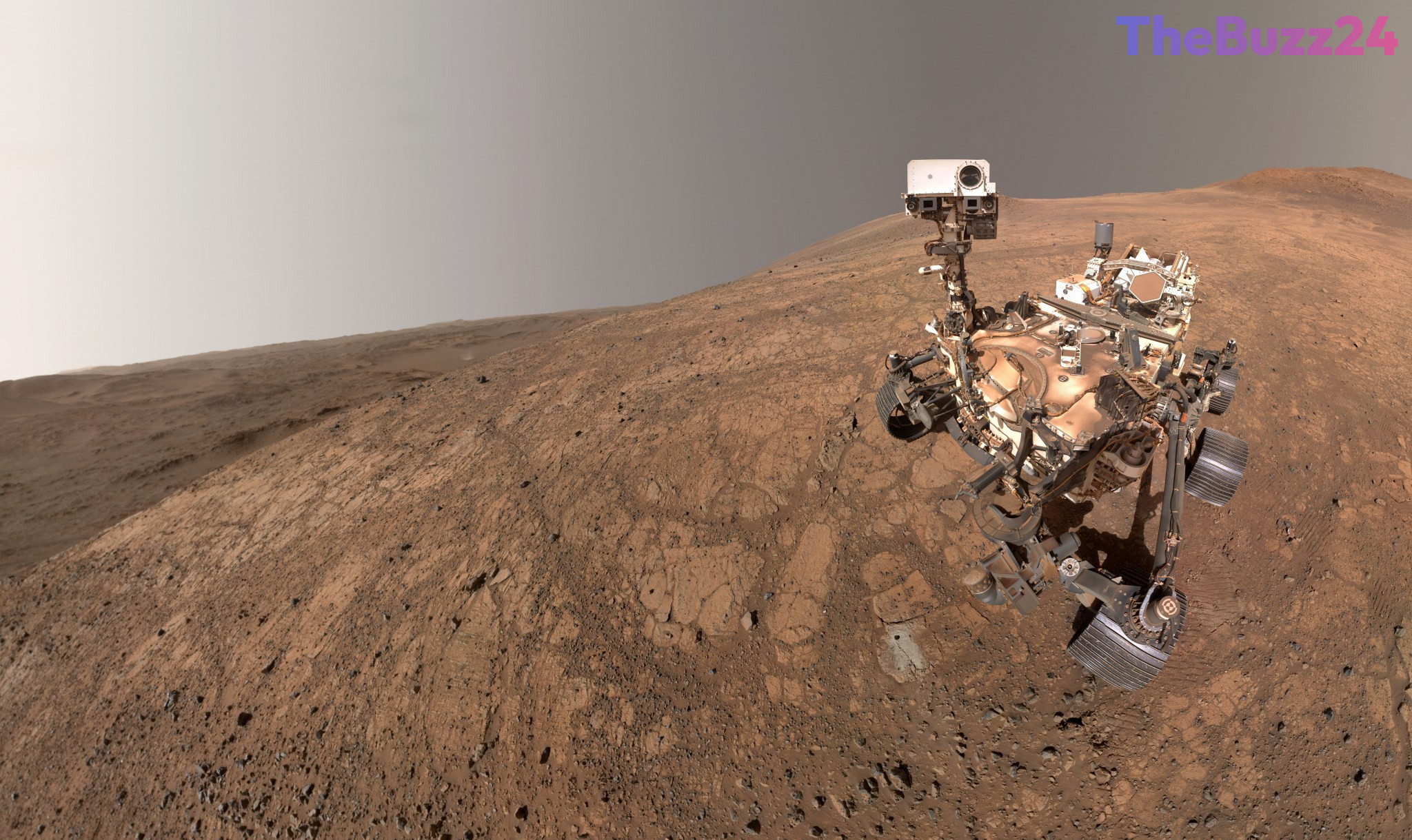
Ancient Martian Bedrock Reveals a Violent History of Asteroid Bombardment
The Perseverance rover has uncovered a significant geological record on the rim of Mars’ Jezero Crater, providing scientists with a rare look into the solar system’s tumultuous early history. The discovery centers on a 245-foot-thick sequence of layered rock, known as the ‘Broom Point member,’ which is estimated to be over 3.9 billion years old. Unlike Earth, where plate tectonics have long since recycled and erased the planet’s earliest crust, Mars has preserved this ancient terrain, offering a unique window into a period of intense cosmic activity.
Data collected by the rover’s suite of instruments indicates that the rock layers were formed by repeated, high-energy asteroid impacts. The presence of breccias—rocks composed of angular fragments—interspersed with fine-grained dust suggests a cycle of destruction and deposition. Furthermore, the discovery of glassy beads within these layers points to molten material being ejected during massive collisions, similar to the debris patterns observed from the asteroid impact that caused the extinction of the dinosaurs on Earth.
Researchers believe the site was shaped by a ‘one-two punch’ of cosmic events. The initial formation of the massive Isidis Basin likely tilted the original rock layers to extreme angles, while a subsequent, smaller impact created the Jezero Crater, further fracturing and uplifting the terrain. The rover has collected core samples from this region, which, if returned to Earth for laboratory analysis, could provide precise dating for these ancient events, effectively acting as a ‘cosmic weather report’ from four billion years ago.
Key Takeaways
- The Perseverance rover identified a 3.9-billion-year-old rock formation on Mars that serves as a pristine record of early solar system asteroid impacts.
- The 'Broom Point' rock layers contain evidence of molten debris and high-energy collisions, suggesting a period of constant bombardment on early Mars.
- Scientists believe the unique, steeply tilted rock formations were caused by a sequence of two major asteroid impacts, including the creation of the Isidis Basin and the Jezero Crater.
Editor’s Analysis & Impact
The findings from the Perseverance rover represent a significant milestone in planetary science, effectively turning Mars into a ‘time capsule’ for the early solar system. Because Earth’s own geological record from this era has been largely destroyed by tectonic activity, the Martian data is essential for understanding the conditions that shaped the inner planets. The implications for future space exploration are profound; by dating these impact layers, researchers can better calibrate the timeline of the solar system’s development. Furthermore, the success of this mission underscores the critical importance of sample return initiatives. If these specific core samples are successfully retrieved, they will likely become the most valuable geological specimens in history, providing the empirical evidence needed to bridge the gap between theoretical models of early planetary formation and the physical reality of our cosmic neighborhood.
Frequently Asked Questions
Q: Why is the Broom Point member considered so important for scientists?
A: It is one of the oldest terrains ever examined by a rover, dating back over 3.9 billion years. Because Mars lacks plate tectonics, this site preserves a geological record that has been completely erased on Earth.
Q: How do scientists know these rocks were formed by asteroid impacts?
A: The presence of breccias, gas-bubble cavities indicating molten rock, and high concentrations of glassy beads are all characteristic signatures of high-energy impact events rather than volcanic activity.
AI Disclosure: This article is based on verified data and official reports. Our Team and AI have cross-referenced every financial detail with primary sources to ensure total accuracy.
More from this Category