Cosmic Archaeology: Hubble Uncovers Evidence of Ancient Milky Way Collision 11.8 Billion Years Ago
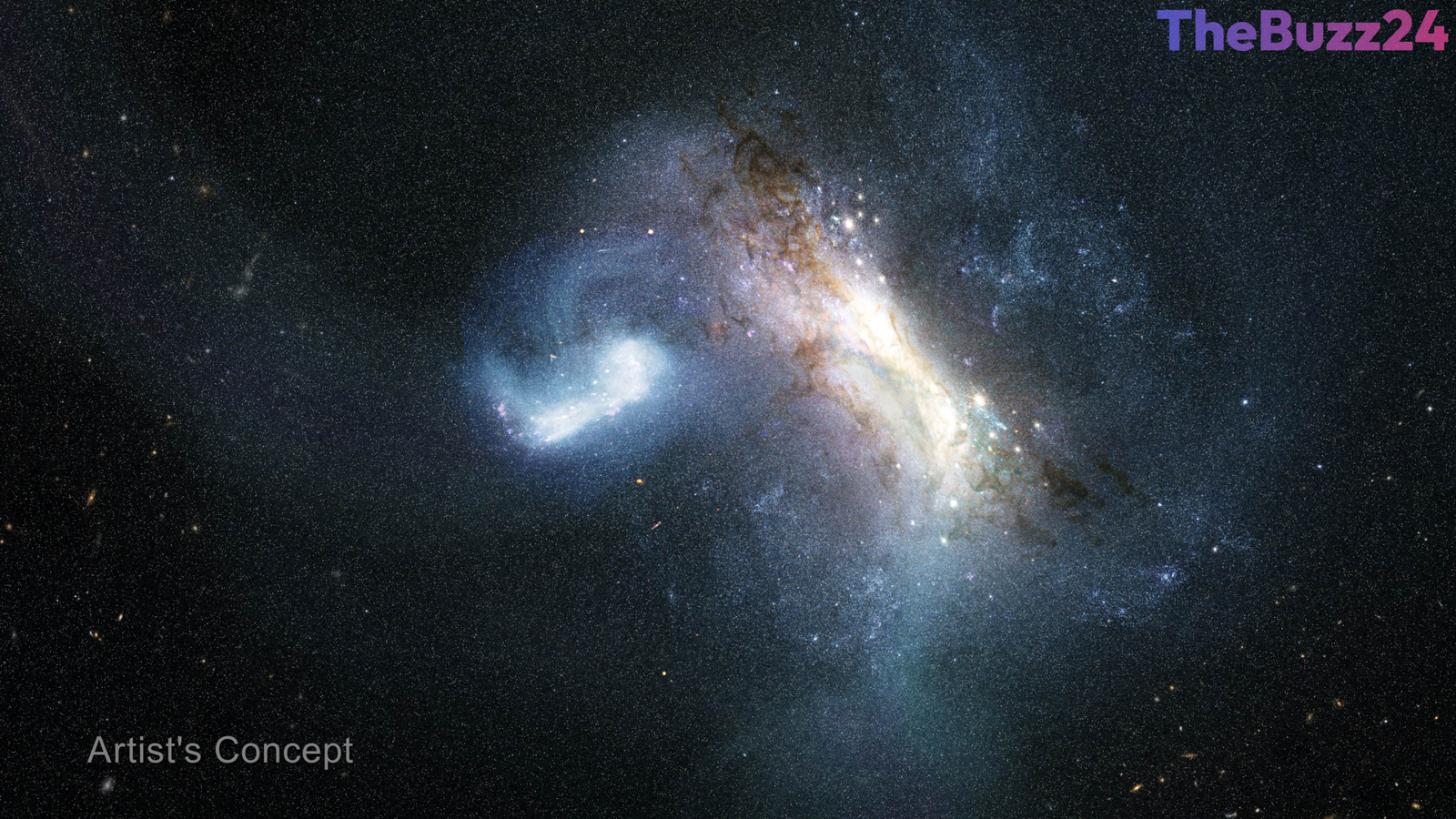
The Milky Way’s massive structure was forged through cosmic collisions, steadily assimilating smaller neighboring systems over billions of years. New observations from the Hubble Space Telescope have pushed our understanding of our galaxy’s formative timeline back by nearly two billion years, revealing definitive evidence of an ancient collision with a dwarf galaxy known as Low-energy-Kraken-Heracles (LKH).
Taking place roughly 11.8 billion years ago—just two billion years after the Big Bang—this colossal merger represented a fundamental building phase for our early galaxy. At the time of impact, LKH contained roughly 500 million solar masses in stars, contributing a significant fraction to the young, developing Milky Way. Previous studies recognized the Gaia-Sausage-Enceladus merger from 10 billion years ago and the ongoing Sagittarius dwarf interaction, but tracing collisions further back in time had proven extremely difficult due to billions of years of gravitational disruption.
To pierce through the chaotic fog of the deep cosmic past, astronomers examined 39 ancient globular star clusters situated within the inner 20,000 light-years of the galactic core. By pairing high-resolution Hubble imagery with astrometric datasets from the European Space Agency’s Gaia observatory, researchers measured the ages and chemical compositions, or metallicities, of these dense stellar swarms with exceptional precision.
The analysis isolated a distinct third population of globular clusters that did not originate inside our galaxy nor during the later Gaia-Sausage-Enceladus encounter. Instead, these stellar relics were carried in by LKH itself. This breakthrough demonstrates that external stellar populations played an indispensable role during the earliest architecture of the Milky Way, challenging older theories that early galactic evolution was driven solely by internally formed stars.
Key Takeaways
- Hubble Space Telescope observations confirm the Milky Way merged with a dwarf galaxy named LKH approximately 11.8 billion years ago.
- The discovery extends the recorded timeline of the Milky Way's major merger history 1.8 billion years farther back into cosmic time.
- Precise chemical and age analysis of inner globular clusters proves that early galactic growth relied heavily on assimilating stars born in external galaxies.
Editor’s Analysis & Impact
The discovery of the LKH merger marks a milestone in galactic archaeology, underscoring the enduring scientific value of long-running space observatories when paired with modern astrometric surveys like Gaia. By establishing that substantial external stellar mass was integrated into the Milky Way just two billion years after the Big Bang, astronomers must now recalibrate prevailing models of early galactic assembly and chemical evolution. This paradigm shift shows that hierarchical galactic mergers were active drivers of structure formation far earlier than previously confirmed. Moving forward, continued spectroscopic and high-resolution cluster surveys will be vital to mapping other elusive, deep-history cosmic collisions, offering deeper insight into how massive spiral galaxies evolve from early cosmic turbulence into stable, star-forming systems.
Frequently Asked Questions
Q: What is the LKH dwarf galaxy?
A: Low-energy-Kraken-Heracles (LKH) is an ancient dwarf galaxy containing approximately 500 million times the mass of the Sun in stars that collided with and was absorbed by the young Milky Way about 11.8 billion years ago.
Q: How did astronomers identify the ancient merger?
A: Researchers used the Hubble Space Telescope along with Gaia spacecraft data to measure the precise age and chemical makeup of 39 ancient globular clusters in the galactic core, isolating a group of stars that originated outside the Milky Way.
Q: Why is this discovery important for galactic evolution theories?
A: It provides concrete evidence that the earliest stages of the Milky Way were heavily shaped by mergers with external galaxies, rather than evolving exclusively from stars formed within our galaxy.
AI Disclosure: This article is based on verified data and official reports. Our Team and AI have cross-referenced every financial detail with primary sources to ensure total accuracy.
More from this Category