Mystery Comet 220P Dazzles Skywatchers with Unprecedented Brightness
Comet 220P/McNaught, a celestial body typically too faint for casual observation, has recently become a spectacular sight, captivating astronomers and amateur skywatchers alike. This periodic comet, usually requiring powerful telescopes to be discerned, has undergone two dramatic and unexpected outbursts this year, causing its luminosity to surge by an astonishing 20,000 times its normal brightness. As a result, it is now visible through binoculars and can be captured with long-duration camera exposures, offering a rare opportunity to witness its transformation.
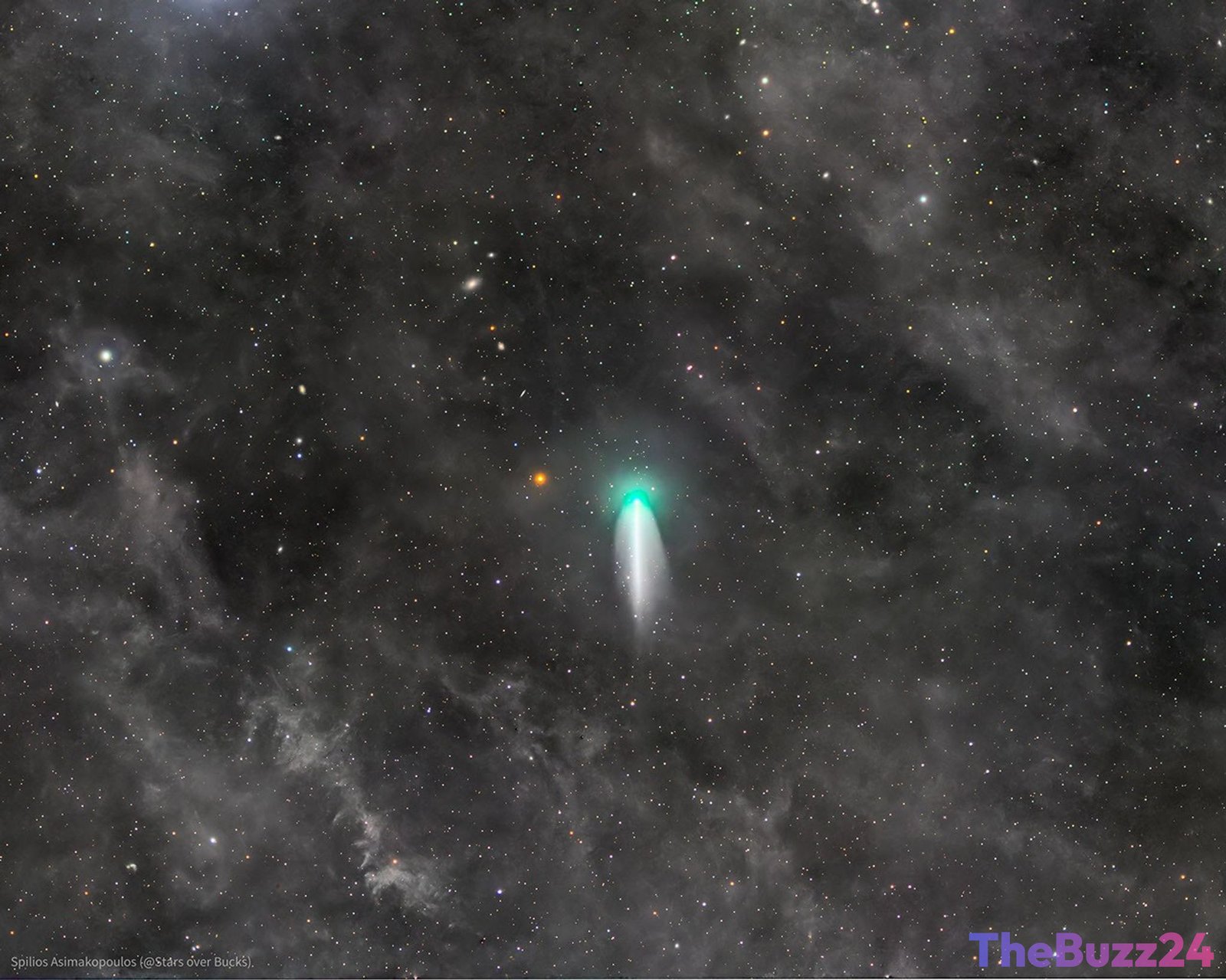
The comet maintains its regular elliptical orbit around the Sun, traversing a path between Mars and Jupiter and completing a full revolution in just over five years. A remarkable long-duration exposure, captured ten days ago from South Africa by astronomer Spilios Asimakopoulos, vividly showcases the comet’s current appearance: a distinct bright green head followed by a short, ethereal dust tail. This visual display underscores the profound change in its activity.
The precise reasons behind Comet 220P’s sudden and intense brightening remain a subject of scientific investigation. Leading hypotheses suggest that these powerful outbursts could be triggered by the rapid release of gases trapped beneath the comet’s icy surface, or potentially by “comet quakes”—seismic-like events occurring on its nucleus. Observers have a limited window to appreciate this phenomenon; the comet is anticipated to make a relatively close approach to Earth in October, passing at a distance roughly equivalent to one Earth-Sun unit. Following this close encounter, it is expected to rapidly diminish in brightness as it begins its journey back to the more distant reaches of its orbit.
This extraordinary event provides invaluable data for planetary scientists studying cometary dynamics and composition. Such unpredictable displays highlight the dynamic and often mysterious nature of objects within our solar system, offering unique insights into the processes that shape these ancient wanderers.
Key Takeaways
- Comet 220P/McNaught has experienced two unexpected outbursts, making it 20,000 times brighter than usual.
- Normally requiring a telescope, the comet is now visible with binoculars and long-exposure cameras, displaying a bright green head and a short dust tail.
- The comet will pass within one Earth-Sun distance from Earth in October before fading, with the cause of its dramatic brightening still under investigation.
Editor’s Analysis & Impact
The unexpected outbursts of Comet 220P/McNaught offer a significant opportunity for cometary science. While there’s no direct market impact, the event stimulates public interest in astronomy and space exploration, potentially boosting engagement with scientific institutions and educational programs. For the scientific community, it provides rare real-time data on cometary activity, which could lead to a better understanding of the mechanisms behind sudden brightening events, such as gas releases or “comet quakes.” This could refine models for predicting cometary behavior and contribute to our knowledge of early solar system materials. The event underscores the dynamic nature of celestial bodies and the continuous potential for new discoveries, even among well-known objects.
Frequently Asked Questions
Q: What is Comet 220P/McNaught?
A: Comet 220P/McNaught is a periodic comet that orbits the Sun between Mars and Jupiter, completing a cycle in just over five years. It is typically very dim and requires a telescope to be seen.
Q: Why has Comet 220P suddenly become so bright?
A: The comet has experienced two unexpected outbursts, increasing its brightness by approximately 20,000 times. Scientists hypothesize this could be due to the rapid release of subsurface gases or "comet quakes" on its icy nucleus, though the exact cause is still under investigation.
Q: When can I best observe Comet 220P?
A: The comet is currently visible with binoculars and long-exposure cameras. It is expected to make a relatively close approach to Earth in October, after which it will likely fade quickly as it moves further away in its orbit.
AI Disclosure: This article is based on verified data and official reports. Our Team and AI have cross-referenced every financial detail with primary sources to ensure total accuracy.
More from this Category