Canada Charts Independent Path as Ottawa and EU Explore Historic Associate Partnership Amid US Trade Tensions
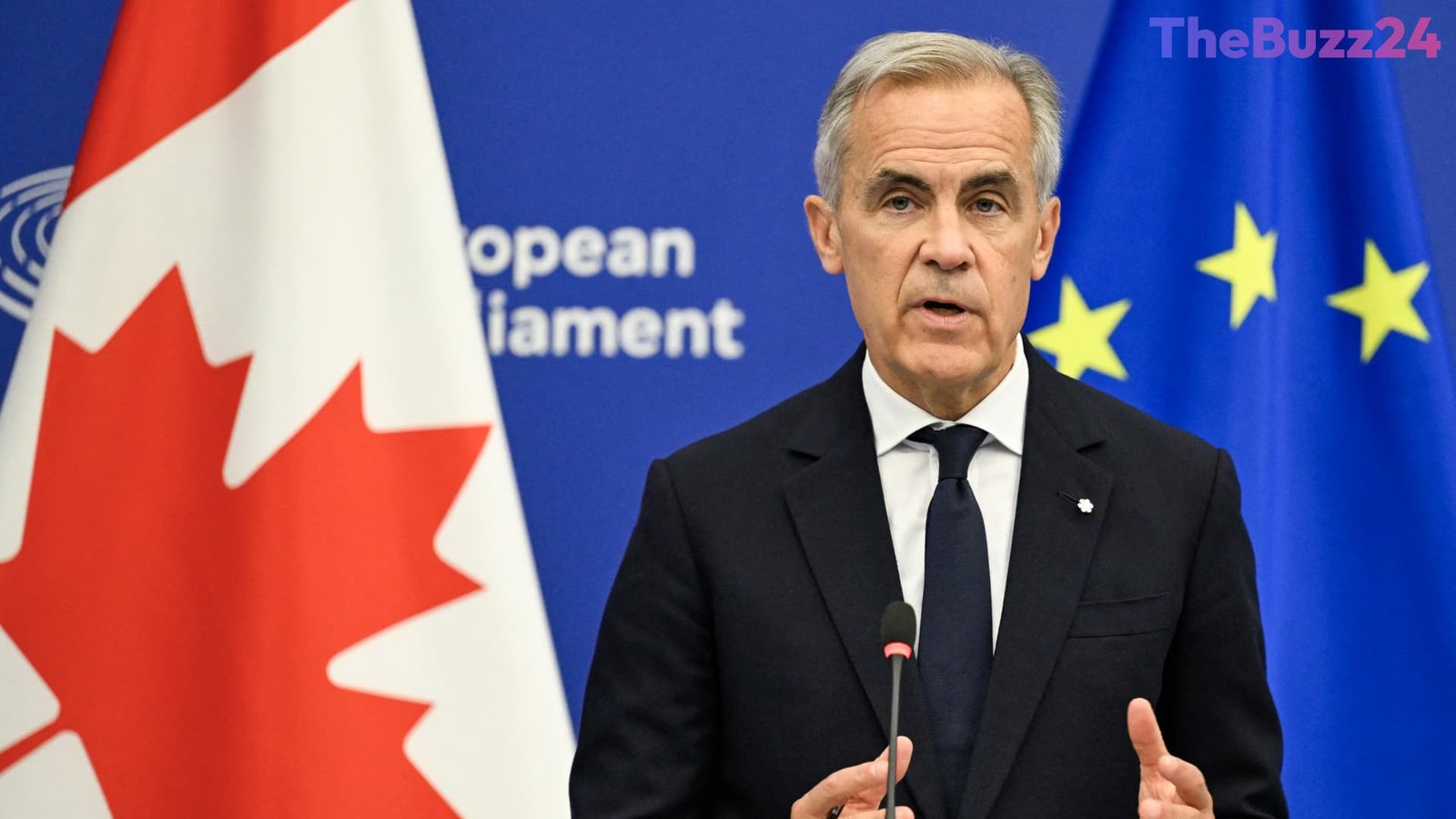
Canadian Prime Minister Mark Carney has firmly asserted his nation’s sovereign right to forge international partnerships, following strong criticisms from U.S. President Donald Trump regarding proposed closer ties with Europe. Addressing European lawmakers in Strasbourg, Carney emphasized that Canada will ultimately determine its own geopolitical alliances, with any final framework subjected to a formal parliamentary vote by Canadian legislators.
The dialogue between Ottawa and Brussels centers on elevating their existing relationship to an unprecedented level, which could potentially establish Canada as the European Union’s first associate member. While no formal category for associate membership currently exists under existing EU treaties, European Commission President Ursula von der Leyen voiced strong support for opening the door to Ottawa. The envisioned alliance aims to expand cooperation well beyond current trade agreements, targeting critical areas such as artificial intelligence, climate initiatives, defense, and Arctic security.
Tensions surrounding the prospective partnership have escalated as North American trade relations face severe strains. The Trump administration recently enacted higher tariffs on Canadian merchandise, prompting Ottawa to implement dollar-for-dollar retaliatory levies. Furthermore, the U.S. leadership sharply criticized the EU’s outreach to Canada, warning of potential economic penalties if the initiative proceeds. Despite external pressures, Carney maintained that the pursuit of deeper European integration is designed to safeguard economic resilience and democratic sovereignty rather than to provoke a geopolitical rivalry.
Key Takeaways
- Canadian Prime Minister Mark Carney defended Canada's sovereign right to choose international partnerships, stating that the Canadian Parliament will ultimately vote on any alliance structure with the European Union.
- European Commission President Ursula von der Leyen expressed support for making Canada the EU's first associate member, deepening cooperation in areas like trade, defense, AI, and climate security.
- The diplomatic push follows escalating trade tensions and tariffs between the U.S. and Canada, with the U.S. administration criticizing the proposed EU-Canada alignment.
Editor’s Analysis & Impact
The evolving diplomatic and economic alignment between Canada and the European Union marks a significant pivot in global trade dynamics. As traditional multilateral frameworks face strain from rising protectionism and weaponized tariffs, middle powers like Canada are actively seeking strategic diversification to insulate their economies. While an official EU associate membership requires substantial legal and structural innovation within the bloc, the political will demonstrated by Ottawa and Brussels signals a broader realignment of Western democracies. For global markets and supply chains, this friction underscores the fragility of North American trade accords and points toward a future characterized by localized economic blocs and heightened regulatory coordination among allied nations.
Frequently Asked Questions
Q: What is the proposed relationship between Canada and the European Union?
A: The EU and Canada are exploring the possibility of establishing Canada as the bloc's first associate member, which would significantly deepen cooperation on trade, defense, artificial intelligence, climate change, and Arctic security.
Q: Will Canadian lawmakers have a say in the proposed EU partnership?
A: Yes, Canadian Prime Minister Mark Carney confirmed that the final structure of the alliance will be subject to robust debates and a formal vote in the Canadian Parliament.
Q: How has the United States reacted to the proposed EU-Canada alliance?
A: The U.S. administration has sharply criticized the move, with President Donald Trump labeling the associate membership proposal 'laughable' and warning of potential heavy tariffs against Europe if the initiative moves forward amid ongoing trade disputes.
AI Disclosure: This article is based on verified data and official reports. Our Team and AI have cross-referenced every financial detail with primary sources to ensure total accuracy.
More from this Category