Deep Space Discovery: James Webb Telescope Pinpoints Origin of Record-Breaking Radio Burst
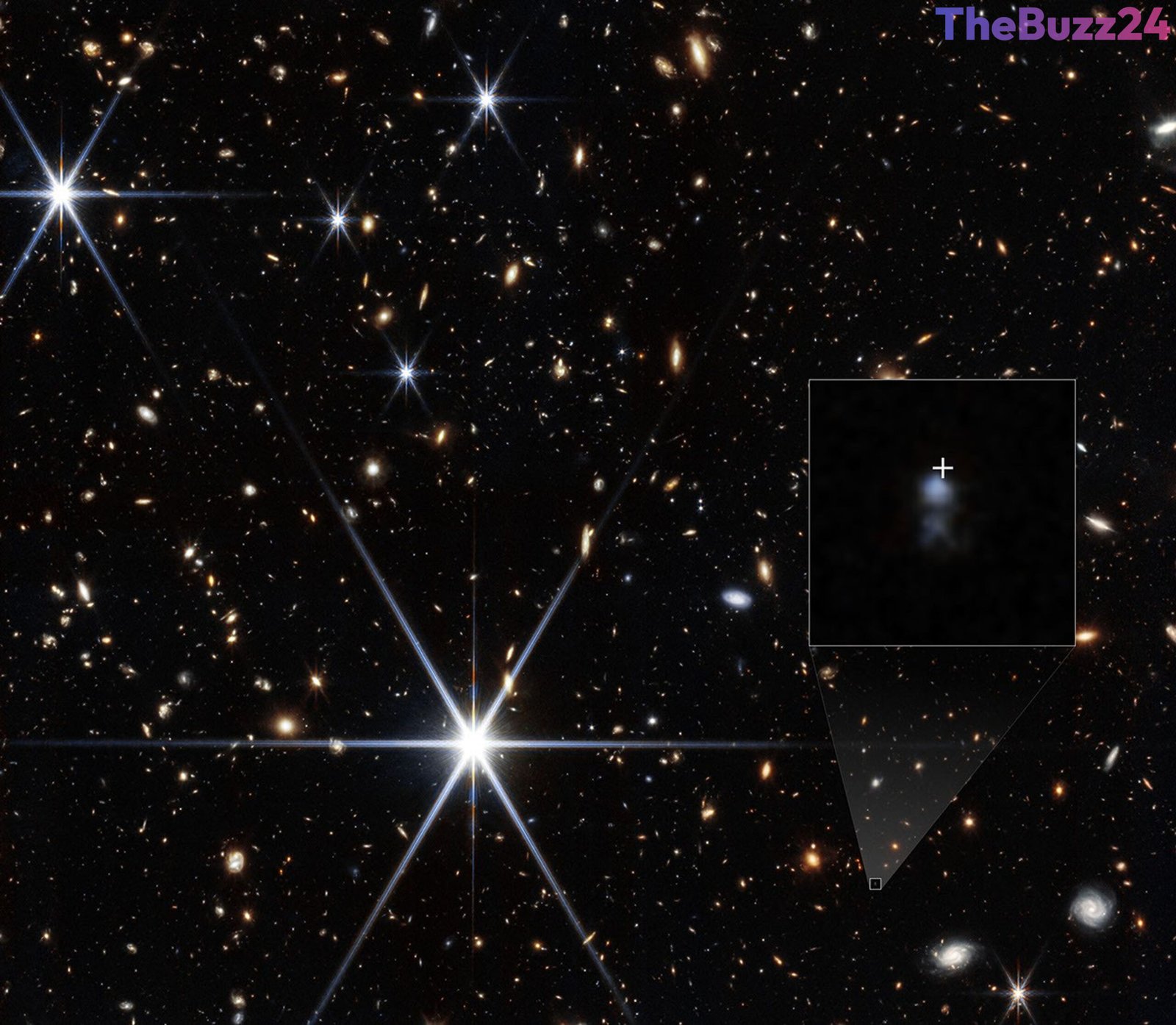
Astronomers have achieved a significant milestone in space exploration by identifying the host galaxy of the most distant fast radio burst (FRB) ever recorded. Using the advanced capabilities of the James Webb Space Telescope, researchers pinpointed the source of FRB 20240304B, a mysterious, millisecond-long flash of radio energy that originated approximately 3 billion years after the Big Bang. This discovery provides a rare glimpse into the early universe and challenges existing theories regarding the nature of these energetic cosmic events.
The investigation began when the MeerKAT telescope detected the burst, but ground-based observatories were unable to identify a host galaxy at the precise location. By deploying the James Webb Space Telescope’s Near-Infrared Camera and Spectrograph, the team successfully captured the faint signature of a small, active dwarf galaxy. This finding was unexpected, as previous research suggested that FRBs typically originate from larger, more massive galaxies. The host galaxy’s rapid star-formation rate during the era known as “cosmic noon” indicates that the environment producing these bursts may be significantly different than previously theorized.
This discovery has profound implications for the leading theories surrounding the origin of fast radio bursts. While some scientists previously hypothesized that FRBs were the result of merging neutron stars—a process that typically requires billions of years—the identification of this burst in a young, active dwarf galaxy suggests an alternative mechanism. Researchers now lean toward the theory that these bursts are generated by young, highly magnetic neutron stars known as magnetars, which can form shortly after the death of a massive star.
Beyond identifying the source, the burst served as a “cosmic flashlight,” allowing scientists to analyze the matter it passed through on its journey to Earth. By studying the signal, the team identified previously unknown cosmic structures, including a distant galaxy cluster. As more powerful radio telescopes and space-based observatories come online, researchers expect to uncover more of these distant signals, further mapping the invisible “cosmic web” that connects the universe.
Key Takeaways
- The James Webb Space Telescope identified the host galaxy of the most distant fast radio burst ever detected, dating back to 3 billion years after the Big Bang.
- The host galaxy is a small, active dwarf galaxy, contradicting previous theories that linked FRBs primarily to massive, older galaxies.
- The findings suggest that fast radio bursts are likely caused by young magnetars rather than the collision of older neutron stars.
Editor’s Analysis & Impact
The identification of FRB 20240304B marks a pivotal shift in high-energy astrophysics. By confirming that these bursts can originate from young, low-mass galaxies, the scientific community must pivot away from merger-based models toward magnetar-driven explanations. This discovery not only refines our understanding of stellar evolution but also validates the James Webb Space Telescope’s role as an essential tool for deep-space archaeology. The ability to use these bursts as probes for the ‘cosmic web’ opens a new frontier in mapping intergalactic matter. Future research will likely focus on the frequency of these events in the early universe, potentially providing a new metric for measuring the rate of star formation and the distribution of matter across cosmic time.
Frequently Asked Questions
Q: What is a fast radio burst (FRB)?
A: A fast radio burst is an intense, extremely brief flash of radio waves originating from deep space, typically lasting only a few milliseconds.
Q: Why is the discovery of this specific host galaxy important?
A: It is important because it challenges the theory that FRBs come from old, massive galaxies, suggesting instead that they may originate from young, highly magnetic neutron stars in smaller, active galaxies.
AI Disclosure: This article is based on verified data and official reports. Our Team and AI have cross-referenced every financial detail with primary sources to ensure total accuracy.
More from this Category