Tragedy on Egyptian Rails: Deadly Train Collision Prompts High-Level Investigation
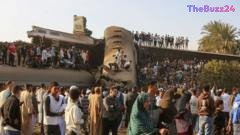
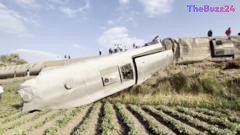
A major railway disaster has unfolded in Egypt following a collision involving two passenger trains, which caused multiple carriages to derail and sparked an urgent emergency response. The incident occurred along key routes south of the capital, involving one train en route from Giza toward the Fayoum oasis and a second service traveling from Cairo down to Aswan.
Emergency personnel and first responders were swiftly dispatched to the crash site to secure the area, treat survivors, and assist with recovery efforts. Wreckage from the impact left several carriages severely damaged and overturned across the tracks, severely disrupting traffic along one of the country’s most vital transport corridors.
While the root cause of the crash has not yet been determined, Egyptian President Abdul Fattah al-Sisi announced that a formal investigation is immediately underway. The presidency affirmed a zero-tolerance stance regarding the incident, emphasizing that anyone found responsible for negligence or failure to adhere to safety protocols will be held fully accountable under the law.
The disaster brings renewed scrutiny to railway safety across Egypt, where authorities have been pursuing modernization programs to overhaul aging infrastructure, enhance signaling networks, and prevent deadly operational failures along widely used passenger lines.
Key Takeaways
- Two passenger trains traveling routes toward Fayoum and Aswan collided, causing extensive derailment and damage.
- Egyptian President Abdul Fattah al-Sisi ordered an immediate investigation, promising strict accountability for any negligence found.
- First responders and recovery crews remain deployed at the scene to clear the wreckage and assist impacted passengers.
Editor’s Analysis & Impact
Egypt’s rail network is an indispensable transit spine for millions of daily commuters, yet catastrophic accidents have repeatedly highlighted deep structural vulnerabilities. Over recent years, the government has directed substantial capital toward replacing legacy locomotives and modernizing mechanical switching systems. However, this latest collision underscores the persistent gap between ongoing long-term upgrades and day-to-day operational safety. The incident places intense political pressure on the Ministry of Transport to accelerate automated train-control deployments and enforce stricter operational oversight. How swiftly authorities identify the technical or human failures in this crash will be crucial in restoring commuter confidence and determining whether current infrastructure safety reforms are moving fast enough.
Frequently Asked Questions
Q: Which train routes were involved in the collision?
A: The collision involved one train traveling from Giza to the Fayoum oasis and another heading along the southern corridor from Cairo to Aswan.
Q: What official response has been taken by the Egyptian government?
A: President Abdul Fattah al-Sisi confirmed an official investigation is underway, stating that strict legal action and accountability will follow for anyone whose negligence contributed to the crash.
Q: Has the cause of the train derailment been determined?
A: The exact cause remains under technical investigation by authorities, who are examining track conditions, signaling systems, and operator conduct.
AI Disclosure: This article is based on verified data and official reports. Our Team and AI have cross-referenced every financial detail with primary sources to ensure total accuracy.
More from this Category