Digital Asset Markets Face Liquidity Hurdles Following Massive ETF Outflows
The digital asset sector is currently navigating a period of intense volatility as it undergoes a significant structural adjustment. Following a sharp market correction that saw Bitcoin prices retreat by over 33%, investor sentiment has cooled considerably across the broader cryptocurrency landscape. This downturn has been compounded by a notable shift in institutional demand, specifically regarding spot Bitcoin Exchange Traded Funds (ETFs), which have witnessed net outflows totaling $4.9 billion since the middle of October.
While major institutional players like BlackRock’s IBIT ETF continue to hold substantial positions, the overall reduction in capital inflows has created persistent downward pressure on asset valuations. Beyond the ETF sector, the market is currently working through a painful deleveraging process. A wave of liquidations throughout October triggered a massive unwinding of positions in perpetual futures markets, with open interest across major platforms such as Binance, Bybit, and Hyperliquid dropping by more than 30%. Decentralized finance (DeFi) protocols have also seen a contraction in activity, with lending platforms like Aave V3 reporting a decline in active loans.
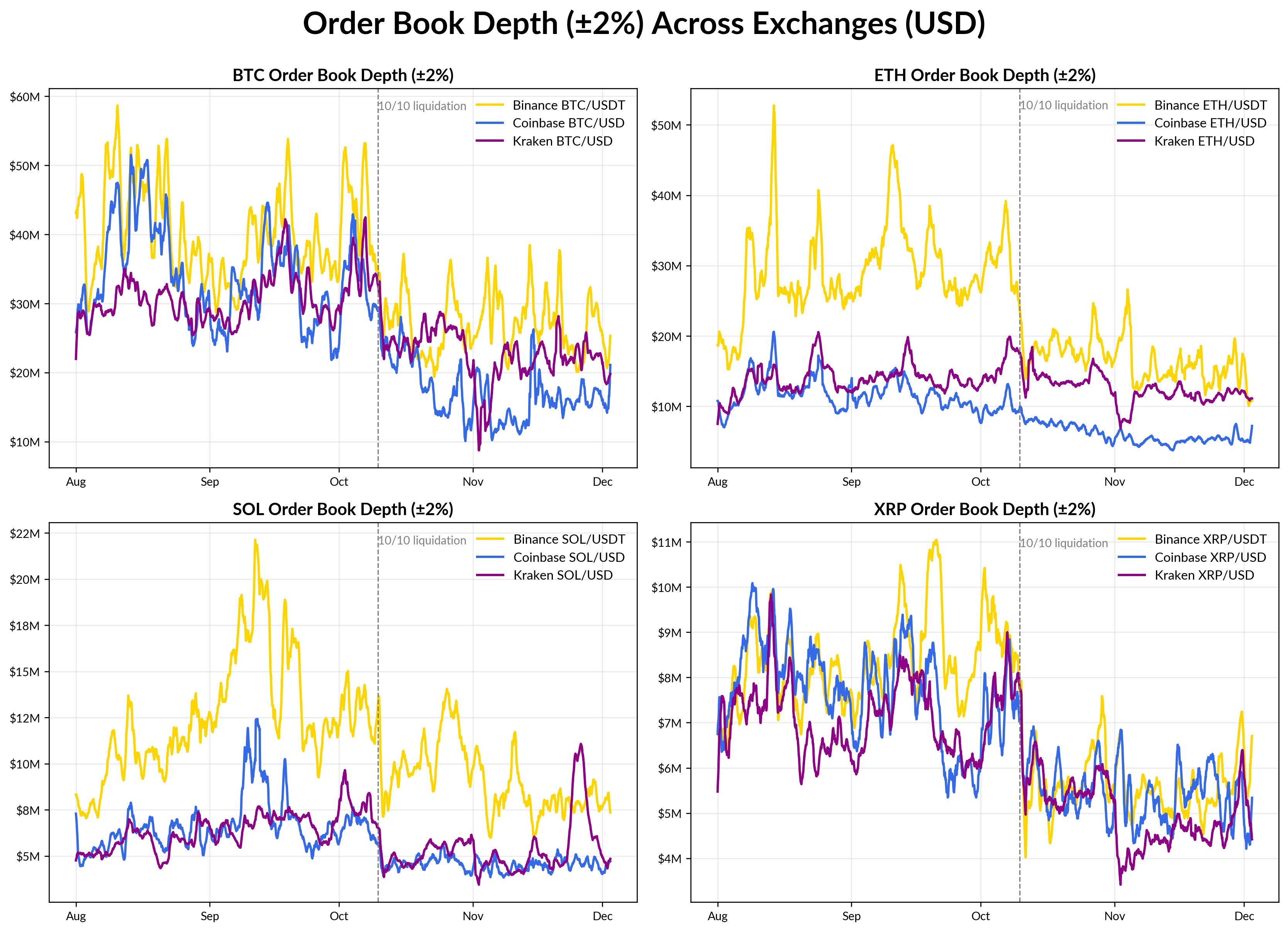
Liquidity remains the primary obstacle to a sustained market recovery. Current order book depth for major assets including Bitcoin, Ethereum, and Solana remains significantly lower than levels recorded earlier in the quarter. This lack of depth leaves the market vulnerable to extreme price swings, particularly among altcoins where market-making activity has diminished. Industry observers suggest that a recovery will likely depend on a combination of renewed ETF interest, increased accumulation by digital asset treasuries, and a stabilization of macroeconomic conditions, particularly regarding global interest rate policies.
Key Takeaways
- Spot Bitcoin ETFs have experienced $4.9 billion in net outflows since mid-October, signaling a cooling in institutional demand.
- A significant deleveraging event in October saw open interest in perpetual futures markets drop by over 30%, purging some systemic risk but leaving the market fragile.
- Shallow liquidity in order books for major assets like Bitcoin and Ethereum is increasing market susceptibility to high volatility and sharp price swings.
Editor’s Analysis & Impact
The current state of the digital asset market reflects a classic ‘washout’ phase following a period of speculative excess. The transition from aggressive institutional accumulation via ETFs to a net-outflow environment suggests that large-scale investors are currently in a risk-off posture, likely influenced by broader macroeconomic uncertainty and interest rate concerns. While the deleveraging of perpetual futures and DeFi protocols is painful in the short term, it is a necessary evolution to remove over-leveraged participants and stabilize the market foundation. Moving forward, the industry’s ability to attract fresh capital will depend on the restoration of order book depth and a clearer signal from central banks regarding monetary policy. Until liquidity returns to pre-correction levels, investors should anticipate continued sensitivity to news and potential for further downside volatility.
Frequently Asked Questions
Q: Why are digital asset markets experiencing such high volatility?
A: The volatility is primarily driven by a combination of significant ETF outflows, a massive deleveraging of perpetual futures positions, and a general lack of liquidity in order books, which makes assets more sensitive to trading volume.
Q: What is the significance of the decline in open interest?
A: A decline in open interest indicates that traders are closing out their positions, often due to forced liquidations. While this reduces the risk of a cascading collapse, it also signals a reduction in market participation and capital deployment.
AI Disclosure: This article is based on verified data and official reports. Our Team and AI have cross-referenced every financial detail with primary sources to ensure total accuracy.
More from this Category