The Mechanics of Aave: Navigating Growth and Stability in Decentralized Finance
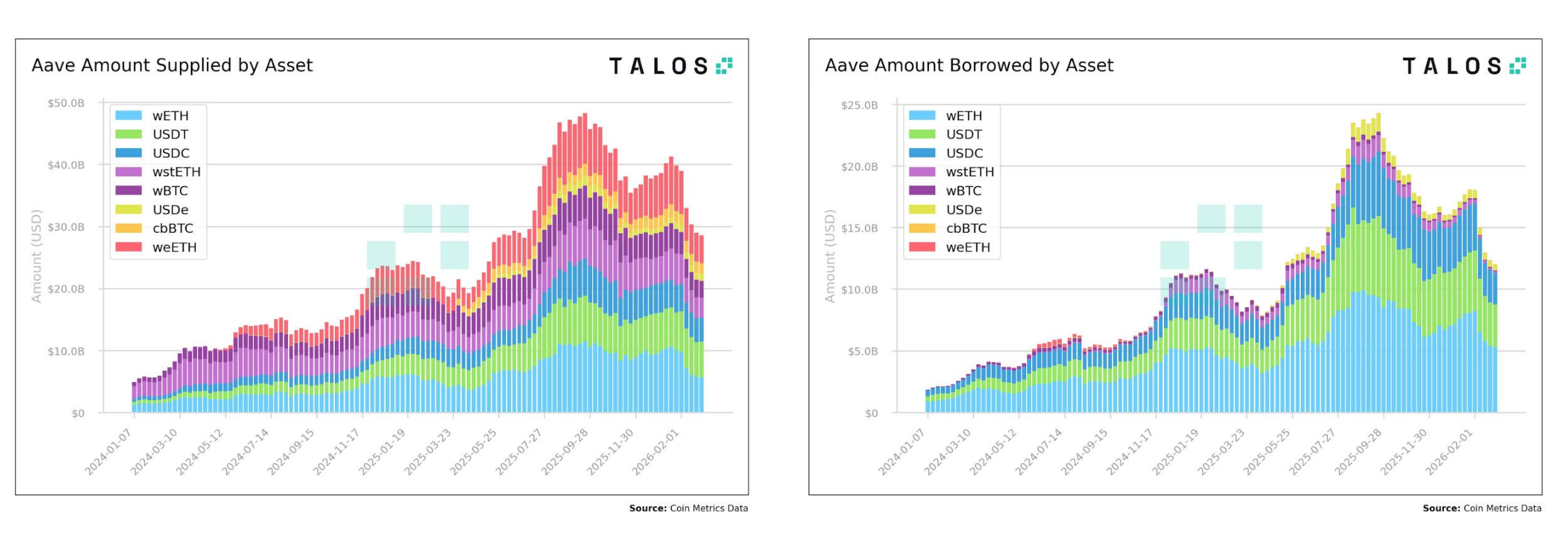
Aave has firmly established itself as a foundational pillar within the decentralized finance (DeFi) landscape, acting as a critical liquidity hub for both individual investors and institutional entities. As a decentralized lending protocol, it enables users to utilize their digital assets to generate yield or obtain loans directly through blockchain-based smart contracts. With total deposits now topping $50 billion and borrowing volume exceeding $21 billion, the platform stands as a dominant force in the broader cryptocurrency market.
The protocol sustains its operations through a sophisticated revenue model centered on its lending markets and the GHO stablecoin. These generated funds are strategically reinvested into the ecosystem, supporting essential functions such as security audits, operational working groups, and AAVE token buybacks. This circular economic model is designed to enhance the protocol’s long-term sustainability while delivering measurable value to its community of token holders.
Security and risk management are deeply integrated into Aave’s architectural framework. To combat the inherent volatility of digital assets, the platform employs rigorous safety measures, including strict collateralization ratios, supply and borrow limits, and specialized interest-rate curves. These mechanisms are specifically engineered to shield the protocol from extreme market swings and the systemic risks associated with mass liquidations, maintaining stability during periods of high market turbulence.
Governance of the protocol is managed through a decentralized voting system, empowering AAVE token holders to influence strategic upgrades and policy changes. This community-driven approach is balanced by the technical expertise provided by Aave Labs, reflecting the ongoing challenge of maintaining a decentralized infrastructure while ensuring efficient development. As the platform continues to scale, this collaborative model remains essential to its evolution and resilience in the competitive DeFi sector.
Key Takeaways
- Aave maintains a massive footprint in DeFi with over $50 billion in total deposits and $21 billion in active borrowing.
- The protocol utilizes a circular revenue model, reinvesting earnings from lending and the GHO stablecoin into security and ecosystem development.
- Risk management is prioritized through automated safeguards like collateral requirements and borrow caps to prevent systemic failure during market volatility.
Editor’s Analysis & Impact
Aave’s ability to scale while maintaining a robust risk management framework positions it as a benchmark for the DeFi industry. The protocol’s shift toward a more integrated ecosystem—highlighted by the GHO stablecoin and strategic token buybacks—suggests a maturation phase where sustainability is prioritized over pure growth. The primary challenge moving forward lies in the ‘governance-efficiency’ paradox: as the protocol grows, the speed of decentralized decision-making must keep pace with the rapid technical requirements of the market. If Aave can successfully navigate the tension between community governance and centralized technical development, it will likely remain the dominant liquidity layer for institutional DeFi adoption. Investors should watch how the protocol manages its collateral parameters as it expands into more volatile or exotic asset classes in the coming years.
Frequently Asked Questions
Q: How does Aave protect users from market volatility?
A: Aave uses conservative risk parameters, including strict collateral requirements, supply and borrow caps, and kinked interest-rate curves to prevent mass liquidations during price swings.
Q: What is the role of the AAVE token in the protocol?
A: AAVE tokens grant holders the authority to participate in decentralized governance, allowing them to vote on protocol upgrades, strategic shifts, and risk management policies.
AI Disclosure: This article is based on verified data and official reports. Our Team and AI have cross-referenced every financial detail with primary sources to ensure total accuracy.
More from this Category