Beyond the Hype: Industry Leaders Detail Humanoid Robots’ Real-World Challenges
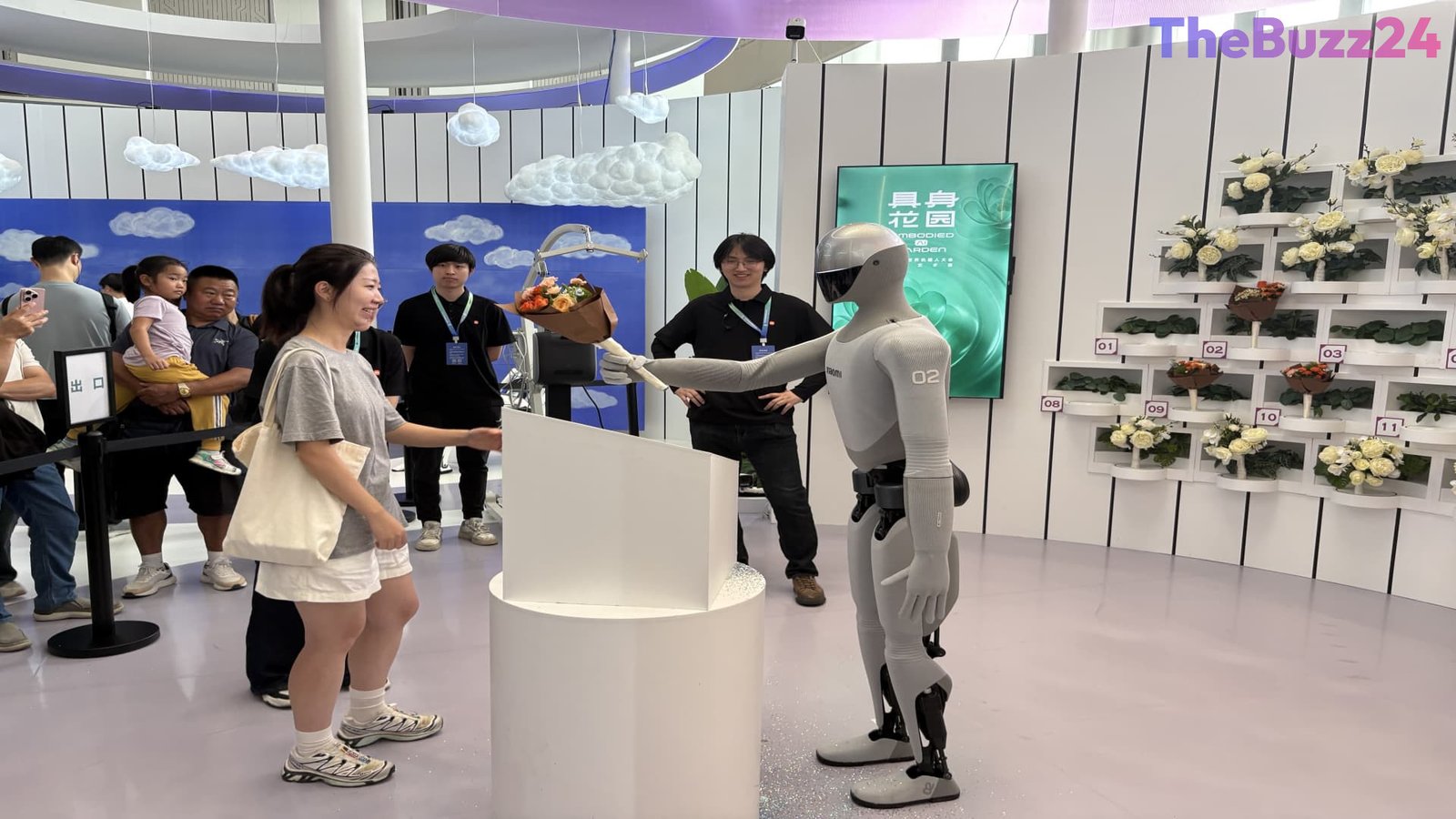
Industry leaders convening at the World Robot Conference in Beijing recently highlighted the significant technological hurdles still facing humanoid robots. A primary challenge remains the gap in efficiency and adaptability when compared to human capabilities. Wang Xingxing, founder of Unitree, a company that recently saw a dramatic 460% surge on its IPO day before an 18.7% decline, emphasized that these robots currently require considerable time to master new skills, creating a bottleneck for broader industry integration. His remarks underscored the complex path humanoid robots must navigate to become a viable part of the human workforce.
Despite recent U.S. Federal Communications Commission (FCC) measures last month to restrict imports of certain foreign-made advanced robotic devices, including humanoids, the immediate impact on the U.S. market is perceived as minimal. Jeff Burnstein, president of the Association for Advancing Automation, noted that the current deployment of humanoids in the U.S. is limited. Instead, the focus for U.S. industries seeking automation solutions largely remains on autonomous mobile robots, which are far more prevalent in factory settings. Burnstein articulated that customers are primarily seeking practical solutions to problems, regardless of whether the technology is a humanoid, a traditional industrial robot, or a collaborative robot.
The onus is therefore on humanoid robot developers to demonstrate clear, affordable, safe, and ready-to-use solutions. Wan Bin, COO of startup Keenon, which develops humanoids to complement simpler delivery robots in tasks like hotel laundry services, elaborated on the engineering complexities. While achieving 50% or even 80% task completion can be relatively straightforward, reaching a robust 99.9% completion rate demands exceptional engineering and training capabilities. Keenon, whose partners include Buffalo Wild Wings and Hilton, has already shipped over 100,000 robots and anticipates exceeding 150,000 units by the end of next year, indicating a market for specialized, reliable robotic solutions, even if not exclusively humanoid.
Key Takeaways
- Humanoid robots currently face significant efficiency and learning challenges compared to humans, hindering widespread adoption.
- U.S. market demand prioritizes practical automation solutions over specific robot types, with autonomous mobile robots currently seeing more use than humanoids.
- Achieving high reliability (e.g., 99.9% task completion) for humanoid robots presents a major engineering hurdle, requiring developers to prove their value with affordable and safe solutions.
Editor’s Analysis & Impact
The article highlights a critical juncture for the humanoid robotics industry. While public perception often envisions advanced, human-like machines seamlessly integrating into daily life, the reality, as articulated by industry leaders, is far more complex. The current limitations in efficiency, adaptability, and the high bar for reliability (99.9% task completion) mean that practical, widespread deployment remains a distant goal. This suggests that investment in the sector, while robust, needs to be tempered with realistic expectations regarding immediate returns and capabilities. The market’s preference for problem-solving solutions, irrespective of robot form factor, indicates that specialized, less human-like robots will continue to dominate industrial and service automation in the near term. Future growth for humanoids will depend on significant breakthroughs in AI, machine learning, and hardware design that can bridge the efficiency gap and reduce costs, potentially shifting labor dynamics in specific sectors over the long term.
Frequently Asked Questions
Q: Are U.S. restrictions on foreign-made advanced robotic devices significantly impacting the market?
A: According to industry experts, the immediate impact of U.S. restrictions is minimal because humanoid robots are not yet widely deployed in the country. U.S. industries are currently more focused on autonomous mobile robots for factory automation and prioritize practical solutions over specific robot types.
Q: What types of robots are currently seeing more practical application than humanoids?
A: Autonomous mobile robots are currently much more widely used in factories and industrial settings. Companies like Keenon are also deploying simpler delivery robots, sometimes in conjunction with humanoids for specific tasks, demonstrating a market for specialized, reliable robotic solutions that may not always be humanoid in form.
AI Disclosure: This article is based on verified data and official reports. Our Team and AI have cross-referenced every financial detail with primary sources to ensure total accuracy.
More from this Category