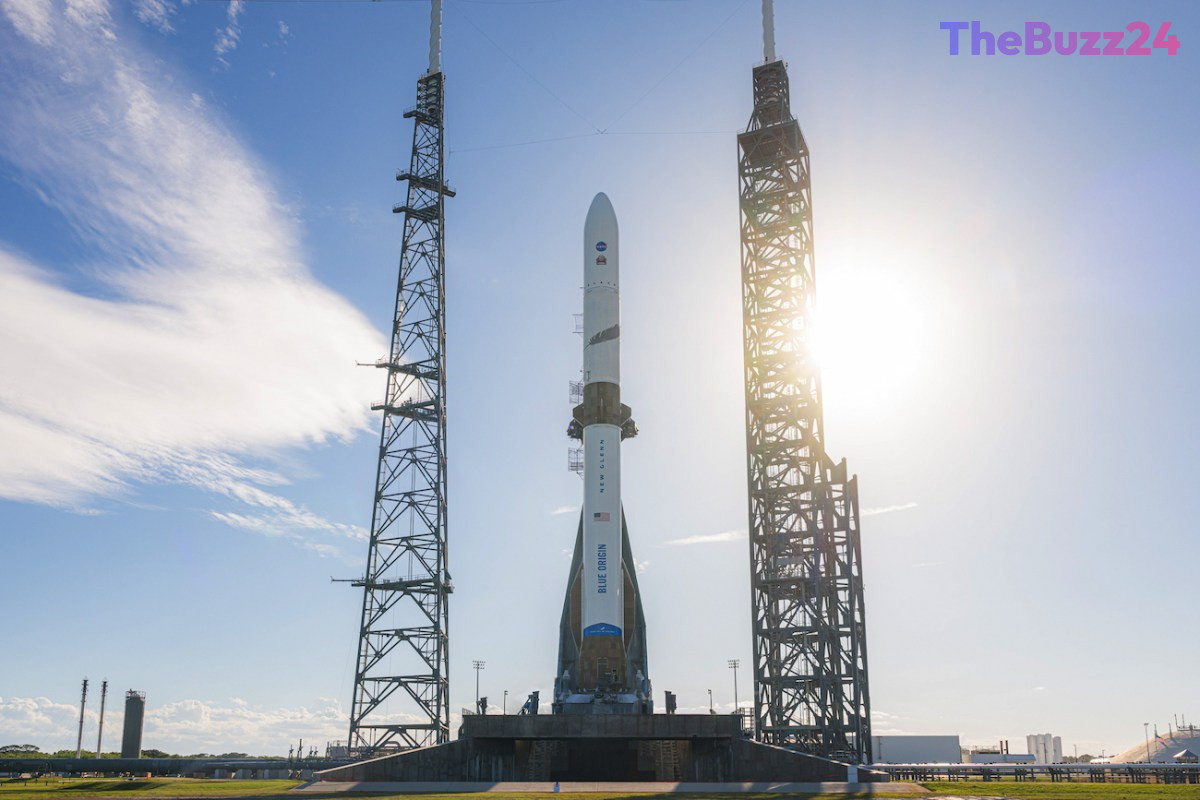
Blue Origin Races to Rebuild and Launch New Glenn Rocket Despite Unresolved Explosion Investigation
Aerospace firm Blue Origin is forging ahead with ambitious plans to fly its massive New Glenn rocket before the end of the year, despite still searching for the root cause of a devastating test-stand explosion last month. The incident occurred on May 28 during preparations for what would have been the heavy-lift vehicle’s fourth flight, following a successful debut launch in January 2025. While no injuries were reported, the blast caused significant damage to the company’s sole active launchpad at Cape Canaveral, Florida.
In a detailed update, Blue Origin Chief Executive Officer Dave Limp confirmed that engineers are actively analyzing extensive sensor data and multi-angle video footage to pinpoint the failure. Preliminary findings point to an issue in the aft section of the rocket’s first stage. Despite the setback, the company remains highly motivated to resume operations quickly, given its critical role in NASA’s accelerated timeline to land astronauts back on the moon.
Rebuilding the damaged launch infrastructure is currently the primary bottleneck. The explosion destroyed a lightning tower and the specialized transporter-erector system used to move and raise the rocket. However, key facilities—including the rocket integration building, gas storage tanks, and water tower—escaped major damage. To expedite the recovery process, Blue Origin is pivoting away from rebuilding the complex transporter-erector, choosing instead to utilize a massive crane to erect the New Glenn rocket on the pad.
This strategic shift in launchpad operations is expected to not only accelerate the return-to-flight timeline but also potentially boost the rocket’s long-term launch frequency. Prior to the May accident, Blue Origin had targeted up to a dozen New Glenn launches for the year. While that timeline has been disrupted, the company is leveraging the surviving infrastructure to resume its high-stakes campaign as rapidly as possible.
Key Takeaways
- Blue Origin is investigating a May 28 explosion of its New Glenn rocket, with early data pointing to a failure in the first stage's aft section.
- The blast severely damaged the Cape Canaveral launchpad, destroying a lightning tower and the transporter-erector system, though key integration facilities survived.
- To speed up recovery and increase future launch cadence, the company is replacing the transporter-erector system with a massive crane to stand the rocket upright.
Editor’s Analysis & Impact
Blue Origin’s aggressive push to return New Glenn to flight underscores the intense pressure mounting in the private space sector. As a key partner in NASA’s Artemis program, Blue Origin cannot afford prolonged delays if the U.S. hopes to meet its ambitious lunar landing timelines. However, rushing back to the launchpad without fully resolving the root cause of the May 28 explosion carries immense risk. A second consecutive failure could severely damage the company’s credibility and hand a decisive advantage to competitors like SpaceX. By pivoting to a crane-based erection system, Blue Origin is attempting a clever engineering workaround to bypass rebuilding complex machinery. While this may shorten their recovery timeline, the ultimate success of the New Glenn program hinges on the structural integrity of the rocket itself, making the ongoing investigation the most critical factor in their near-term survival.
Frequently Asked Questions
Q: What caused the Blue Origin New Glenn rocket explosion?
A: The exact cause is still under investigation. Early analysis by Blue Origin indicates the issue originated in the aft section of the rocket's first stage.
Q: Was anyone injured in the New Glenn explosion?
A: No, there were no injuries reported during the test-stand incident on May 28.
Q: How is Blue Origin changing its launchpad setup after the blast?
A: Instead of rebuilding the destroyed transporter-erector system, Blue Origin plans to use a massive crane to lift and position the New Glenn rocket on the launchpad, which they believe will speed up recovery and future launch operations.
AI Disclosure: This article is based on verified data and official reports. Our Team and AI have cross-referenced every financial detail with primary sources to ensure total accuracy.
More from this Category