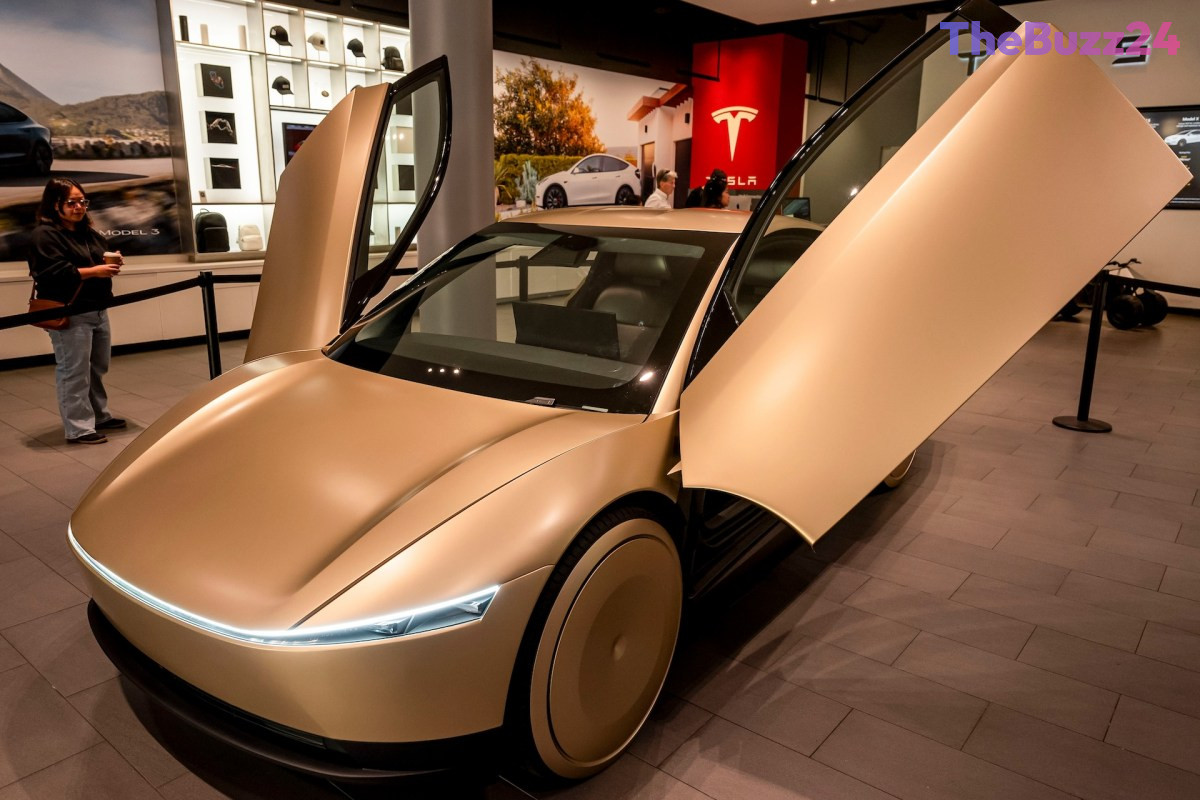
Tesla Initiates Real-World Testing of Pedal-Free Cybercab in Austin
Tesla has officially commenced testing of its production-ready Cybercab in Austin, Texas, marking a significant milestone in the company’s pursuit of fully autonomous transportation. The two-seater vehicle, which notably lacks both a steering wheel and pedals, was recently spotted in operation with a safety monitor present in the passenger seat. This development follows years of anticipation surrounding the robotaxi project, which aims to provide a dedicated, app-hailable autonomous transit solution.
While Tesla has previously utilized modified Model Y SUVs to pilot its robotaxi service in the Austin area, the introduction of the purpose-built Cybercab represents a shift toward a specialized fleet. The company has been conducting trials with various prototypes across the United States, fueling speculation regarding a broader commercial rollout. Regulatory progress appears to be aligning with these efforts, as the National Highway Traffic Safety Administration has proposed rules that would remove the mandate for brake pedals in vehicles designed exclusively for automated driving systems.
Tesla’s strategy for achieving autonomy relies heavily on a camera-only vision system, distinguishing it from competitors like Waymo, which utilize a more complex array of lidar and radar sensors. By controlling both the hardware manufacturing and the software development, Tesla aims to achieve a cost advantage that could disrupt the current robotaxi landscape. However, the company faces the dual challenge of proving the safety of its vision-based approach while scaling operations in complex urban environments where both Tesla and its competitors have previously encountered operational hurdles.
Key Takeaways
- Tesla is testing its two-seater, pedal-free Cybercab in Austin, Texas, with a safety monitor on board.
- Proposed federal regulatory changes may soon eliminate the requirement for brake pedals in fully autonomous vehicles.
- Tesla’s approach differs from rivals by utilizing a camera-only sensor suite and vertical integration of vehicle manufacturing and software.
Editor’s Analysis & Impact
The deployment of the Cybercab signifies a critical pivot for Tesla as it attempts to transition from a consumer vehicle manufacturer to a dominant player in the autonomous mobility-as-a-service (MaaS) sector. By betting on a camera-only architecture, Tesla is attempting to solve the ‘edge case’ problem of autonomous driving through massive data collection and AI training rather than expensive hardware redundancy. If successful, this could drastically lower the cost-per-mile for robotaxi services, potentially undercutting competitors like Waymo. However, the company faces significant scrutiny regarding safety and regulatory compliance. The industry will be watching closely to see if Tesla can overcome the technical limitations that have plagued its previous driver-assistance systems and successfully navigate the transition from controlled testing to a scalable, reliable, and legally approved nationwide robotaxi network.
Frequently Asked Questions
Q: Does the Tesla Cybercab have a steering wheel or pedals?
A: No, the production version of the Cybercab is designed without a steering wheel or pedals, as it is intended to be a fully autonomous vehicle.
Q: How does Tesla's autonomous technology differ from Waymo's?
A: Tesla relies on a camera-only vision system to navigate, whereas Waymo utilizes a more complex sensor suite that includes lidar, radar, and cameras.
AI Disclosure: This article is based on verified data and official reports. Our Team and AI have cross-referenced every financial detail with primary sources to ensure total accuracy.
More from this Category