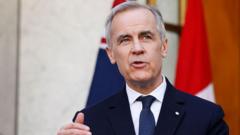
Mark Carney’s High-Stakes Bid for Parliamentary Majority
Prime Minister Mark Carney is navigating a defining chapter of his leadership as his administration prepares for three critical by-elections in the Greater Toronto and Montreal areas. Currently holding a near-majority in the House of Commons, the Liberal Party is aiming to secure the additional seats necessary to govern independently. Achieving this goal would grant the administration the legislative freedom to implement its long-term policy agenda without the constraints of coalition negotiations, effectively cementing its control until 2029.
The government’s path to a majority has been aided by a notable trend of floor-crossings, with five opposition lawmakers switching their allegiance to the Liberal caucus over the last year. While Conservative leader Pierre Poilievre has criticized these defections as a threat to democratic norms, political analysts suggest the shifts reflect deeper dissatisfaction within the Conservative ranks regarding current leadership and strategic direction.
Under Carney’s guidance, the Liberal Party has undergone a significant ideological shift, adopting a more fiscally conservative stance. By proposing a reduction in the public sector and calling for the elimination of the consumer carbon tax, the administration is actively courting centrist and right-leaning voters. The upcoming by-election in the Terrebonne riding is widely considered a litmus test for this strategy, as the party attempts to balance its traditional base with its new, broader appeal.
Ultimately, these by-elections represent more than just individual seat counts; they are a referendum on Carney’s vision for the country. A successful outcome would provide the Prime Minister with the political capital required to pursue his agenda with autonomy, which he maintains is essential for fostering national unity and long-term stability.
Key Takeaways
- Prime Minister Mark Carney is seeking a formal legislative majority through three upcoming by-elections in the Greater Toronto and Montreal regions.
- The Liberal Party has shifted toward a fiscally conservative platform, including the proposed removal of the consumer carbon tax, to attract centrist voters.
- Five opposition lawmakers have defected to the Liberal caucus in the past year, sparking debate over political integrity and internal Conservative Party stability.
Editor’s Analysis & Impact
The strategic pivot by Mark Carney’s Liberal Party represents a calculated risk to reshape the Canadian political landscape. By adopting fiscally conservative policies, the administration is effectively encroaching on traditional Conservative territory, which could permanently alter the ideological spectrum of the party. If successful, this move could neutralize the opposition’s primary arguments and provide the Liberals with a clear mandate for the remainder of the decade. However, this realignment carries the inherent danger of alienating the party’s progressive base. The outcome of the Terrebonne by-election will be a critical indicator of whether this ‘big tent’ strategy can hold together or if it will trigger internal fractures. Investors and policy stakeholders should watch these results closely, as they will dictate the speed and nature of upcoming fiscal reforms.
Frequently Asked Questions
Q: Why are the upcoming by-elections critical for Mark Carney?
A: The by-elections are essential because the Liberal Party is currently one seat short of a formal majority; winning these seats would allow the government to pass legislation without relying on coalition partners.
Q: How has the Liberal Party's platform changed under Carney?
A: The party has shifted toward a more fiscally conservative stance, notably advocating for the removal of the consumer carbon tax and a reduction in the size of the public sector.
AI Disclosure: This article is based on verified data and official reports. Our Team and AI have cross-referenced every financial detail with primary sources to ensure total accuracy.
More from this Category