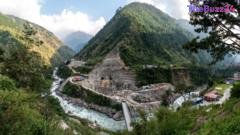
Cracked Foundations: How Devastating Floods Exposed Nepal’s Over-Reliance on Hydropower
Nepal has long banked its economic and energy future on the immense potential of its rivers, generating nearly 100% of its electricity from hydropower and bringing in roughly $200 million annually through energy exports to India and Bangladesh. However, the geographic advantages provided by the Himalayas are increasingly clashing with the harsh realities of accelerating climate change. Recent catastrophic flash floods have devastated entire mountain settlements, tragically claiming over 1,300 lives and leaving thousands more unaccounted for near the border regions.
The unprecedented deluges heavily impacted critical infrastructure, knocking out more than 10% of the nation’s total power generation capacity and inflicting severe structural damage on a dozen facilities within the Trishuli River basin. Major foreign-backed investments, including multi-million-dollar projects supported by international financial institutions and foreign banks, found themselves directly in the path of the disaster. While state electricity officials have insisted that domestic household supplies remain stable for now, the widespread destruction has forced energy planners to confront the growing vulnerability of high-altitude infrastructure.
Historically, expanding hydropower capacity transformed Nepal from a nation experiencing daily power cuts into a stable 24-hour electricity market. With hundreds of plants operational or in development, planners capitalized on fast-flowing mountain currents that required minimal storage systems. Yet, with high-altitude Himalayan regions warming at an alarming rate, the risk of glacial collapses and extreme weather events has surged exponentially. Environmental experts and industry analysts point out that repeating past development patterns without incorporating rigorous climate-resilient designs is no longer viable.
In the wake of the disaster, energy sector specialists are strongly advocating for a diversified grid that incorporates alternative renewables such as solar and wind to mitigate single-point system failures. Transitioning away from a policy framework entirely dominated by hydropower poses significant economic and structural hurdles, but the rising costs of insurance premiums, recurring environmental shocks, and growing international pressure demand a comprehensive strategic overhaul. As policymakers grapple with the path forward, the crisis has underscored an urgent global reality: developing nations heavily impacted by climate shifts require robust international cooperation, shared data systems, and substantial financial backing to secure their energy grids against future catastrophes.
Key Takeaways
- Massive flash floods in Nepal destroyed 12 hydropower plants, wiping out over 10% of the nation's total electricity generation capacity.
- The disaster has triggered intense calls from energy experts to diversify Nepal's energy grid by incorporating solar and wind power alternatives.
- International financial backers and local operators face mounting criticism and rising insurance costs for failing to adequately account for known climate and geographical risks.
Editor’s Analysis & Impact
The recent natural disaster in Nepal serves as a glaring wake-up call for developing nations heavily dependent on a single renewable energy source. While hydropower has successfully driven economic growth and regional energy exports, the compounding threats of glacial warming and extreme weather expose the fragility of high-altitude infrastructure. Moving forward, the regional energy market will likely witness a policy shift toward energy diversification, integrating solar and wind capacities to buffer against climate volatility. However, the transition will require massive capital expenditures and international assistance, especially as foreign investors and private insurers factor escalating climate risks into project financing and coverage premiums. The broader implication highlights a critical global equity issue: developing nations contributing minimally to global emissions are bearing disproportionate economic and human costs from climate change, necessitating a collaborative international approach to resilience and early-warning infrastructure.
Frequently Asked Questions
Q: What caused the recent disruption to Nepal's power grid?
A: Massive flash floods, potentially triggered by a collapsed glacier and bedrock failure in the high-altitude Himalayan region, severely damaged 12 hydropower plants and wiped out over 10% of the country's generation capacity.
Q: Why are experts suggesting a change in Nepal's energy strategy?
A: Experts argue that relying almost entirely on high-altitude hydropower leaves the country's electricity grid vulnerable to climate-related disasters, prompting calls to diversify into solar and wind power.
Q: How are private operators and insurers reacting to the floods?
A: Private operators are facing significant financial strains as insurance payouts for flood-related damages mount, leading to sharply rising insurance premiums that threaten the feasibility of doing business.
AI Disclosure: This article is based on verified data and official reports. Our Team and AI have cross-referenced every financial detail with primary sources to ensure total accuracy.
More from this Category