Curiosity Rover Unveils Mysterious Martian Yardangs in Stunning Detail
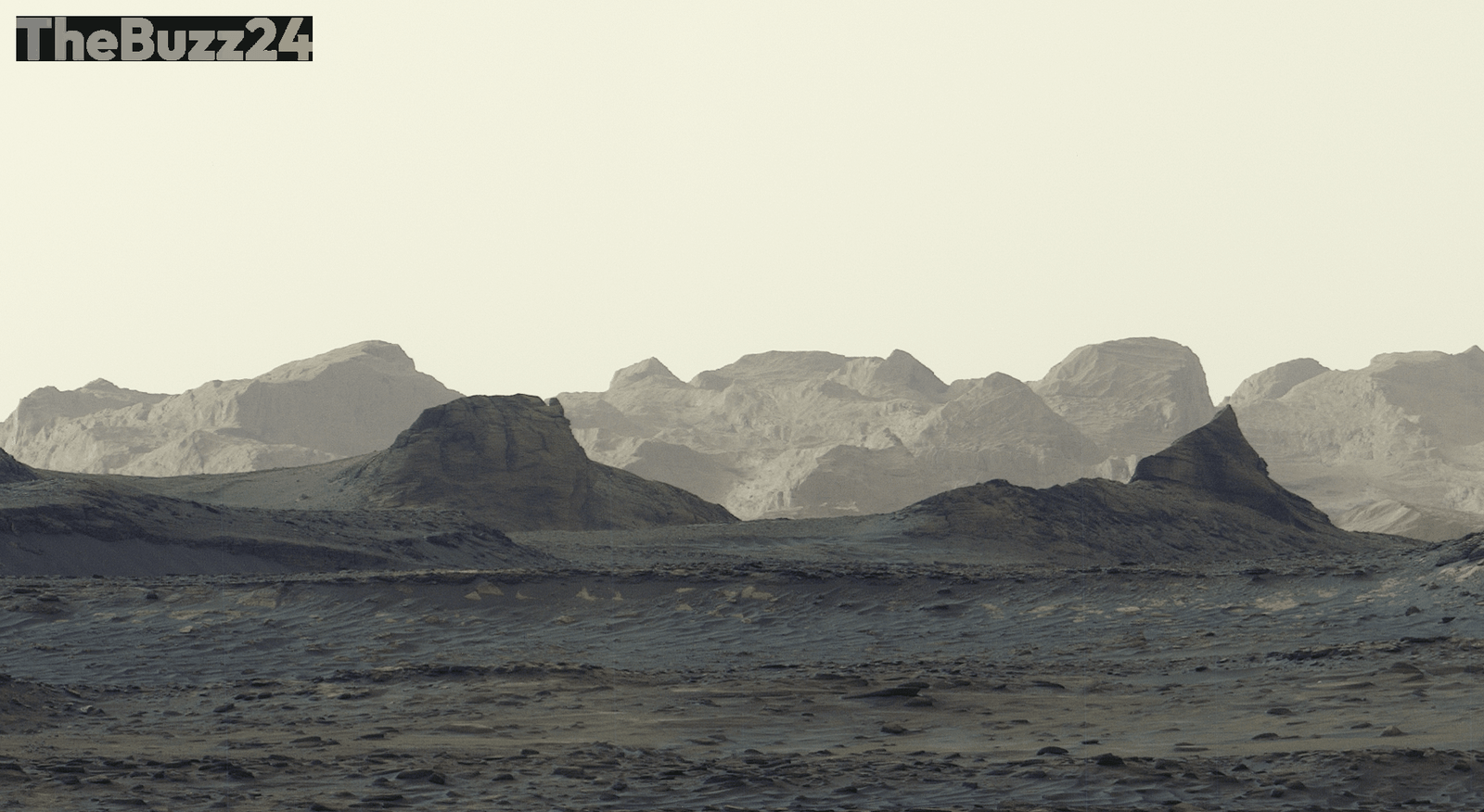
NASA’s Curiosity rover has transmitted a breathtaking panorama from Mars, offering an unprecedentedly detailed look at wind-sculpted rock formations known as yardangs. Captured on August 11, 2026, at 8:30 a.m. local Mars time, the image showcases striking blue hues in the foreground, illuminated by the early morning sun. This particular panorama, composed of six stitched-together images from Curiosity’s Mastcam, was processed without standard white balancing to preserve the authentic appearance of the Martian dawn.
The yardang layer, a geological feature of significant scientific interest, stretches across approximately 10 miles of the northwestern terrain of Mount Sharp. Curiosity has been diligently ascending this 3-mile-tall mountain since 2014, recently achieving a new mission milestone by reaching an elevation of 0.6 miles, the highest ever climbed by a rover on Mars. As the rover draws closer to these enigmatic formations, scientists anticipate gathering more remarkable imagery and crucial data regarding their origin.
Mount Sharp’s layered structure provides a historical record of Mars’s past, revealing evidence of ancient lakes and streams. It is theorized that as water receded, wind erosion may have sculpted the exposed materials, leading to the formation of the yardangs. However, the unique appearance of the yardang layer—its distinct color and angled strata—has led to alternative hypotheses, including the possibility of ancient volcanic ash deposits. Scientists are eager to investigate these possibilities further.
Currently in its fifth extended mission, Curiosity is exploring regions rich in sulfates and carbonates, indicators of past arid conditions. The mission team hopes to reach the base of the yardangs by 2027, where Curiosity’s robotic arm will be deployed to collect unique data, potentially unlocking secrets about Mars’s geological history and environmental evolution.
Key Takeaways
- NASA's Curiosity rover has captured a detailed panorama of Martian yardangs, wind-carved rock formations.
- The rover recently achieved a record elevation gain on Mount Sharp, getting closer to studying these mysterious geological features.
- Scientists are investigating the formation of yardangs, with theories ranging from wind erosion to ancient volcanic ash deposits.
Editor’s Analysis & Impact
This latest imagery from the Curiosity rover underscores the ongoing value of robotic exploration in unraveling planetary history. The detailed views of the yardangs on Mount Sharp present a compelling geological puzzle, highlighting the dynamic processes that have shaped Mars. The potential discovery of volcanic ash layers could significantly alter our understanding of Mars’s past geological activity and atmospheric conditions. As Curiosity continues its ascent, the data collected will be crucial for future mission planning and for piecing together a more comprehensive narrative of the Red Planet’s evolution, particularly concerning its watery past and subsequent aridification.
Frequently Asked Questions
Q: What are Martian yardangs?
A: Martian yardangs are elongated, wind-eroded ridges found on the surface of Mars. They are typically formed when wind selectively erodes softer rock layers, leaving behind more resistant material in streamlined shapes.
Q: Why is the yardang layer on Mount Sharp of particular interest to scientists?
A: The yardang layer on Mount Sharp is of interest because its appearance, color, and layering differ from surrounding rock formations. This suggests a unique formation process, possibly involving wind erosion of ancient deposits or even volcanic activity, offering clues about Mars's geological and environmental history.
Q: What is Mount Sharp?
A: Mount Sharp, officially known as Aeolis Mons, is a large mountain located in the center of Gale Crater on Mars. It is composed of layers of rock that record billions of years of Martian history, and NASA's Curiosity rover has been exploring its slopes since 2014.
AI Disclosure: This article is based on verified data and official reports. Our Team and AI have cross-referenced every financial detail with primary sources to ensure total accuracy.
More from this Category