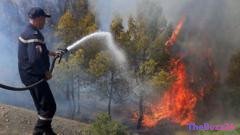
Devastating Wildfires Sweep Northern Algeria, Leaving At Least 12 Dead Amid Intense Heatwave
A series of destructive wildfires has swept across the northern coastline of Algeria, claiming the lives of at least 12 people and leaving dozens more injured. Driven by an intense heatwave gripping North Africa, the blazes have forced widespread evacuations in several coastal provinces. Interior Minister Said Sayoud confirmed that at least 54 individuals have suffered burn injuries, with six currently receiving critical care in intensive units. The fatalities were concentrated in the provinces of Jijel, Bejaia, and Tizi Ouzou, which have borne the brunt of the firestorm.
Emergency response teams and civil protection agencies have been working tirelessly to combat the flames, reporting nearly 70 active blazes across the nation. In hard-hit areas like Bejaia and Jijel, residents were forced to flee their homes as thick smoke blanketed residential zones. Local footage captured scenes of displaced citizens seeking temporary shelter in public buildings, such as post offices, to escape the suffocating air. Health Minister Mohamed Seddik Ait Messaoudene joined Sayoud in visiting Bejaia to coordinate emergency relief, evaluate firefighting strategies, and manage the ongoing evacuation efforts.
This latest disaster echoes previous tragedies in the region, particularly in Bejaia, which suffered a catastrophic fire season three years ago that resulted in 30 deaths. The current summer season has been exceptionally brutal, with emergency crews responding to over 2,000 fires in July alone, which had already claimed six lives prior to this week’s outbreak. The recurring nature of these disasters highlights the growing vulnerability of the Mediterranean coastline to extreme weather events.
Environmental experts point to climate change as a primary driver behind the increasing frequency and severity of these wildfires. According to data from the World Meteorological Organization (WMO), North Africa is warming at an alarming rate of 0.43 degrees Celsius per decade—the fastest pace of any subregion on the continent. The combination of soaring temperatures and prolonged droughts is not only fueling uncontrollable forest fires but is also disrupting local ecosystems and agriculture, even leading to unprecedented livestock losses in the arid region.
Key Takeaways
- At least 12 people have died and 54 others have been injured as dozens of wildfires rage across northern Algeria's coastal provinces.
- Emergency services are battling nearly 70 active fires, prompting mass evacuations in heavily affected regions like Bejaia and Jijel.
- The disaster is exacerbated by a severe North African heatwave, with regional warming trends far exceeding global averages.
Editor’s Analysis & Impact
The escalating wildfire crisis in Algeria underscores a broader, systemic threat facing the Mediterranean basin and North Africa. As climate change accelerates, the region is experiencing unprecedented thermal stress, characterized by rapid warming and severe water scarcity. This environmental shift is transforming seasonal forest fires from manageable hazards into catastrophic, multi-province emergencies that overwhelm local infrastructure. For Algeria and neighboring nations like Tunisia, the economic toll is mounting, affecting agriculture, tourism, and public health systems. Moving forward, governments in the region must transition from reactive crisis management to proactive climate adaptation. This includes investing in advanced early-warning systems, modernizing aerial firefighting fleets, and implementing stricter land-management policies to mitigate the risks of future extreme weather events.
Frequently Asked Questions
Q: Which areas in Algeria have been most affected by the recent wildfires?
A: The northern coastal provinces have been hardest hit, with significant casualties and damage reported in the Bejaia, Jijel, and Tizi Ouzou regions.
Q: How does climate change impact the wildfire situation in North Africa?
A: Climate change has led to rapid warming in North Africa, with temperatures rising by 0.43°C per decade. This extreme heat, combined with severe droughts, creates dry, volatile conditions that make wildfires much easier to ignite and harder to control.
Q: What measures are being taken to address the crisis?
A: Civil protection agencies and firefighters are actively battling dozens of blazes, while government officials, including the Interior and Health Ministers, are coordinating evacuations, medical treatment for the injured, and resource deployment in the affected provinces.
AI Disclosure: This article is based on verified data and official reports. Our Team and AI have cross-referenced every financial detail with primary sources to ensure total accuracy.
More from this Category