El Niño’s Strengthening Grip Reshapes Pacific Marine Ecosystems
The equatorial Pacific is currently experiencing the strengthening effects of El Niño, a naturally occurring climate pattern characterized by warmer-than-normal sea surface temperatures and significant shifts in atmospheric and oceanic circulation. This phenomenon, which NOAA’s Climate Prediction Center anticipates will intensify through late 2026 and persist into early 2027, is already manifesting observable changes across the region, including elevated sea surface heights. Its widespread influence can trigger diverse regional impacts, from unexpected floods in arid zones to delayed monsoon seasons and altered patterns for tropical cyclone formation.
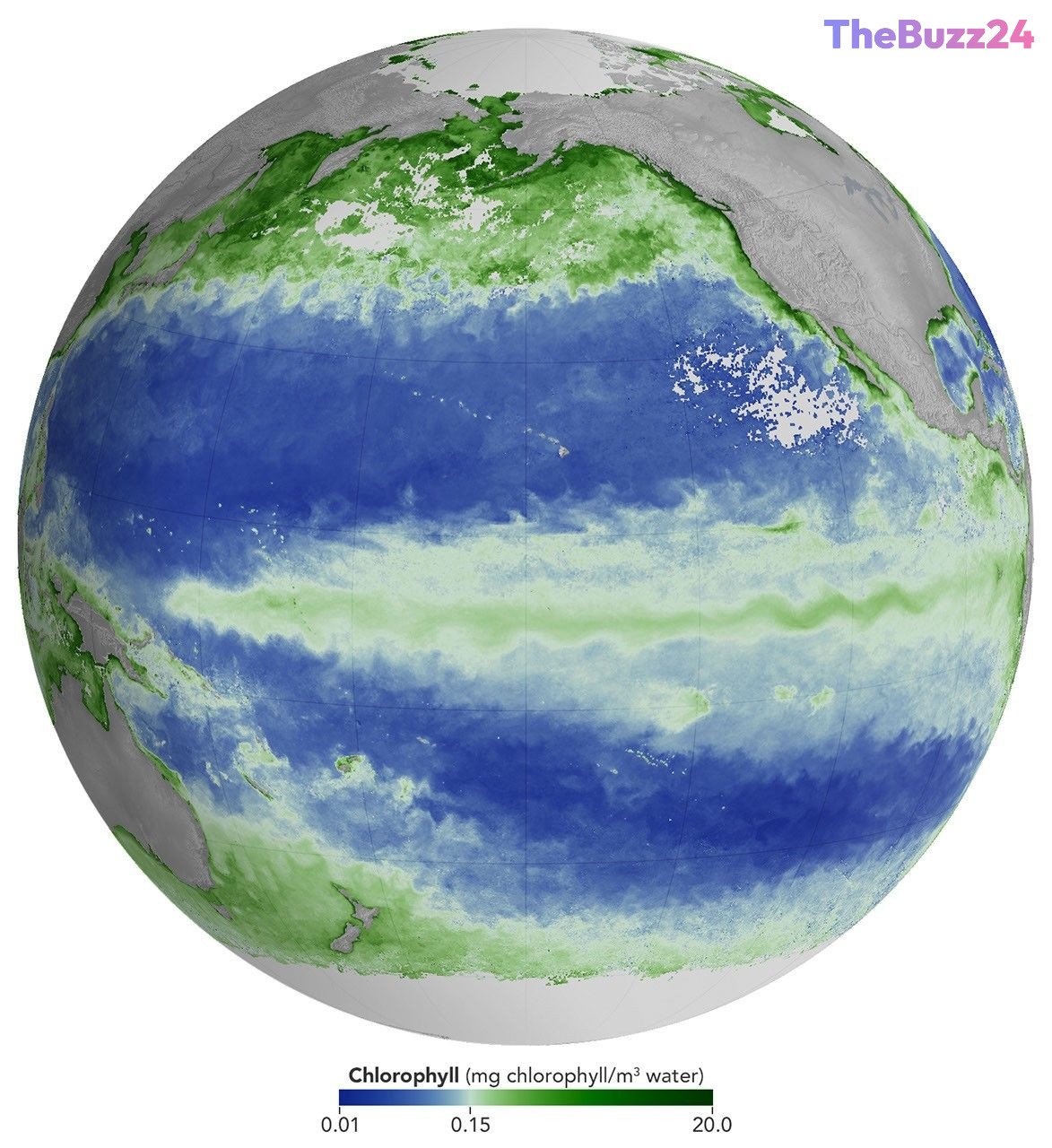
One of the most immediate ecological consequences of El Niño’s onset is a profound disruption to the marine food web. Satellite observations from the Ocean Color Instrument (OCI) aboard NASA’s Plankton, Aerosol, Cloud, ocean Ecosystem (PACE) satellite reveal a substantial decrease in chlorophyll-a concentrations in the central Pacific, particularly around the equator north of New Zealand, when comparing June 2026 (during El Niño’s strengthening) to neutral conditions in June 2025. Oceanographers Matthew Kehrli and Graham Trolley from NASA’s Goddard Space Flight Center explain that this reduction in phytoplankton abundance is a direct result of weakened easterly equatorial trade winds. These weaker winds allow the warm surface layer of the ocean to deepen, suppressing the vital upwelling of cool, nutrient-rich waters that typically fuel phytoplankton growth.
The decline in phytoplankton, the base of the marine food web, creates a cascading effect throughout the ocean ecosystem. Less phytoplankton means less food for zooplankton, which in turn impacts larger marine life such as fish, seabirds, and marine mammals. Historically, past El Niño events have led to severe declines in Peru’s anchovy fisheries, driven by similar conditions of warmer surface waters and reduced upwelling. In response to the current conditions, Peru’s Ministry of Production has already implemented suspensions of the anchovy fishery to protect this crucial national resource. Reports indicate that pelicans, struggling to find food in their usual habitats, have been observed venturing into Peruvian ports and urban areas.
Despite the severe disruptions, scientists note that a post-El Niño “chlorophyll rebound” is possible, often characterized by higher-than-normal concentrations in the equatorial Pacific. This resurgence can be fueled by increased iron concentrations delivered by ocean currents and dust from drier land in Central and South America, even without a subsequent La Niña event. The PACE mission, launched in February 2024, provides unprecedented tools for studying these variations. Its global, near-daily hyperspectral measurements will allow the scientific community to observe the 2026 El Niño with greater detail than ever before, enabling researchers to better understand the responses of specific phytoplankton communities and broader ecological impacts, both marine and terrestrial.
Key Takeaways
- El Niño is intensifying, causing warmer equatorial Pacific waters and altered ocean circulation patterns.
- This leads to a significant reduction in phytoplankton (chlorophyll-a) due to suppressed upwelling of nutrient-rich waters.
- The decline in phytoplankton severely impacts the entire marine food web, affecting zooplankton, fish, seabirds, marine mammals, and critical fisheries like Peru's anchovy industry.
Editor’s Analysis & Impact
The immediate and severe impact on fisheries, particularly Peru’s anchovy industry, highlights the economic vulnerability of coastal nations to climate phenomena. Fishery suspensions, while necessary for conservation, lead to significant economic losses for local communities and can ripple through global seafood markets. This underscores the need for robust climate adaptation strategies in resource-dependent economies. With El Niño expected to strengthen further, marine ecosystems face prolonged stress. However, advanced satellite missions like NASA’s PACE offer unprecedented data for monitoring and understanding these changes. This improved observational capacity could lead to more accurate forecasts and better-informed management decisions, potentially mitigating future impacts. This event serves as a stark reminder of the interconnectedness of atmospheric and oceanic systems with biological productivity. It emphasizes the critical role of phytoplankton as the foundation of marine life and the cascading effects when this foundation is disturbed, impacting biodiversity, food security, and regional economies.
Frequently Asked Questions
Q: What is El Niño and how does it affect ocean temperatures?
A: El Niño is a natural climate pattern characterized by warmer-than-normal sea surface temperatures in the equatorial Pacific Ocean. It alters atmospheric and oceanic circulation patterns, leading to widespread changes in weather and ocean conditions globally.
Q: Why does El Niño lead to a decrease in phytoplankton?
A: During El Niño, easterly trade winds weaken, causing the warm surface layer of the ocean to deepen. This suppresses the upwelling of cool, nutrient-rich waters from the deep ocean, which are essential for phytoplankton growth. With fewer nutrients reaching the surface, phytoplankton populations decline.
Q: What are the broader consequences of reduced phytoplankton for marine life and human activities?
A: As the base of the marine food web, a reduction in phytoplankton has cascading effects. It means less food for zooplankton, fish, seabirds, and marine mammals, potentially leading to population declines. For humans, this directly impacts fisheries, causing reduced catches, economic losses, and necessitating conservation measures like fishing suspensions, as seen with Peru's anchovy industry.
AI Disclosure: This article is based on verified data and official reports. Our Team and AI have cross-referenced every financial detail with primary sources to ensure total accuracy.
More from this Category