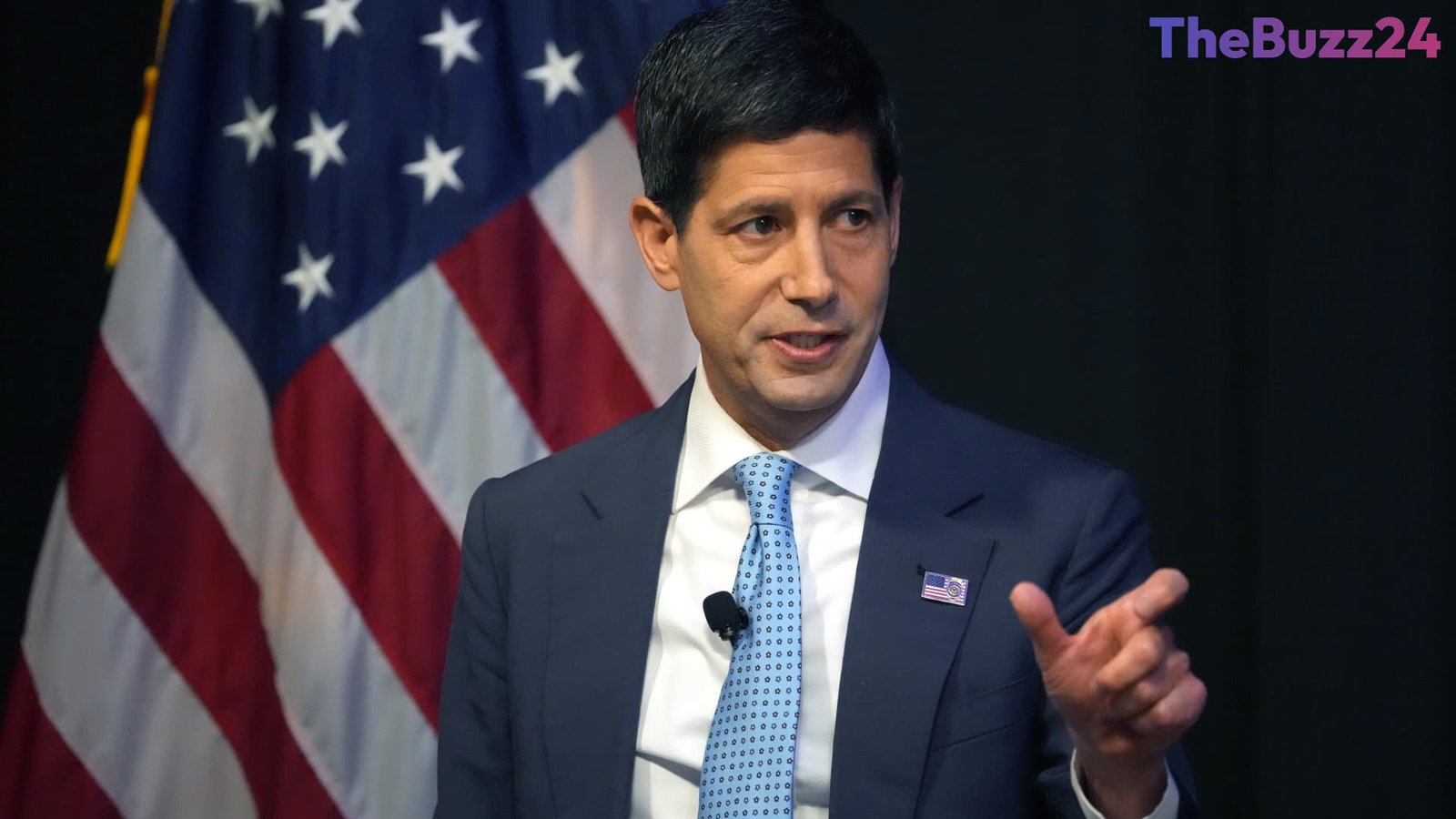
Fed Chair Kevin Warsh Weighs the Economic Promise and Peril of ‘Super Intelligence’
Federal Reserve Chairman Kevin Warsh recently addressed the profound economic implications of artificial intelligence, now increasingly referred to as ‘super intelligence’ within government circles. Speaking at a productivity and employment task force summit in San Francisco, Warsh highlighted the technology as a transformative force capable of reshaping the modern economic landscape. He emphasized that while the technology holds the potential to drive significant productivity gains and act as a disinflationary catalyst, its long-term trajectory remains uncertain.
Warsh outlined a spectrum of potential outcomes for the U.S. economy. On the optimistic side, he noted that widespread adoption could accelerate real economic growth while maintaining full employment. Conversely, he warned of the risks associated with rapid automation, which could lead to significant job displacement and rising unemployment rates. These dual possibilities present a complex challenge for future monetary policy, as the central bank must navigate the shifting dynamics of labor and output.
Beyond the immediate labor concerns, Warsh cautioned that the current enthusiasm surrounding the technology could lead to a scenario of disappointment. He noted that if massive capital investments and inflated equity valuations fail to yield the expected productivity breakthroughs, the market could face a correction. Such a downturn could trigger an economic slowdown, leaving the economy to recover without the anticipated efficiency gains that currently underpin market optimism.
This discussion took place during a broader initiative led by Warsh, who has established several task forces to examine critical economic pillars, including inflation frameworks and data reliance. The San Francisco summit featured a range of experts, including venture capitalist Marc Andreessen, as the Federal Reserve seeks to better understand how emerging technologies will influence its mandate in the years to come.
Key Takeaways
- Federal Reserve Chair Kevin Warsh identifies 'super intelligence' as a major economic force that could either boost productivity or cause significant labor displacement.
- The Fed is actively monitoring how AI-driven productivity gains might influence future monetary policy and inflation control.
- Warsh warned of a potential 'disappointment' scenario where high capital investment fails to deliver promised returns, potentially leading to market corrections and economic slowdowns.
Editor’s Analysis & Impact
The remarks from Fed Chair Kevin Warsh signal that the central bank is moving beyond treating AI as a mere tech-sector trend and is now integrating it into its core macroeconomic forecasting. By framing AI as a potential disinflationary force, Warsh is acknowledging that technology could fundamentally alter the Fed’s ability to manage the business cycle. However, the explicit warning regarding ‘disappointment’ suggests a cautious stance toward the current market exuberance. If the Fed perceives that equity valuations are detached from actual productivity gains, it may influence future policy decisions regarding interest rates and liquidity. The shift in terminology to ‘super intelligence’ also suggests that the government is preparing for a long-term strategic integration of these technologies, with the Fed positioning itself to act as a stabilizer against the volatility that such rapid innovation often introduces.
Frequently Asked Questions
Q: Why is the term 'super intelligence' being used instead of AI?
A: The term is being adopted following a directive from the U.S. government to use 'super intelligence' as the primary descriptor for advanced artificial intelligence technologies.
Q: What are the primary economic risks of AI according to Kevin Warsh?
A: The primary risks include widespread job displacement due to automation and the possibility that heavy capital investment in AI fails to produce the expected productivity gains, leading to market instability.
AI Disclosure: This article is based on verified data and official reports. Our Team and AI have cross-referenced every financial detail with primary sources to ensure total accuracy.
More from this Category