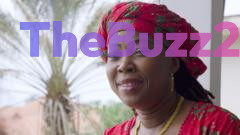
From Child Bride Escapee to Sierra Leone’s Influential First Lady: Fatima Bio’s Journey
Fatima Bio, the current First Lady of Sierra Leone, has navigated a remarkable life trajectory, transforming from a teenager facing an arranged marriage to a prominent and often debated figure in national politics. Her personal journey, marked by escape from a child marriage and subsequent life in the UK, has profoundly shaped her advocacy for women and girls, particularly in her push for legislation against child marriage, which was enacted in 2024.
Bio’s early life was dramatically altered when her father, a diamond miner, arranged her marriage at the age of 13 to a man in his 30s. However, the outbreak of Sierra Leone’s civil war provided an opportunity for escape. At 16, she fled to the UK with the help of relatives, seeking asylum and a new beginning. In London, she found independence and her voice, which she now uses to champion causes for young people. Her experiences in the UK also led to her maintaining a council flat in Southwark, a decision that has drawn scrutiny given her position as First Lady, though she defends it by stating her children are British citizens and she pays for the accommodation herself.
As First Lady, Bio is a dynamic presence, seen by some as a progressive force advocating for issues like period poverty and educational equality for girls, while others criticize her for perceived overreach into political affairs and her outspoken nature. She actively engages with the public through social media, addressing taboo subjects and distributing sanitary products to combat school absenteeism. Her role as head of the Organization of African First Ladies for Development (Oaflad) highlights her growing influence, yet her active participation in political rallies and public challenges to officials have led to criticism for stepping beyond the traditionally ceremonial role of a First Lady.
Bio’s public image is carefully curated, presenting an aspirational narrative for Sierra Leone, a country often defined by its history of conflict and resource exploitation. She actively works to refresh her nation’s image, emphasizing its religious tolerance and achievements, such as hosting the first girls’ high school in sub-Saharan Africa. Despite facing controversies, including criticism over her family’s properties and an alleged association with a wanted drug dealer, Bio remains resolute. She maintains that her actions are driven by a desire to serve the people and improve their lives, leaving open the possibility of future political aspirations, guided by her faith.
Key Takeaways
- Fatima Bio, Sierra Leone's First Lady, escaped an arranged child marriage at 16 and later moved to the UK, where she gained independence and became an advocate for women's rights.
- She has championed a law banning child marriage in Sierra Leone, enacted in 2024, and actively addresses issues like period poverty to improve girls' education.
- Bio is a polarizing figure, admired by some for her activism and criticized by others for perceived political overreach and controversies surrounding her personal affairs.
Editor’s Analysis & Impact
Fatima Bio’s story is a compelling narrative of personal resilience intersecting with national politics. Her active engagement in social and political issues, while polarizing, reflects a growing trend of influential women seeking to redefine traditional roles. Her advocacy on issues like child marriage and period poverty addresses critical developmental challenges in Sierra Leone. However, the controversies surrounding her public profile, including her UK housing and alleged associations, highlight the intense scrutiny faced by public figures, especially those who challenge established norms. Her influence could pave the way for greater female participation in leadership, but also underscores the delicate balance between activism and the perceived boundaries of a First Lady’s office. The long-term impact will depend on her ability to navigate these challenges and translate her influence into sustainable policy changes.
Frequently Asked Questions
Q: What is Fatima Bio's background before becoming First Lady?
A: Fatima Bio was almost married off as a child bride at 13. She escaped this fate at 16 due to the civil war in Sierra Leone and sought asylum in the UK, where she gained independence and became an activist.
Q: What are Fatima Bio's main advocacy areas?
A: She is a strong advocate for women and girls, particularly focusing on ending child marriage, combating period poverty to ensure girls can attend school, and promoting education and equality.
Q: Why is Fatima Bio considered a divisive figure?
A: While many admire her for her outspokenness and activism on social issues, others criticize her for allegedly overstepping the traditional role of a First Lady, becoming too involved in politics, and facing controversies regarding her personal life and associations.
AI Disclosure: This article is based on verified data and official reports. Our Team and AI have cross-referenced every financial detail with primary sources to ensure total accuracy.
More from this Category