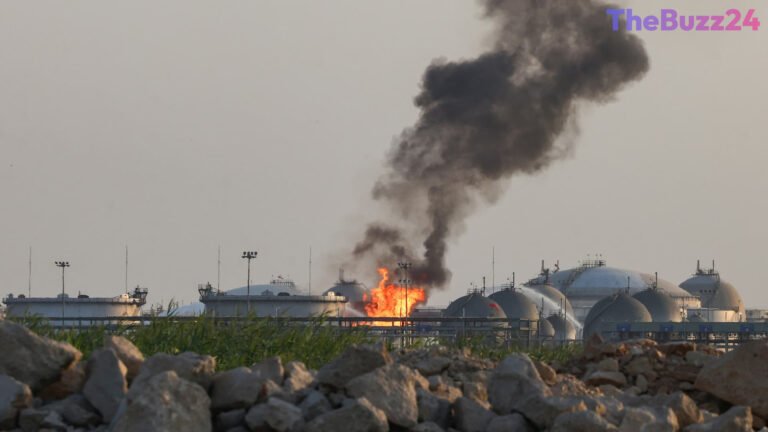
Geopolitical Alarms Ring: Trump’s Iran Warnings Spark Oil Surge and Global Market Retreat
Financial markets across the Asia-Pacific region experienced a sharp downturn on Monday as geopolitical tensions in the Middle East flared once again. The market anxiety follows a stern social media warning from Donald Trump directed at Tehran, where he declared that the “clock is ticking” and hinted at severe repercussions if specific demands are left unaddressed. This escalating rhetoric has reignited deep-seated fears among global investors regarding the stability of energy supply chains in one of the world’s most critical oil-producing regions.
In immediate response to the heightened political friction, energy markets experienced a notable surge. International benchmark Brent crude futures for July delivery climbed 1.34% to settle at $110.72 per barrel, while U.S. West Texas Intermediate (WTI) futures for June rose by 1.75% to reach $107.26 per barrel. Market analysts point to the potential disruption of the Strait of Hormuz—a vital maritime transit point for global oil shipments—as a primary driver behind the sudden price spike, as traders brace for potential supply bottlenecks.
The ripple effects of the geopolitical standoff quickly spread to global equity and bond markets. In Asia, South Korea’s Kospi index tumbled by more than 2%, while Australia’s S&P/ASX 200 fell by 0.76%, and Japan’s Nikkei 225 registered modest losses. Concurrently, Japanese government bond yields surged by over 8 basis points to 2.785%, reflecting growing anxieties over energy-driven global inflation. This sell-off follows a volatile week on Wall Street, where major indices closed lower amid heavy profit-taking in the technology sector.
As U.S. stock futures remained largely unchanged, investors are pivoting their attention toward upcoming corporate earnings, particularly from retail giants and semiconductor leader Nvidia. The broader market sentiment remains fragile, compounded by recent pullbacks in major technology firms such as Intel, Advanced Micro Devices (AMD), and Micron Technology. Market participants are now forced to navigate a highly complex environment characterized by shifting monetary policy expectations and unpredictable geopolitical risks.
Key Takeaways
- Donald Trump's social media warnings to Iran have heightened geopolitical risks, causing a sell-off in Asia-Pacific stock markets.
- Global oil benchmarks Brent crude and WTI both surged over 1% due to fears of supply disruptions in the Strait of Hormuz.
- Rising energy costs have sparked inflation concerns, driving up Japanese government bond yields and weighing on tech-heavy indices.
Editor’s Analysis & Impact
The convergence of geopolitical instability and inflationary pressures presents a challenging environment for global markets. The immediate spike in crude oil prices underscores the vulnerability of global energy supply chains, particularly around the Strait of Hormuz. If tensions between the U.S. and Iran escalate further, sustained high energy costs could derail central banks’ efforts to tame inflation, potentially forcing interest rates to remain higher for longer. This macroeconomic headwind comes at a delicate time for the technology sector, which is already undergoing a healthy correction after a period of aggressive growth. Investors should prepare for heightened volatility in the near term, with a close eye on upcoming earnings from bellwethers like Nvidia to gauge whether corporate fundamentals can withstand these mounting geopolitical and macroeconomic pressures.
Frequently Asked Questions
Q: Why did oil prices rise following the geopolitical tensions?
A: Oil prices surged because of fears that escalating tensions between the U.S. and Iran could lead to military conflict or blockades in the Strait of Hormuz, a critical maritime chokepoint through which a significant portion of the world's oil supply passes.
Q: How did Asian stock markets react to the news?
A: Major Asian indices fell, with South Korea's Kospi dropping over 2% and Australia's S&P/ASX 200 declining by 0.76%, as investors fled riskier assets in favor of safer havens.
Q: What other factors are currently influencing investor sentiment?
A: Beyond geopolitical risks, investors are closely monitoring upcoming quarterly earnings reports from major retail corporations and tech giants like Nvidia, alongside navigating recent pullbacks in semiconductor stocks like Intel and AMD.
AI Disclosure: This article is based on verified data and official reports. Our Team and AI have cross-referenced every financial detail with primary sources to ensure total accuracy.
More from this Category