High-Stakes Diplomacy in Doha: US Envoys Arrive for Indirect Talks Amid Fragile Iran Truce
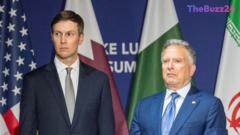
High-level diplomatic efforts are underway in Doha as US special envoy Steve Witkoff and Jared Kushner, son-in-law to President Donald Trump, arrived in the Qatari capital for critical discussions. The envoys are meeting with regional mediators to navigate the highly sensitive negotiations between Washington and Tehran. However, officials have confirmed that no direct meetings or high-level talks between the US representatives and Iranian officials are currently scheduled, highlighting the deeply cautious and indirect nature of the current diplomatic track.
This diplomatic push follows a volatile period marked by a four-day exchange of military strikes between the US and Iran, which threatened to derail a fragile preliminary agreement aimed at ending a four-month conflict involving the US, Israel, and Iran. The flare-up was ignited by disputes over the reopening of the Strait of Hormuz, a critical maritime chokepoint responsible for the transit of approximately 20 percent of the world’s oil and gas shipments. While both nations have since agreed to stand down and allow commercial vessels to move freely, the recent hostilities underscore the precariousness of the ceasefire.
The foundation of the current talks rests on a memorandum of understanding (MoU) brokered by Pakistan and Qatar less than two weeks ago. The agreement outlines a 60-day window to negotiate a permanent truce, address Iran’s nuclear program, and resolve outstanding US sanctions. Technical discussions are expected to continue through lower-ranking officials, focusing on specific tracks such as regional security, economic performance, and nuclear issues.
A major point of contention remains the release of frozen Iranian assets. While Tehran is pushing for the release of $6 billion of the $12 billion currently held in Qatar, mediators have emphasized that any financial unlocking is strictly contingent on tangible progress in the bilateral negotiations. Iranian officials are also expected to engage with Qatari mediators to discuss the implementation of the MoU, maintaining that they will take all necessary measures to safeguard their interests in the Strait of Hormuz.
Key Takeaways
- US envoys Steve Witkoff and Jared Kushner are in Doha to hold indirect talks with mediators regarding US-Iran relations, with no direct meetings scheduled with Iranian officials.
- The diplomatic push follows a recent exchange of military strikes over the Strait of Hormuz, a vital global energy corridor, which threatened a newly brokered memorandum of understanding.
- The release of $6 billion in frozen Iranian assets remains tied to the progress of these negotiations, which also cover Iran's nuclear program and US sanctions.
Editor’s Analysis & Impact
The diplomatic mission to Doha highlights the extreme fragility of the current Middle Eastern security architecture. The Strait of Hormuz remains a critical vulnerability for global energy markets; even brief disruptions can trigger spikes in oil prices and disrupt international trade. By utilizing indirect mediation through Qatar and Pakistan, both Washington and Tehran are attempting to de-escalate without appearing politically compromised at home. However, the reliance on indirect communication increases the risk of miscalculation, as evidenced by the recent military exchanges. For global markets, the key indicator of stability will be whether technical talks can successfully transition into a formal, long-term treaty within the 60-day window outlined in the MoU. Investors should brace for continued volatility in energy sectors until a concrete agreement on sanctions and maritime security is finalized.
Frequently Asked Questions
Q: Why are US and Iranian officials not meeting directly in Doha?
A: Due to deep-seated political tensions and the sensitive nature of the negotiations, both nations are currently utilizing Qatari and Pakistani mediators to convey proposals and manage discussions indirectly.
Q: What is the significance of the Strait of Hormuz in this conflict?
A: The Strait of Hormuz is a vital global maritime chokepoint through which roughly 20% of the world's oil and gas shipments pass. Disputes over its control and transit rights have previously triggered military exchanges and threaten global energy security.
Q: What is the status of the frozen Iranian assets?
A: Iran is seeking the release of $6 billion of the $12 billion in frozen assets held in Qatar. However, mediators have stated that the release of these funds is strictly dependent on progress made during the ongoing negotiations.
AI Disclosure: This article is based on verified data and official reports. Our Team and AI have cross-referenced every financial detail with primary sources to ensure total accuracy.
More from this Category