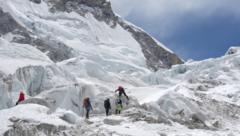
Mount Everest Climbing Season Stalled by Massive Ice Obstruction
The spring climbing season on Mount Everest has hit a major roadblock as a massive, unstable serac—a 100-foot-tall block of ice—has rendered the primary route from Base Camp impassable. Located just below Camp 1, this natural barrier has halted the work of the specialized ‘icefall doctors’ tasked with installing the essential ropes and ladders required for a safe ascent. Currently, there is no viable bypass, forcing expedition teams to wait for the ice to melt naturally before they can proceed with establishing the route to higher camps.
This unexpected delay has significantly disrupted the carefully planned acclimatization schedules for hundreds of climbers. Experts warn that the bottleneck could lead to dangerous overcrowding on the upper slopes later in the season, as the window for safe summit attempts narrows. While the Sagarmatha Pollution Control Committee has ruled out scaling the unstable ice block due to safety concerns, officials are considering contingency plans, including the potential use of helicopters to transport equipment and personnel directly to Camp 2 to bypass the obstruction.
Despite the logistical challenges, the demand for Everest expeditions remains high. Nepal has already issued 367 climbing permits for the season, with a notable increase in interest from international climbers. To manage the influx and address historical concerns regarding congestion, authorities have implemented stricter permit regulations and raised climbing fees to $15,000 for foreign nationals. As the weather window typically closes in late May, the pressure is mounting for the route to be cleared quickly to allow for a successful, albeit compressed, climbing season.
Key Takeaways
- A 100-foot ice serac has blocked the primary route to Camp 1, stalling the start of the Everest climbing season.
- Expedition leaders are considering helicopter support to bypass the blockage, as natural melting is the only current solution.
- Nepal has increased permit fees and tightened regulations to manage overcrowding, despite a high volume of climbers this year.
Editor’s Analysis & Impact
The obstruction on Mount Everest highlights the increasing volatility of high-altitude mountaineering in the face of shifting environmental conditions. Beyond the immediate logistical delays, this incident underscores the fragility of the climbing infrastructure that supports a multi-million dollar industry in Nepal. The reliance on ‘icefall doctors’ to manually secure routes makes the entire season vulnerable to singular geological events. Furthermore, the decision to raise permit fees while simultaneously facing a compressed climbing window suggests a growing tension between revenue generation and safety management. If the window for summiting continues to shrink due to climate-related instability or bureaucratic delays, the industry may face a long-term shift toward fewer, more expensive, and highly regulated expeditions, potentially altering the economic landscape for local Sherpa communities and international operators alike.
Frequently Asked Questions
Q: Why can't the climbers just climb over the ice block?
A: The 100-foot ice block, or serac, is considered too unstable and dangerous to scale, posing a significant risk of collapse to anyone attempting to traverse it.
Q: How does this delay affect the safety of climbers?
A: The delay compresses the climbing season, which may force a large number of climbers to attempt the summit simultaneously once the route is open, increasing the risk of dangerous traffic jams on the mountain.
AI Disclosure: This article is based on verified data and official reports. Our Team and AI have cross-referenced every financial detail with primary sources to ensure total accuracy.
More from this Category