Iran’s Supreme Leader’s Remains Honored in Solemn Processions Through Iraqi Holy Cities
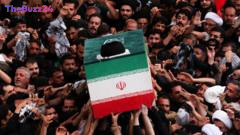
The funeral ceremonies for Iran’s late Supreme Leader, Ayatollah Ali Khamenei, have continued for a fifth day, featuring significant processions through two of Shia Islam’s most revered shrines located in neighboring Iraq. Tens of thousands of mourners gathered in the city of Najaf, participating in a procession that culminated at the mausoleum of Imam Ali, a pivotal figure in Shia Islam. Within the sacred site, attendees vied for a chance to touch the coffin before funeral prayers commenced.
The solemn observances later extended to the city of Karbala, where Khamenei’s remains were transported for another public procession. This event concluded at the shrine of Imam Hussein, another deeply respected Imam in Shia tradition. These ceremonies underscore the profound religious and political significance attached to Khamenei’s passing within the Shia world.
Ayatollah Khamenei, who passed away during a period of heightened conflict between Iran and the United States and Israel, is slated for burial on Thursday in Mashhad, Iran. The funeral events in Iraq saw the participation of Iranian President Masoud Pezeshkian and other high-ranking officials, who were met by Iraqi Prime Minister al-Zaidi. The Iraqi government declared Wednesday a public holiday to accommodate the ceremonies, highlighting the regional importance of the occasion.
Reports indicate that Iran’s newly appointed Supreme Leader, Mojtaba Khamenei, who succeeded his father, has not been publicly visible since allegedly sustaining serious injuries in an Israeli airstrike. This strike, which reportedly claimed the lives of his father, wife, and other family members, occurred on February 28th in Tehran. The ongoing geopolitical tensions, including recent exchanges between the US and Iran following tanker attacks in the Strait of Hormuz, add a complex layer to the mourning period and Iran’s international relations.
Key Takeaways
- Funeral processions for Iran's late Supreme Leader Ayatollah Ali Khamenei were held in Najaf and Karbala, Iraq, drawing large crowds.
- The ceremonies took place amidst ongoing geopolitical tensions between Iran, the US, and Israel, following recent military exchanges.
- Iran's President Pezeshkian attended the events in Iraq, while the newly appointed Supreme Leader, Mojtaba Khamenei, has not appeared publicly since an alleged airstrike.
Editor’s Analysis & Impact
The extensive funeral ceremonies for Ayatollah Ali Khamenei, particularly those held in Iraq’s holiest Shia sites, signal a deliberate effort by Iran to project religious and political influence across the region. The participation of Iranian leadership and the declaration of a public holiday in Iraq underscore the deep ties between the two nations. However, the events are overshadowed by escalating tensions with the US and Israel, and the uncertain health of the new Supreme Leader. This confluence of factors suggests a period of potential instability and strategic maneuvering for Iran, both domestically and on the international stage, as it navigates leadership succession and ongoing conflicts.
Frequently Asked Questions
Q: Where were the main funeral ceremonies for Ayatollah Ali Khamenei held in Iraq?
A: The main funeral ceremonies were held in the Shia holy cities of Najaf and Karbala in Iraq, with processions passing through the mausoleums of Imam Ali and Imam Hussein, respectively.
Q: Who attended the funeral ceremonies in Iraq?
A: Iranian President Masoud Pezeshkian and other senior Iranian officials attended the ceremonies. The Iraqi Prime Minister al-Zaidi also welcomed the delegation, and the Iraqi government declared a public holiday.
Q: What is the current geopolitical context surrounding these events?
A: The funeral ceremonies are taking place amid heightened tensions and recent military exchanges between Iran, the US, and Israel, following attacks on oil tankers in the Strait of Hormuz. This adds a layer of complexity to Iran's internal affairs and international relations.
AI Disclosure: This article is based on verified data and official reports. Our Team and AI have cross-referenced every financial detail with primary sources to ensure total accuracy.
More from this Category