Israel Accelerates West Bank Settlement Expansion with Controversial E1 Project
The Israeli government has advanced plans to expand a highly controversial settlement in the occupied West Bank, signaling a firm commitment to preventing the establishment of a Palestinian state. Prime Minister Benjamin Netanyahu recently solidified plans to push forward with construction in the strategically critical E1 area, located just east of Jerusalem. The move has gained momentum with the opening of tenders for approximately 1,200 new settlement homes, drawing widespread international condemnation.
The E1 project has long been a red line for international diplomats. Opponents warn that building in this sector would effectively bisect the West Bank, cutting off the northern territory from the south and isolating East Jerusalem from other Palestinian urban centers like Ramallah and Bethlehem. The United Nations has warned that the development poses an existential threat to any future Palestinian state, while a joint statement from the United Kingdom, France, Germany, Italy, and Canada labeled the plans unacceptable.
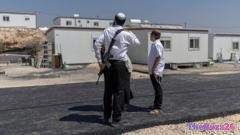
Since capturing the West Bank in 1967, Israel has established roughly 160 settlements, which are now home to about 700,000 residents. While international law prohibits an occupying power from settling its civilian population in occupied territory, the pace of construction has surged dramatically since Netanyahu returned to power in late 2022 at the head of a right-wing coalition. This expansion has accelerated further following the outbreak of conflict in Gaza. Satellite analysis reveals rapid development in settlements such as Tzofim and Kochav Hashahar, alongside the retrospective legalization of unauthorized outposts.
Beyond housing construction, the administration of the West Bank has undergone a significant structural shift. Control over much of the territory’s daily administration has transitioned from military authorities to a civilian agency led by Finance Minister Bezalel Smotrich. This administrative shift has been accompanied by more than $360 million in funding for new highway networks. While these roads connect Israeli settlements, they simultaneously divide Palestinian towns, establishing permanent physical infrastructure ahead of upcoming national elections.
Key Takeaways
- Israel has opened tenders for 1,200 new homes in the strategic E1 area, a move that could physically divide the West Bank.
- The international community, including the UN and several European nations, has strongly condemned the expansion as a threat to a two-state solution.
- A shift from military to civilian administration, backed by $360 million in road funding, is rapidly integrating the settlements into Israel's permanent infrastructure.
Editor’s Analysis & Impact
The acceleration of the E1 settlement project represents a critical geopolitical shift that could permanently alter the landscape of the Israeli-Palestinian conflict. By physically bisecting the West Bank and isolating East Jerusalem, the development effectively dismantles the viability of a contiguous Palestinian state—a long-standing cornerstone of international diplomacy. Domestically, the Netanyahu administration is leveraging this expansion to solidify support among its right-wing base ahead of highly competitive elections. However, the transition from military to civilian administration in the West Bank, coupled with aggressive infrastructure funding, suggests a deeper, structural integration of these territories. This strategy of creating irreversible ‘facts on the ground’ will likely deepen Israel’s diplomatic isolation and escalate regional tensions, making future peace negotiations exceedingly difficult to initiate.
Frequently Asked Questions
Q: Why is the E1 settlement area considered so controversial?
A: The E1 area is strategically located east of Jerusalem. Developing it would effectively cut the West Bank in half, separating the northern and southern regions, and isolating East Jerusalem from Palestinian territory, which critics say makes a contiguous Palestinian state impossible.
Q: What is the legal status of these settlements?
A: Under international law, the West Bank is considered occupied territory, which prohibits an occupying power from settling its civilian population there. Consequently, the international community views all Israeli settlements in the West Bank as illegal.
Q: How has the administration of the West Bank changed recently?
A: Responsibility for administering the West Bank has increasingly shifted from military oversight to a civilian authority led by Finance Minister Bezalel Smotrich, facilitating rapid infrastructure development and settlement integration.
AI Disclosure: This article is based on verified data and official reports. Our Team and AI have cross-referenced every financial detail with primary sources to ensure total accuracy.
More from this Category