Satellite Revolution: Mapping the World’s Hidden Freshwater Reserves
Global freshwater management is undergoing a significant transformation as satellite observation technology reaches new levels of precision. By leveraging decades of orbital data, researchers are now able to monitor the health and capacity of reservoirs, lakes, and streams with unprecedented accuracy. This shift is critical for managing resources essential to hydroelectric power, irrigation, and public drinking water supplies, which are increasingly threatened by climate volatility and human consumption.
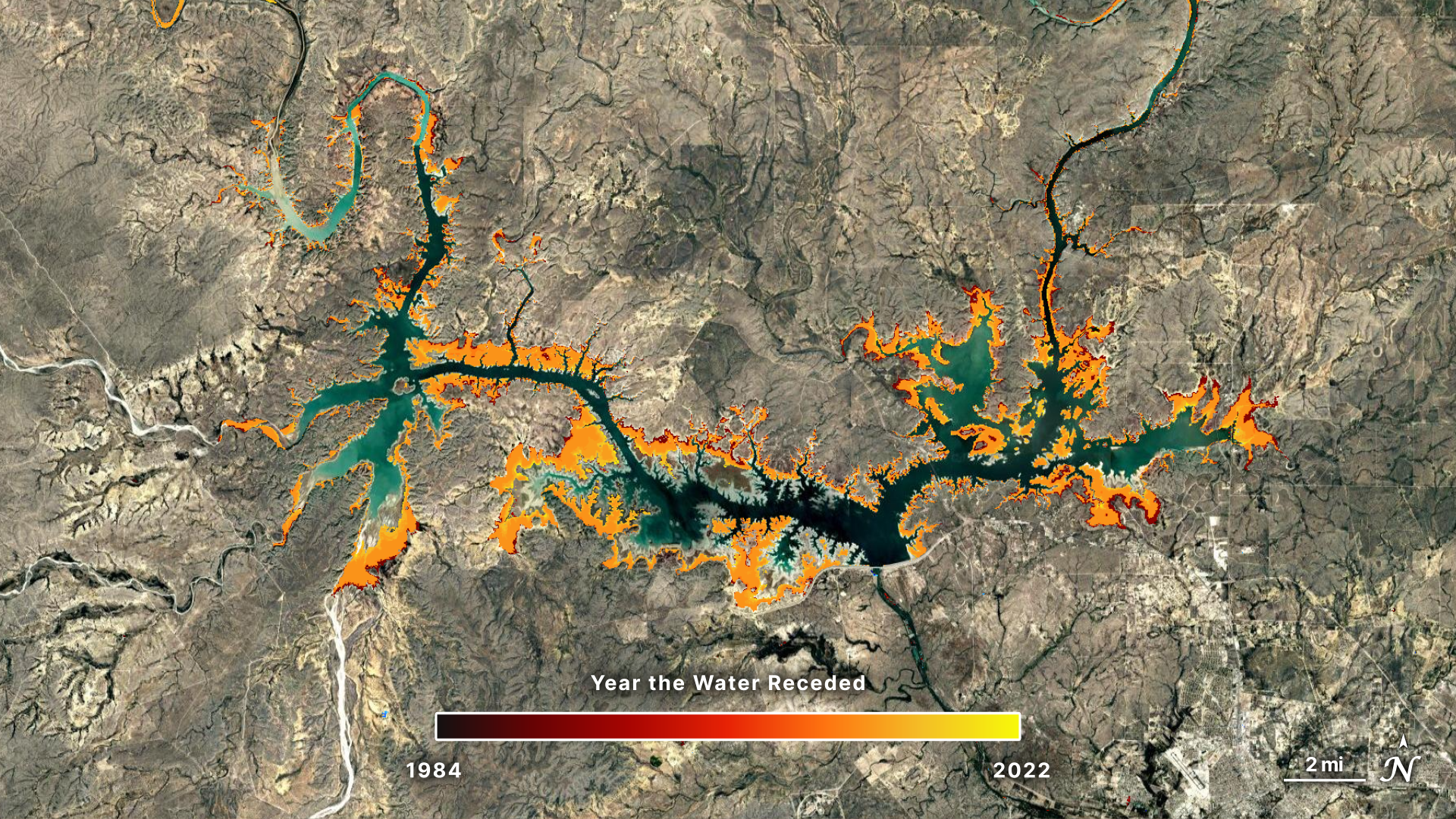
Central to this advancement is the analysis of Landsat satellite imagery spanning from 1984 to 2022. Utilizing sophisticated algorithms like the Modified Normalized Difference Water Index (mNDWI), scientists can now distinguish between temporary seasonal fluctuations and permanent environmental shifts. This capability allows for the detection of water bodies as small as 900 square meters, providing a granular view of how landscapes are changing over time, such as the documented recession of the Amistad Reservoir.
Beyond surface-level monitoring, the integration of laser altimetry from the ICESat-2 satellite has enabled the creation of the ‘3D-LAKES’ dataset. This initiative maps the underwater topography of approximately half a million water bodies globally. By understanding the bathymetry of these reservoirs, planners can accurately calculate water storage capacity at various levels, a feat that was previously hindered by logistical and financial constraints. These combined tools offer a robust framework for flood risk assessment, habitat preservation, and drought mitigation strategies.
Key Takeaways
- Satellite data from 1984 to 2022 is being used to track permanent changes in global surface water with high precision.
- The new '3D-LAKES' dataset uses laser altimetry to map the underwater topography of over 500,000 lakes and reservoirs.
- Advanced algorithms now allow for the distinction between temporary seasonal water changes and long-term environmental transformations.
Editor’s Analysis & Impact
The integration of satellite-based bathymetry and long-term surface monitoring represents a paradigm shift in environmental resource management. By moving from reactive water management to data-driven predictive modeling, governments and utility providers can optimize water usage during periods of scarcity and better prepare for extreme weather events. The economic implications are profound; accurate storage capacity data directly impacts the efficiency of hydroelectric grids and the stability of agricultural supply chains. As climate change continues to alter hydrological cycles, these satellite tools will become indispensable assets for national security and economic planning. The future outlook suggests that as these datasets become more accessible, we will see a surge in AI-driven water management software that can automate reservoir regulation, ultimately reducing waste and preventing catastrophic water shortages in vulnerable regions.
Frequently Asked Questions
Q: How does satellite technology distinguish between seasonal water changes and permanent ones?
A: Researchers use advanced algorithms like the Modified Normalized Difference Water Index (mNDWI) to analyze long-term trends in Landsat imagery, allowing them to filter out temporary seasonal fluctuations and identify permanent landscape transformations.
Q: What is the significance of the '3D-LAKES' dataset?
A: The 3D-LAKES dataset provides a global map of underwater topography for roughly half a million lakes and reservoirs, allowing scientists to calculate water storage capacity accurately based on varying water levels.
AI Disclosure: This article is based on verified data and official reports. Our Team and AI have cross-referenced every financial detail with primary sources to ensure total accuracy.
More from this Category