Mali Forces Repel Major Militant Assault, Claim Dozens Killed Amid Escalating Insurgency
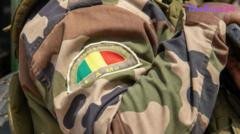
Malian armed forces recently reported repelling a significant militant assault on a military base in San, claiming to have neutralized dozens of Islamist fighters. The attack, which occurred on Sunday, was swiftly claimed by Jama’at Nusrat al-Islam wal-Muslimin (JNIM), an al-Qaeda-affiliated jihadist group, which asserted its fighters had briefly seized control of the facility. While the Malian army disputed ceding full control, it acknowledged that its soldiers had to execute a “temporary retreat” during the intense engagement.
According to Lt Col El Oumrani, commander of the 23rd regiment stationed in San, approximately 40 “terrorists” were eliminated, and the assault was successfully repelled. He urged local residents to maintain vigilance, reassuring them that the base remained firmly under army custody. Witnesses described the attack commencing around 05:00 local time and lasting for approximately two hours. The assailants reportedly arrived on motorcycles and foot, with some attempting to infiltrate the base disguised in army uniforms. Reports indicate that at least 10 soldiers were killed in the fighting, and the militants utilized drones, heavy machine guns, and armored vehicles to breach the perimeter.
This latest confrontation underscores the rapidly deteriorating security landscape in Mali, more than a decade after a jihadist insurgency first took root in the country’s northern regions. Since 2012, vast swathes of Mali’s north and east have remained outside government control, plagued by persistent insurgencies. JNIM, in particular, has demonstrated an alarming capacity to diversify and deepen its operational reach, now targeting central and southern Mali despite numerous military efforts. The nation has also witnessed broader coordinated attacks, such as those in April by an alliance of jihadists and separatist rebels, including the Azawad Liberation Front, aimed at destabilizing the military regime of Gen Assimi Goïta, who seized power in a 2020 coup. The April offensive notably included the death of Defence Minister Sadio Camara in an apparent suicide truck bombing near the capital, Bamako. Following the coup, which was partly justified by the previous government’s failure to improve security, Mali notably shifted its alliances, rejecting French military assistance in favor of support from Russia.
Key Takeaways
- Malian forces repelled a major militant attack on a base in San, claiming dozens of enemy fighters killed, though the militant group JNIM claimed temporary control.
- The incident highlights Mali's worsening security situation, with JNIM expanding its reach and the government struggling to control large parts of the country.
- The conflict is set against a backdrop of a 2020 military coup, a shift from French to Russian military support, and recent coordinated attacks by various rebel groups.
Editor’s Analysis & Impact
This latest militant assault in Mali underscores the profound and escalating security crisis gripping the Sahel nation. The persistent insurgency, particularly the expanding reach of groups like JNIM, signals a significant challenge to the military junta’s authority and its ability to stabilize the country. The shift from French military support to Russian assistance, a direct consequence of the 2020 coup, represents a critical geopolitical realignment with uncertain long-term implications for regional counter-terrorism efforts. Economically, sustained instability will continue to deter investment, disrupt trade, and exacerbate humanitarian challenges, pushing more people into displacement and poverty. The future outlook suggests a protracted conflict, with the potential for further regional spillover, demanding a more robust and coordinated international response beyond current approaches to prevent wider destabilization across West Africa.
Frequently Asked Questions
Q: Who is Jama'at Nusrat al-Islam wal-Muslimin (JNIM)?
A: JNIM is a prominent jihadist group operating in the Sahel region, particularly in Mali. It is affiliated with al-Qaeda and has been responsible for numerous attacks against military and civilian targets, seeking to establish an Islamist state.
Q: What factors contribute to Mali's deteriorating security situation?
A: Mali's security crisis stems from a complex interplay of factors, including a decade-long jihadist insurgency, ethnic tensions, weak governance, and the presence of various armed groups. The 2020 military coup and subsequent political instability have further exacerbated these challenges.
Q: Why did Mali shift its military alliances from France to Russia?
A: Following the 2020 coup, the Malian military junta, led by Gen Assimi Goïta, expressed dissatisfaction with the effectiveness of French military intervention in combating the insurgency. This led to a rejection of French support and a pivot towards Russia, which has since provided military assistance and personnel, reflecting a broader geopolitical shift in the region.
AI Disclosure: This article is based on verified data and official reports. Our Team and AI have cross-referenced every financial detail with primary sources to ensure total accuracy.
More from this Category