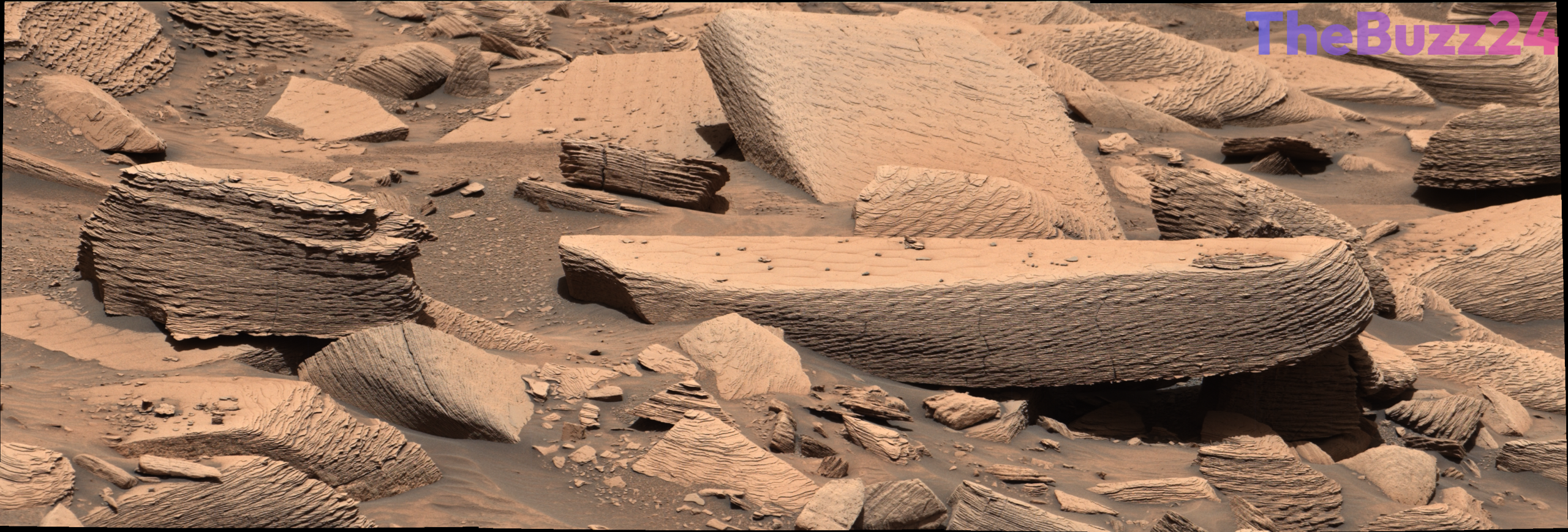
Martian Time Capsule: Curiosity Rover Uncovers Evidence of Ancient Mega-Storms
The Curiosity rover has provided a groundbreaking look into the atmospheric history of Mars, capturing evidence of an intense, hours-long sandstorm that occurred billions of years ago. By analyzing multilayered rock formations at a site researchers have dubbed ‘Jawbone Canyon,’ the rover identified unique sediment patterns that indicate sand ripples were forced to climb over one another during a period of extreme wind activity.
These geological structures, known as climbing wind ripple strata, represent the first discovery of their kind on the Red Planet. The sediment eventually hardened over eons, creating a rare, preserved record of a singular, dramatic weather event from Mars’ early history. This discovery offers scientists a tangible window into the environmental conditions that shaped the Martian surface long before the planet became the arid landscape observed today.
The findings were officially documented in a study featured on the cover of the journal Geology in July 2026. By examining these rock layers, planetary scientists are gaining a better understanding of the wind dynamics and atmospheric shifts that influenced the evolution of Mars, providing critical data for ongoing research into the planet’s past habitability and climate transitions.
Key Takeaways
- The Curiosity rover discovered rare 'climbing wind ripple strata' at a site on Mars called Jawbone Canyon.
- These rock formations serve as a geological time capsule, documenting an intense, hours-long sandstorm from billions of years ago.
- The discovery provides new insights into the ancient atmospheric conditions and wind dynamics of the Red Planet.
Editor’s Analysis & Impact
The discovery of climbing wind ripple strata by the Curiosity rover is a significant milestone in planetary geology. By identifying specific sediment patterns that correlate to ancient, high-intensity weather events, researchers can refine climate models for early Mars. This finding moves beyond mere surface observation, allowing scientists to reconstruct the atmospheric behavior of the planet during its formative years. The implications are broad; understanding how these storms shaped the landscape helps contextualize the transition of Mars from a potentially wetter, more active world to its current state. As mission data continues to be analyzed, these ‘time capsules’ will be essential for future exploration efforts, helping to map out areas of interest for potential sample return missions and providing a clearer picture of the environmental challenges early Mars presented.
Frequently Asked Questions
Q: What are climbing wind ripple strata?
A: These are geological structures formed when sand ripples are pushed by intense winds to climb over one another, eventually hardening into distinct, multilayered rock formations.
Q: Why is the discovery at Jawbone Canyon important?
A: It is the first time such evidence has been found on Mars, offering scientists a rare, preserved record of a specific, high-energy weather event from billions of years ago.
AI Disclosure: This article is based on verified data and official reports. Our Team and AI have cross-referenced every financial detail with primary sources to ensure total accuracy.
More from this Category