Massive Ukrainian Drone Campaign Strikes St. Petersburg as Putin Rejects Peace Negotiations
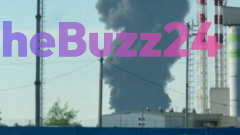
Ukraine has launched a massive and unprecedented wave of drone strikes targeting St. Petersburg and its surrounding areas, coinciding with the conclusion of Russia’s high-profile annual economic forum. The aerial assault prompted local authorities to issue stay-at-home warnings to residents for the first time since the outbreak of the full-scale conflict more than four years ago. Over 140 unmanned aerial vehicles were reportedly intercepted over the Leningrad region, though several key military and logistics targets were successfully struck.
Ukrainian President Volodymyr Zelensky confirmed that domestic drones traveled upwards of 1,000 kilometers (620 miles) to strike critical infrastructure, including naval arsenals and a major Baltic Fleet base in Kronstadt. Additionally, an oil depot in the southern Krasnodar region was targeted as part of Kyiv’s ongoing strategy to disrupt Russia’s military supply lines and energy infrastructure. Ukrainian military officials noted that penetrating Russian airspace has become increasingly feasible, citing minimal resistance during deep-strike operations.
The escalation comes immediately after Russian President Vladimir Putin dismissed Zelensky’s written appeal for a ceasefire and direct peace talks. Speaking at the economic forum—which aimed to draw foreign investment from over 130 nations—Putin reiterated that Moscow would only halt military operations if Ukraine ceded control of the Donetsk, Luhansk, Kherson, and Zaporizhzhia regions and abandoned its aspirations to join NATO. Ukraine has firmly rejected these terms, arguing that territorial concessions would only invite future aggression.
Beyond the strikes near St. Petersburg, Ukrainian drone operations have heavily disrupted Russian logistics in occupied territories, forcing Moscow-installed authorities in the Luhansk region to suspend public transit and cargo routes. As the conflict intensifies, Zelensky is scheduled to travel to the United Kingdom to coordinate further defense strategies with European leaders, including British Prime Minister Sir Keir Starmer, German Chancellor Friedrich Merz, and French President Emmanuel Macron.
Key Takeaways
- Ukraine executed a highly coordinated drone attack spanning over 1,000 kilometers, targeting St. Petersburg and Kronstadt during Russia's annual economic forum.
- Russian President Vladimir Putin officially rejected Ukrainian President Volodymyr Zelensky's proposal for a ceasefire and direct peace negotiations.
- The strikes have severely disrupted Russian logistics, leading to transit shutdowns in occupied Luhansk and prompting unprecedented stay-at-home warnings in St. Petersburg.
Editor’s Analysis & Impact
The latest deep-penetration drone strikes by Ukraine signal a significant shift in the conflict’s dynamics, demonstrating Kyiv’s rapidly maturing domestic defense capabilities. By successfully targeting Kronstadt and St. Petersburg—over 1,000 kilometers from the front lines—Ukraine has exposed vulnerabilities in Russia’s domestic air defense network. This military escalation, occurring alongside Russia’s premier economic forum, serves a dual purpose: it disrupts critical military logistics and undermines Moscow’s efforts to project economic stability to international investors. With Vladimir Putin firmly rejecting ceasefire proposals and demanding substantial territorial concessions, the prospects for a diplomatic resolution remain virtually non-existent. Instead, the conflict is poised to enter a highly volatile phase characterized by long-range attrition warfare, with Ukraine increasingly targeting Russia’s economic engine—its energy and logistics infrastructure—to weaken its war machine.
Frequently Asked Questions
Q: What were the primary targets of the recent Ukrainian drone strikes?
A: The strikes targeted military arsenals, a major Russian Navy Baltic Fleet base in Kronstadt near St. Petersburg, and an oil depot in the southern Krasnodar region.
Q: Why did Russian authorities advise St. Petersburg residents to stay indoors?
A: Following an unprecedented wave of over 140 drones targeting the Leningrad region, local officials issued the warning to ensure civilian safety during active air defense operations.
Q: What are Russia's conditions for ending the conflict?
A: President Vladimir Putin stated that Russia will only end the war if Ukraine withdraws from the Donetsk, Luhansk, Kherson, and Zaporizhzhia regions, and officially abandons its bid to join NATO.
AI Disclosure: This article is based on verified data and official reports. Our Team and AI have cross-referenced every financial detail with primary sources to ensure total accuracy.
More from this Category