Mathematical Milestone: Dual Breakthroughs Claim Solution to Riemann Hypothesis
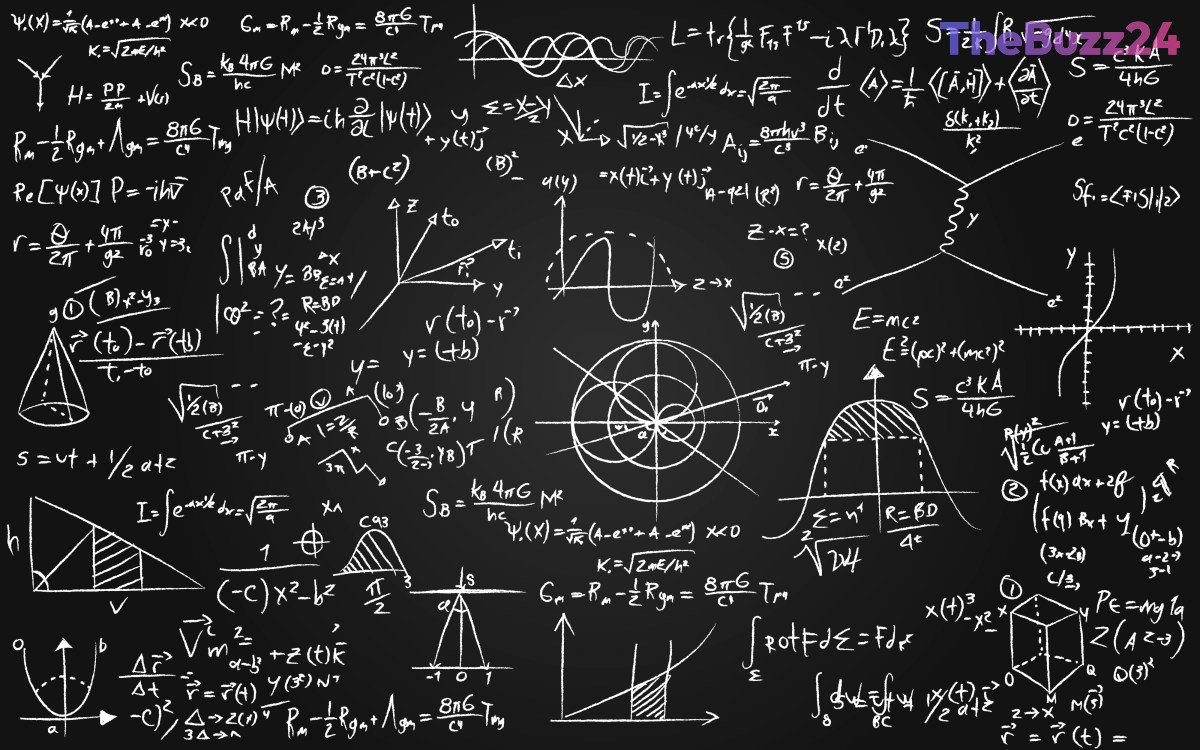
The mathematical community is currently grappling with a historic development as two independent claims have emerged, each asserting a solution to the Riemann Hypothesis, a 167-year-old challenge that stands as one of the most significant unsolved problems in mathematics. The hypothesis, which suggests a hidden structure governing the distribution of prime numbers, has long been considered a ‘holy grail’ of number theory.
Levent Alpöge, a researcher at Anthropic, announced his findings by utilizing Lean, an open-source language designed to verify mathematical proofs. Alpöge described his process as a collaborative effort with AI, noting that the model played a pivotal role in navigating the complex logical architecture required to reach the proof. His work, which he admits is currently difficult for humans to parse, relies on advanced concepts including Galois representations and automorphy-lifting arguments.
Simultaneously, a separate, entirely human-led proof has been presented by Stanford postdoctoral researcher Alessandro Masullo. Supported by Stanford professor and American Mathematics Association president Ravi Vakil, Masullo’s work represents the culmination of 12 years of independent research. Masullo emphasized that his contribution serves as a testament to the enduring capability of human mathematicians in an era increasingly dominated by artificial intelligence.
While the global mathematics community begins the rigorous process of peer review and verification, the dual nature of these announcements has sparked a broader conversation about the future of discovery. Whether the solution ultimately stems from human intuition or AI-assisted computation, the verification of these proofs will likely take significant time as experts work to translate these complex findings into a format that is fully intelligible to the scientific community.
Key Takeaways
- Two independent claims have emerged simultaneously asserting a solution to the 167-year-old Riemann Hypothesis.
- One proof was developed with the assistance of AI and verified using the Lean language, while the other was produced through 12 years of traditional human research.
- The mathematical community is now entering a rigorous verification phase to determine the validity of these complex proofs.
Editor’s Analysis & Impact
The simultaneous emergence of these proofs marks a watershed moment for both mathematics and the role of artificial intelligence in scientific discovery. The Riemann Hypothesis is a Millennium Prize problem, and its resolution would have profound implications for cryptography, number theory, and computational complexity. The tension between Alpöge’s AI-assisted approach and Masullo’s traditional human-led effort highlights a growing paradigm shift in research methodology. If either proof is validated, it will likely accelerate the integration of AI tools in theoretical sciences, potentially shortening the time required to solve other ‘unsolvable’ problems. However, the industry must now address the ‘black box’ challenge: ensuring that AI-generated proofs are not just correct, but also human-intelligible, to maintain the transparency and pedagogical standards essential to academic progress.
Frequently Asked Questions
Q: What is the Riemann Hypothesis?
A: The Riemann Hypothesis is a conjecture dating back to 1859 that proposes a specific, hidden structure underlying the distribution of prime numbers. It is one of the most famous unsolved problems in mathematics.
Q: Why is the verification of these proofs taking time?
A: Mathematical proofs of this magnitude involve extremely complex logical frameworks and advanced theories. Experts must carefully review every step of the logic to ensure there are no errors, a process that can take months or even years.
AI Disclosure: This article is based on verified data and official reports. Our Team and AI have cross-referenced every financial detail with primary sources to ensure total accuracy.
More from this Category