NASA Taps SpaceX for Upcoming StarBurst Gamma-Ray Mission
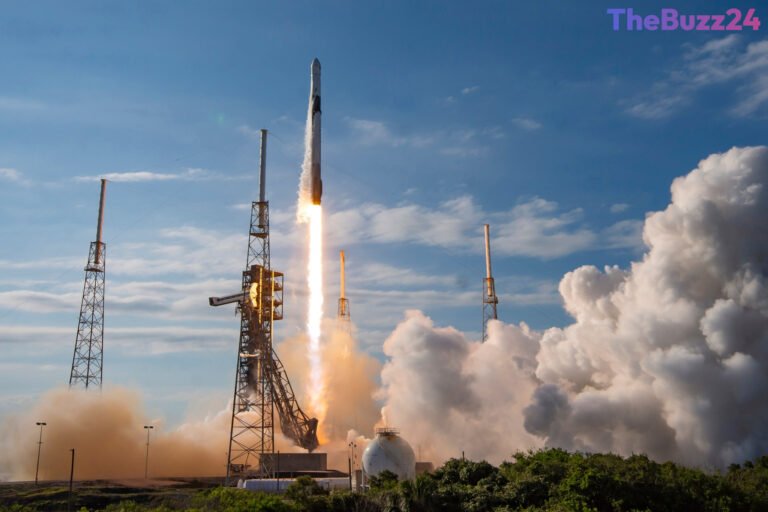
NASA has officially selected SpaceX to facilitate the launch of the StarBurst mission, a specialized small satellite project aimed at uncovering the mysteries behind neutron star mergers and short-duration gamma-ray bursts. The mission is scheduled to lift off no earlier than 2028, utilizing a Falcon 9 rocket as part of a Bandwagon rideshare mission departing from Cape Canaveral Space Force Station in Florida.
This launch agreement is structured as a firm-fixed-price task order under the Venture-Class Acquisition of Dedicated and Rideshare (VADR) contract. This framework provides NASA with a flexible, cost-effective mechanism to secure launch services over a decade-long period, with a cumulative contract ceiling of $1 billion. The initiative falls under the agency’s Astrophysics Pioneers Program, which prioritizes high-impact, lower-cost scientific investigations using small-scale spacecraft.
Once in orbit, StarBurst will continuously monitor the sky to detect the high-energy emissions associated with the violent collision of neutron stars. By integrating these observations with gravitational-wave data and ground-based telescope follow-ups, scientists aim to advance the field of multimessenger astronomy. This collaborative data approach is expected to provide unprecedented insights into the origins of some of the universe’s most powerful explosions.
Key Takeaways
- NASA has contracted SpaceX to launch the StarBurst satellite mission, expected to begin no earlier than 2028.
- The mission will utilize a Falcon 9 rocket under the VADR contract, which supports cost-effective, small-scale space research.
- StarBurst aims to study neutron star mergers and gamma-ray bursts to enhance the field of multimessenger astronomy.
Editor’s Analysis & Impact
The selection of SpaceX for the StarBurst mission underscores the growing reliance on commercial launch providers to facilitate specialized, lower-cost scientific research. By utilizing the VADR contract, NASA is effectively democratizing access to space for smaller, high-reward missions that might otherwise be sidelined by budget constraints. The focus on multimessenger astronomy represents a significant shift in how we observe the cosmos; by combining traditional electromagnetic data with gravitational-wave detection, researchers can build a more comprehensive model of stellar evolution. This mission not only promises to solve long-standing questions regarding the origins of gamma-ray bursts but also sets a precedent for how future Astrophysics Pioneers projects will be executed, favoring agility and integration over massive, singular infrastructure projects.
Frequently Asked Questions
Q: What is the primary goal of the StarBurst mission?
A: The StarBurst mission is designed to detect and study short gamma-ray bursts, which are powerful explosions caused by the merging of neutron stars.
Q: What is the VADR contract?
A: VADR stands for Venture-Class Acquisition of Dedicated and Rideshare. It is a flexible, 10-year contract vehicle that allows NASA to purchase launch services for small satellites at a lower cost.
AI Disclosure: This article is based on verified data and official reports. Our Team and AI have cross-referenced every financial detail with primary sources to ensure total accuracy.
More from this Category