Next-Gen Weather Tech: Compact CloudCube Radar Set to Transform Climate Modeling
A groundbreaking, compact radar system is set to drastically improve our understanding of global weather patterns and climate change. Developed by engineers at the Jet Propulsion Laboratory, the instrument, known as CloudCube, utilizes a multi-frequency approach to simultaneously analyze clouds and precipitation with unprecedented precision. By shrinking advanced radar technology into a low-power, lightweight package, this innovation paves the way for more cost-effective satellite missions in the future.
CloudCube’s breakthrough lies in its ability to transmit three distinct radar signals—Ka-, W-, and G-band—spanning frequencies from 36 to 240 GHz. Each band targets a specific element of cloud physics. The Ka-band maps precipitation profiles, the W-band tracks the cloud particles that lead to rain or snow, and the highly advanced G-band measures ice and liquid water content in thin, light clouds. Combining these three frequencies allows scientists to essentially “weigh” clouds, capturing a comprehensive picture of atmospheric processes that was previously impossible with a single compact device.
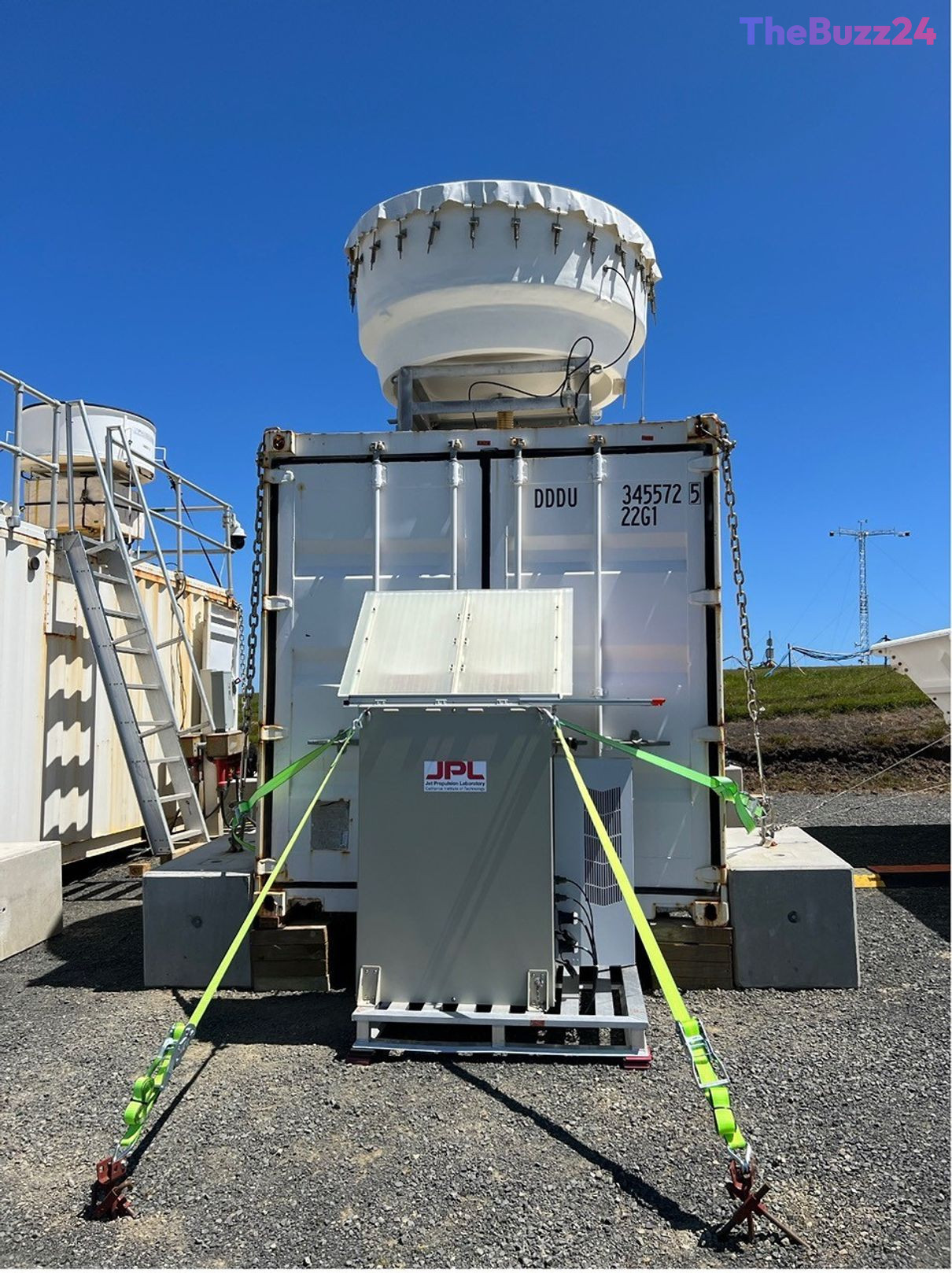
To achieve this in a miniaturized frame, the engineering team combined multiple high-efficiency frequency-multiplication devices, allowing the system to generate G-band signals using minimal power. This design drastically reduces the overall mass and component count, lowering future deployment costs. CloudCube has already proven its capabilities in real-world environments, completing an 11-month ground deployment in Tasmania and recently capturing its first airborne observations of snowfall from a Gulfstream III aircraft. These successful trials bring the technology one step closer to space deployment, promising a major leap forward in meteorological forecasting.
Key Takeaways
- CloudCube is a compact, multi-frequency radar system that simultaneously uses Ka-, W-, and G-band signals to analyze cloud structures and precipitation.
- The instrument's lightweight, low-power design significantly reduces the cost and complexity of deploying advanced meteorological radar into space.
- Successful ground and airborne testing, including capturing snowfall data from an aircraft, paves the way for future satellite integration to improve global climate models.
Editor’s Analysis & Impact
The development of CloudCube represents a pivotal shift in Earth observation technology, moving away from massive, multi-billion-dollar satellite payloads toward agile, miniaturized instruments. By successfully packing three distinct radar bands—especially the power-intensive G-band—into a low-mass system, the aerospace industry is entering an era of cost-effective, high-frequency atmospheric monitoring. This technology will likely democratize climate research, allowing smaller space agencies and private aerospace firms to deploy constellations of micro-satellites for real-time global weather tracking. Ultimately, the high-resolution data provided by CloudCube will refine climate models, helping governments and industries better predict extreme weather events and mitigate the long-term impacts of climate change.
Frequently Asked Questions
Q: What makes CloudCube different from traditional weather radars?
A: Unlike traditional systems that rely on a single frequency, CloudCube simultaneously utilizes three distinct radar bands (Ka, W, and G) in a single, highly compact, and low-power instrument, allowing it to analyze different layers and types of cloud particles at once.
Q: Why is the G-band signal so important for this research?
A: The G-band signal is uniquely suited for measuring ice and liquid water content inside very light clouds. CloudCube is one of the first compact instruments capable of effectively producing this high-frequency signal, which has never been deployed on a space-based instrument before.
Q: How has CloudCube been tested so far?
A: CloudCube has undergone extensive ground testing, including an 11-month deployment in Tasmania, and was recently flight-tested on a research aircraft where it successfully captured airborne observations of snowfall.
AI Disclosure: This article is based on verified data and official reports. Our Team and AI have cross-referenced every financial detail with primary sources to ensure total accuracy.
More from this Category