Northrop Grumman’s Cygnus XL Cargo Ship Concludes ISS Mission, Prepares for Fiery Re-entry
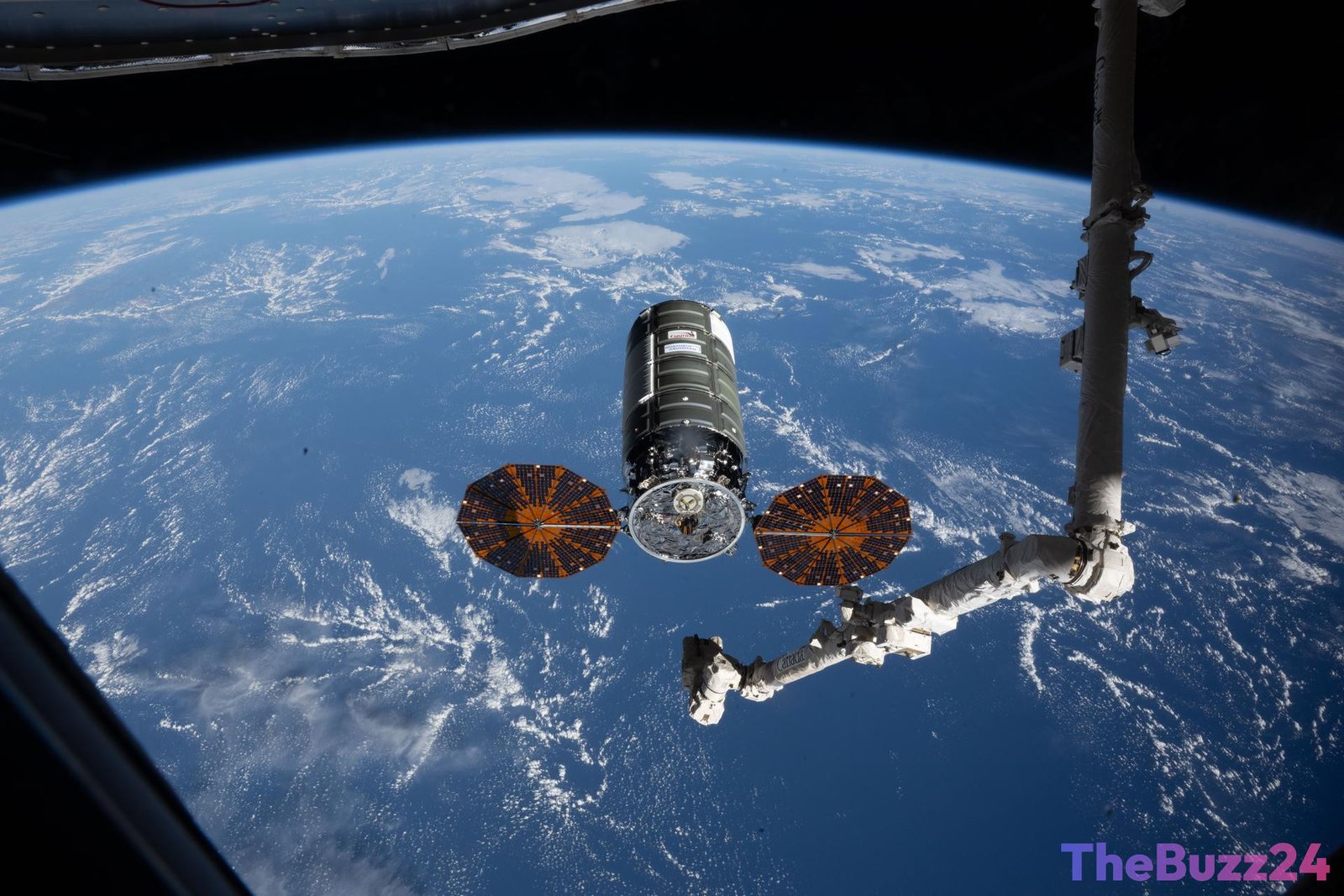
Northrop Grumman’s Cygnus XL spacecraft is set to depart the International Space Station (ISS) on Friday, Oct. 9, concluding its Commercial Resupply Services-24 (CRS-24) mission. The cargo vessel successfully delivered over 11,000 pounds of vital supplies, scientific experiments, and other essential cargo to the orbiting laboratory for NASA, having been captured by the station’s robotic arm on April 13, 2026.
The undocking sequence is scheduled for 12:45 p.m. EDT. Ground flight controllers will issue commands for the space station’s robotic arm, Canadarm2, to detach the Cygnus XL from the Unity module’s Earth-facing port. Following detachment, the arm will maneuver the spacecraft into position for its release. NASA astronaut Luke Delaney will be onboard the orbital complex, monitoring the intricate operation.
After its departure, the Cygnus XL, now laden with thousands of pounds of disposal items and unneeded cargo, will begin its deorbit trajectory. It is slated for a destructive re-entry into Earth’s atmosphere on Sunday, Oct. 11, where it will safely burn up. The resupply mission originally launched on April 11 aboard a SpaceX Falcon 9 rocket from Space Launch Complex 40 at Cape Canaveral Space Force Station in Florida.
Key Takeaways
- Northrop Grumman's Cygnus XL spacecraft is departing the ISS on Oct. 9 after successfully delivering over 11,000 pounds of supplies and experiments.
- The spacecraft will perform a controlled, destructive re-entry into Earth's atmosphere on Oct. 11, carrying disposal items.
- The CRS-24 mission, launched by a SpaceX Falcon 9 rocket in April, highlights ongoing commercial partnerships in space logistics.
Editor’s Analysis & Impact
Commercial resupply missions like Northrop Grumman’s CRS-24 are foundational to the sustained operation of the International Space Station. They demonstrate the growing reliability and efficiency of private sector involvement in space logistics, reducing reliance solely on government-led missions. This trend fosters competition and innovation within the aerospace industry, potentially lowering costs and increasing mission frequency.
The success of these missions paves the way for future commercial space stations and more ambitious deep-space exploration efforts. As private companies prove their capabilities in cargo delivery, the focus can shift towards human spaceflight and more complex orbital infrastructure development. This ongoing partnership between NASA and commercial entities is critical for maintaining a continuous human presence in low-Earth orbit, ensuring the flow of essential resources and scientific equipment, while also offloading waste safely.
Frequently Asked Questions
Q: What is the purpose of the Cygnus XL spacecraft's mission?
A: The Cygnus XL spacecraft's primary purpose is to deliver essential supplies, scientific experiments, and other cargo to the International Space Station (ISS) as part of NASA's Commercial Resupply Services (CRS) program. It also serves to remove disposal items from the station upon its departure.
Q: How does the Cygnus XL spacecraft return to Earth?
A: Unlike some crewed spacecraft, the Cygnus XL is designed for a destructive re-entry. After departing the ISS, it deorbits and burns up safely in Earth's atmosphere, disposing of unneeded cargo and waste from the space station.
Q: Who operates the Cygnus XL spacecraft?
A: The Cygnus XL spacecraft is built and operated by Northrop Grumman, a private aerospace and defense technology company, under contract with NASA for commercial resupply missions to the International Space Station.
AI Disclosure: This article is based on verified data and official reports. Our Team and AI have cross-referenced every financial detail with primary sources to ensure total accuracy.
More from this Category