Perseverance Rover Uncovers Ancient Martian Secrets in the ‘Lac de Charmes’ Region
The Perseverance rover has been actively exploring the rugged “Lac de Charmes” area, situated west of the Jezero crater rim on Mars. Navigating a landscape characterized by valleys and ridges, the robotic explorer has been investigating some of the oldest rocks encountered during the entire mission. These ancient geological formations date back to a period when Mars was frequently bombarded by asteroid impacts, long before rivers and lakes shaped the sedimentary environments inside the Jezero crater. By analyzing these materials, researchers hope to gain unprecedented insights into early Martian history and the broader evolutionary processes of rocky planets within our solar system.
Throughout its expedition in this frontier region, Perseverance has mapped a looping path across intriguing rock outcrops and created 13 abrasion patches to gather valuable scientific data. Initial investigations indicate that many of these rocks are igneous, having formed from cooled lava or magma, while others are impactites created by violent collision events, and some exhibit characteristics of both processes. Enhanced navigation algorithms, utilizing upgraded processing capabilities, have allowed the rover to execute longer and more precise drives across the challenging terrain.
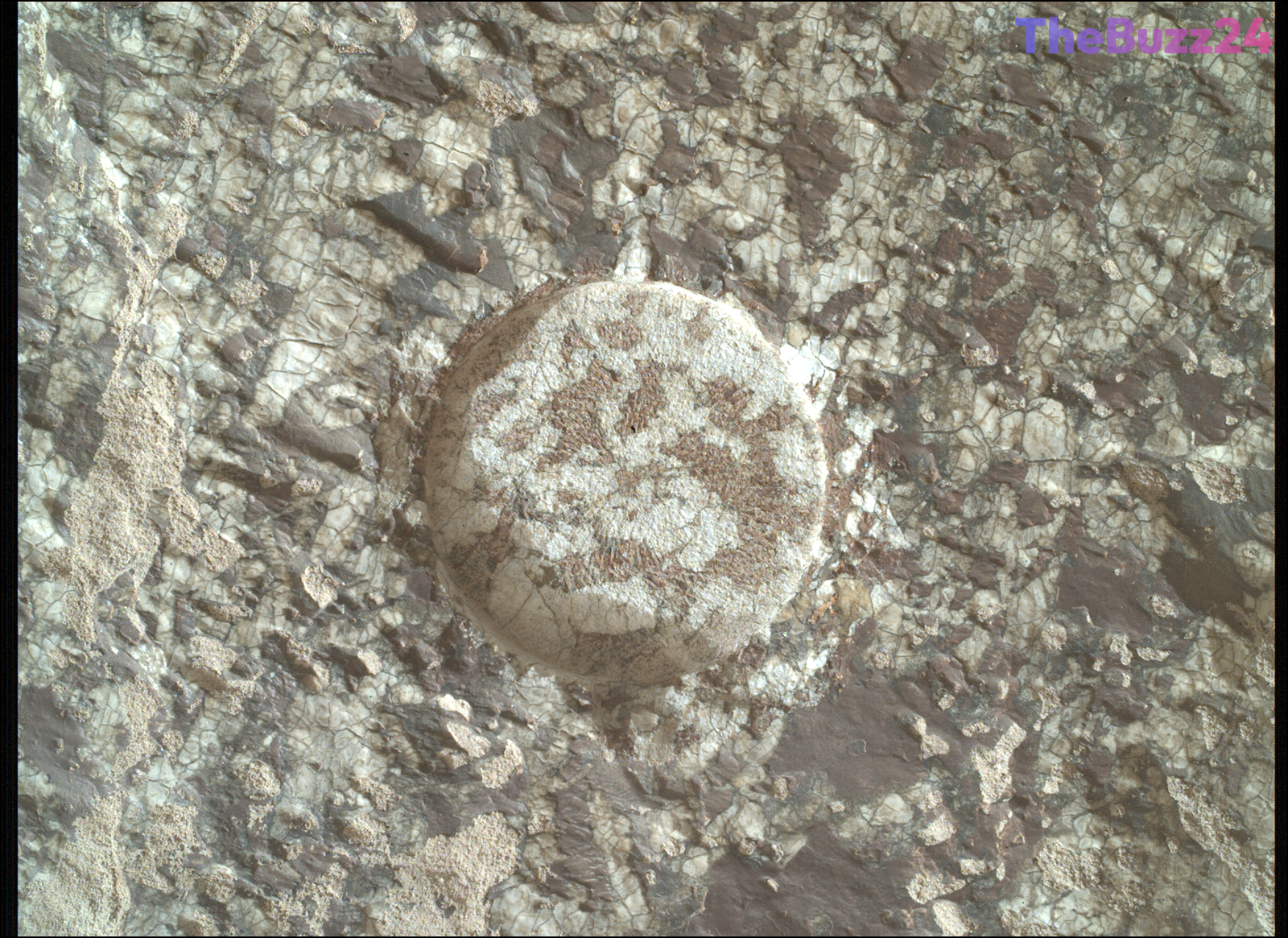
As the exploration of Lac de Charmes draws to a close, the mission continues to yield surprising discoveries. The rover recently shifted focus to an area known as “Idubi,” home to numerous light-toned boulders with diverse textures and compositions. An abrasion patch named “Badger Peak” revealed a striking light-and-dark texture previously unseen by the rover, though initial sampling attempts were halted due to the extreme hardness of the rock. Researchers have since turned their attention to a nearby outcrop designated “Gardenia,” suspected to be a breccia composed of older rock fragments, as Perseverance prepares to embark on the next phase of its journey.
Key Takeaways
- The Perseverance rover has spent recent months exploring the ancient "Lac de Charmes" region west of the Jezero crater rim.
- Data collected from 13 abrasion patches reveal a mix of igneous and impactite rocks dating back to the early bombardment era of Mars.
- Despite challenges in sampling extremely hard boulders at "Idubi," the rover is actively investigating new geological formations like the "Gardenia" outcrop.
Editor’s Analysis & Impact
The ongoing mission of the Perseverance rover marks a critical milestone in planetary science, offering a rare window into the primordial conditions of the inner solar system. By analyzing igneous and impactite rocks from the pre-sedimentary era, planetary geologists are piecing together the thermal and impact history of early Mars, which parallels the evolutionary timeline of Earth and other rocky planets. Furthermore, technological upgrades in autonomous navigation and rover mobility continue to push the boundaries of interplanetary exploration. These advancements not only maximize scientific return per Martian day but also pave the way for future crewed missions and complex sample-retrieval logistics. As the mission transitions to new geologic frontiers, the data retrieved will heavily influence theoretical models of planetary formation for decades to come.
Frequently Asked Questions
Q: What is the significance of the "Lac de Charmes" region on Mars?
A: The Lac de Charmes region contains some of the oldest rocks encountered by the Perseverance rover, dating back to a time when Mars was heavily impacted by asteroids, offering clues about the early history of the planet and rocky planet evolution.
Q: Why did the Perseverance rover fail to sample the "Badger Peak" boulder?
A: The rover was unable to collect a sample from the Badger Peak boulder due to the extreme hardness of the rock, prompting the science team to search for alternative targets with similar compositional traits.
Q: How has technology improved the Perseverance mission recently?
A: The mission has benefited from a new algorithm that repurposes communication processing hardware from the Ingenuity helicopter, enabling longer and more accurate autonomous drives across difficult Martian terrain.
AI Disclosure: This article is based on verified data and official reports. Our Team and AI have cross-referenced every financial detail with primary sources to ensure total accuracy.
More from this Category