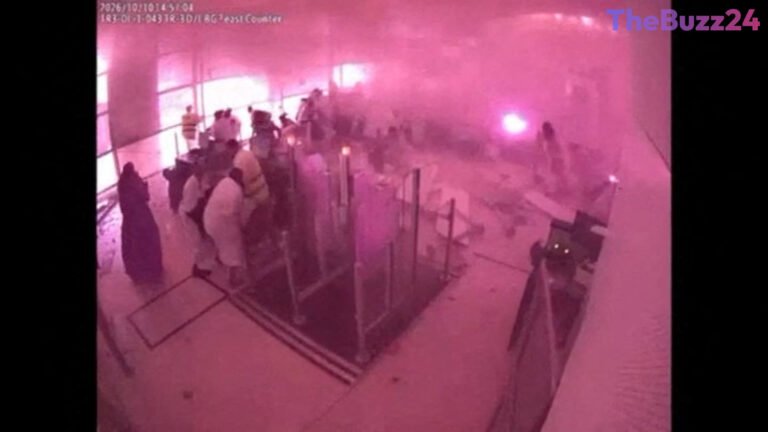
Emergency Teams Deploy Robotics in Wake of Deadly Shanxi Coal Mine Disaster
A massive gas explosion at the Liushenyu Coal Mine in China’s Shanxi province has triggered a large-scale emergency response, marking one of the most significant industrial tragedies in the region in over ten years. In the immediate aftermath of the blast, high-level government directives were issued to prioritize the search for survivors, mobilizing extensive resources to the site to manage the volatile conditions.
To mitigate risks to human life during the recovery process, specialized mine inspection robots were deployed into the affected shafts on Sunday. These autonomous units utilize advanced infrared imaging and high-precision gas sensors to navigate the debris, providing rescue teams with critical data regarding structural integrity and potential pockets of survivors without requiring personnel to enter the most hazardous zones.
As the operation continues, the focus remains on stabilizing the mine and conducting a thorough investigation into the root cause of the explosion. The incident has reignited national discussions regarding industrial safety protocols and the implementation of advanced technology to protect workers in high-risk environments. Meanwhile, local authorities are providing support to the families of the miners as they await news from the ongoing recovery efforts.
Key Takeaways
- A major gas explosion at the Liushenyu Coal Mine has resulted in a significant loss of life, prompting a massive emergency response.
- Rescue teams are utilizing advanced inspection robots equipped with infrared cameras and gas sensors to safely navigate the disaster site.
- The incident has prompted a renewed focus on industrial safety standards and the integration of autonomous technology in mining operations.
Editor’s Analysis & Impact
The Liushenyu Coal Mine disaster highlights the persistent dangers inherent in the global mining sector, despite advancements in safety technology. This event is likely to trigger a nationwide audit of mining facilities across China, potentially leading to stricter regulatory oversight and mandatory upgrades in safety infrastructure. From an industry perspective, the successful deployment of inspection robots in this scenario serves as a proof-of-concept for the wider adoption of autonomous systems in hazardous environments. Moving forward, we can expect increased investment in robotics and AI-driven monitoring systems as companies seek to reduce human exposure to life-threatening conditions. The long-term implications include a shift toward more automated mining processes, which may improve safety records but also raise questions about the future of labor in the industry.
Frequently Asked Questions
Q: What technology is being used to assist in the rescue efforts?
A: Rescue teams are using specialized mine inspection robots equipped with infrared cameras and gas sensors to assess the site's stability and search for survivors.
Q: What is the current status of the investigation into the explosion?
A: Authorities are currently focused on stabilizing the mine site and conducting a thorough investigation to determine the exact cause of the gas explosion.
AI Disclosure: This article is based on verified data and official reports. Our Team and AI have cross-referenced every financial detail with primary sources to ensure total accuracy.
More from this Category