Seagate Faces Production Bottlenecks as AI Demand Surges, Stock Dips
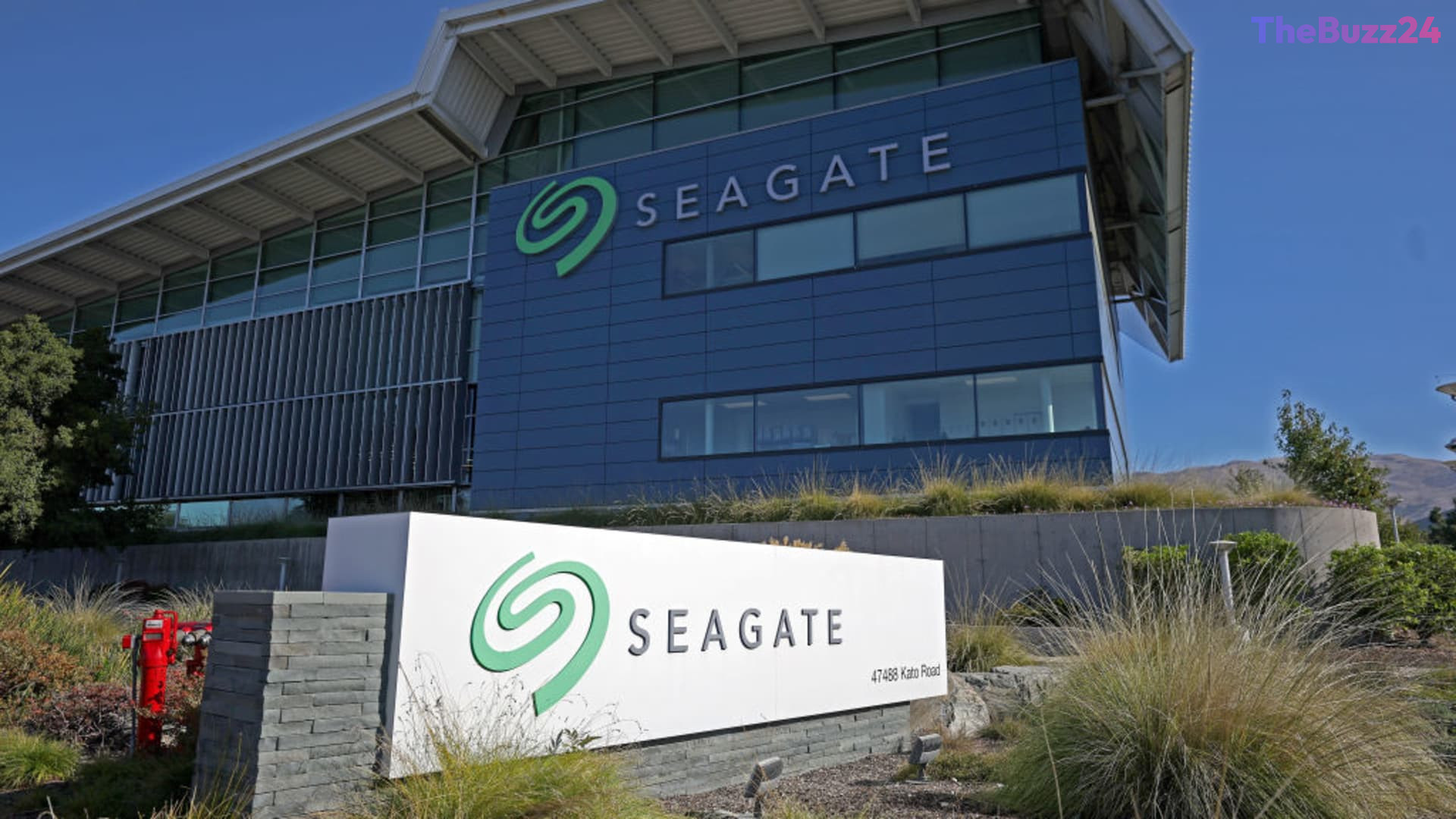
Seagate Technology’s stock experienced a notable decline of over 6% on Monday, contributing to a wider downturn in the memory chip industry. This market reaction was prompted by statements from CEO Dave Mosley, who indicated that the company is encountering significant challenges in ramping up production capacity to satisfy the unprecedented demand fueled by the burgeoning artificial intelligence sector.
Mosley elaborated on the complexities of expanding manufacturing capabilities during a recent industry conference. He suggested that the lengthy timelines associated with constructing new facilities or integrating additional equipment would be detrimental, potentially slowing down the very technological advancements the industry is striving to accelerate. This underscores the critical challenge faced by semiconductor manufacturers: balancing aggressive growth strategies with the imperative to maintain rapid innovation cycles.
Market participants are expressing growing concern over the long-term viability of the current surge in chip demand. Given that semiconductor manufacturing processes can take multiple quarters to complete, companies are under immense pressure to accurately predict future market needs. Despite Seagate’s efforts to offer data center clients a four-to-five-quarter outlook to stabilize the supply chain, Mosley acknowledged that current demand is consistently exceeding these forecasts.
In response to these extended production lead times and the inherent volatility in the computing power market, financial institutions are exploring new risk management tools. The advent of semiconductor futures markets, pioneered by CME Group, represents a significant step towards enabling traders to hedge against the escalating costs and unpredictable supply conditions characteristic of the current AI-driven hardware ecosystem.
Key Takeaways
- Seagate's stock fell significantly due to CEO warnings about production constraints driven by AI demand.
- The company faces challenges in rapidly scaling manufacturing to meet current market demand, which outpaces projections.
- The semiconductor industry is grappling with long production cycles, leading to market volatility and the development of new financial hedging tools like futures markets.
Editor’s Analysis & Impact
The current situation highlights a critical inflection point for the semiconductor industry, particularly for storage solutions providers like Seagate. The insatiable appetite for computing power, driven by AI development, is exposing the inherent limitations of traditional manufacturing expansion timelines. This bottleneck not only impacts individual company revenues but also poses a systemic risk to the broader tech ecosystem reliant on these components. The introduction of semiconductor futures by CME Group is a clear indicator of the market’s attempt to price in and manage this supply-side uncertainty. Investors and industry leaders will be closely watching how Seagate and its competitors navigate these constraints, as the ability to scale efficiently will likely determine market leadership in the coming years.
Frequently Asked Questions
Q: Why is AI driving demand for storage solutions like Seagate's?
A: Artificial intelligence, especially large language models and machine learning applications, requires vast amounts of data for training and operation. This data needs to be stored and accessed rapidly, driving significant demand for high-capacity and high-performance storage devices offered by companies like Seagate.
Q: What are semiconductor futures, and how do they help?
A: Semiconductor futures are financial contracts obligating the buyer to purchase, or the seller to sell, a set amount of a semiconductor commodity at a predetermined future date and price. They allow companies and traders to hedge against price fluctuations and supply chain disruptions, providing a more predictable financial environment in a volatile market.
Q: How long does it typically take to increase semiconductor production capacity?
A: Increasing semiconductor production capacity is a complex and time-consuming process. Building new fabrication plants (fabs) can take several years and billions of dollars. Even expanding existing facilities with new machinery requires significant lead times for equipment manufacturing, installation, and calibration, often spanning multiple quarters.
AI Disclosure: This article is based on verified data and official reports. Our Team and AI have cross-referenced every financial detail with primary sources to ensure total accuracy.
More from this Category